 |
| Pix credit Qiushi here (1st Session of the NPC 1964) |
Changhao Wei and Ying Sun, recently published a quite useful article: "Why Did China Amend Its Law Governing Delegates to People’s Congresses?" (The Diplomat 10 April 2025). The institution of peoples congresses, like other institutions in China, change with the times and reflect the Basic Line of the vanguard Communist Party as it formulates policies for implementing Marxist-Leninism in every stage of historical development of the nation. Wei and Sun provide a powerful description of that evolution in this portion of the historical development of China in its present "new era."
In recent years, the Chinese Communist Party (CCP) under General Secretary Xi Jinping has directed – and the people’s congresses have experimented with – various reforms, both procedural and institutional, to improve “delegates-related work,” though the specifics vary across jurisdictions. The overall goal is to make sure that delegates can – and do, in fact – effectively discharge their representative duties within politically acceptable bounds. Last month’s Delegates Law amendments codified many of those reforms, thereby both placing them on a strong legal footing and upgrading them to statutory requirements that apply nationwide. We highlight a few in this article. (Wei and Sun, "Why Did China Amend Its Law Governing Delegates to People’s Congresses?").Wei and Sun make several important points. The first touches on the cultures of responsiveness of NPC delegates within the parameters of the political system. The second is the role that NPC delegates play both in giving effect to the overall leadership of the Communist Party of China, and as a key element of the recently elaborated whole process people's democracy (for discussion on WPPD see, e.g. here). The alignment of the two gives efforts at elaborating a structure of Chinese socialist democracy its contemporary character. The third touches on the way in which delegates contributes to the four organs theory of the NPC system (which Wei and Sun nicely summarize)--as political organs [政治机关] responsive to CPC guidance and leadership, as that conscientiously adhere to the leadership of the CPC; as state organs [国家权力机关] that give effect to the administrative elaboration of political policy and direction; as mass line organs [工作机关] that give effect to the core policy of people being the masters of the state; and as representative [代表机关] that undertake the duties vested in them by the State Constitution in their function as organs of popular power. Wei and Sun also do an excellent job of describing the nature and fiction of the two contacts principle around which delegate duty may be elaborated--that state organs must maintain close contact with NPC delegates and that NPC delegates must maintain close contacts with the people. This principle is hardened into a set of rules. These rules, in turn, become part of a function of performance measures against which delegate 's work is measured. "The Delegates Law has long required directly elected delegates to keep the voters informed of their work and obligated the delegates’ supervisory bodies to organize regular briefing sessions with their constituents. The amendments not only extended the reporting obligation to cover all delegates (however selected), but also tasked their supervisory bodies with “keeping records on their performance of duties” and “disclosing delegates’ basic information and performance information to the public.”" (Wei and Sun, "Why Did China Amend Its Law Governing Delegates to People’s Congresses?").
For those seeking an excellent summary of NPC reforms the article is worth a read. It may be accessed in the original HERE, and follows below.
For those seeking to delve a little deeper into the theoretical basis of these reforms, it may be worth considering an official English translation (published 2020 from the Chinese version published in 2019 No. 18) of Xi Jinping, Speech at the Ceremony Marking the 60th Anniversary of the National People's Congress (5 September 2014) and published in Qiushi and available online HERE. It is edited from the original Chinese version which also follows below. The General Secretary laid out the pathways to reform that have appeared with regularity over the last decade, and the conceptual structures under which such reform is undertaken.
A country's political system is determined by and reacts to its economic and social foundations. Among all of a country's various institutions, its political system plays the key role. Therefore, to boost confidence in the system of socialism with Chinese characteristics, we must first boost our confidence in the Chinese socialist political system, and enhance our confidence and determination in following the Chinese socialist path of political advancement. [一個國家的政治制度決定於這個國家的經濟社會基礎,同時又反作用於這個國家的經濟社會基礎,乃至於起到決定性作用。在一個國家的各種制度中,政治制度處於關鍵環節。所以,堅定中國特色社會主義制度自信,首先要堅定對中國特色社會主義政治制度的自信,增強走中國特色社會主義政治發展道路的信心和決心。]
* * *
Developing socialist democracy is an essential part of our efforts to modernize China's governance system and governance capacity. The overall goal of comprehensively furthering reform, which was set at the Third Plenary Session of the 18th CPC Central Committee, is comprised of two parts: improving and developing the system of socialism with Chinese characteristics, and modernizing China's governance system and capacity. The first part designates the fundamental orientation, which is the path of socialism with Chinese characteristics and no other path. The second part makes clear the direction we will take to improve and develop the system of socialism with Chinese characteristics under the guidance of this fundamental orientation. Together the two parts constitute a whole. [發展社會主義民主政治,是推進國家治理體系和治理能力現代化的題中應有之義。黨的十八屆三中全會提出的全面深化改革總目標,是兩句話組成的一個整體,即完善和發展中國特色社會主義制度、推進國家治理體系和治理能力現代化。前一句規定了根本方向,我們的方向就是中國特色社會主義道路,而不是其他什麼道路。后一句規定了在根本方向指引下完善和發展中國特色社會主義制度的鮮明指向。兩句話都講,才是完整的。]
The key to developing socialist democracy is to increase and expand our strengths and unique qualities, rather than weaken and reduce them. We must uphold the core role of the Party in exercising overall leadership and coordinating overall initiatives, enhance its capacity to govern in a scientific, democratic, and law-based manner, and ensure that the Party leads the people in governing the country effectively, so as to prevent the Chinese people from becoming aimless like a ship with nobody at the helm or divided like a heap of loose sand. We must uphold the principle that all power in the country belongs to the people, guaranteeing not only law-based democratic elections but also law-based democratic decision-making, democratic management, and democratic supervision, so as to avoid the phenomenon of politicians making wild promises in the elections process that they are unable to deliver later on. We must uphold and improve the system of multi-party cooperation and political consultation under the leadership of the CPC, and strengthen cooperation and coordination of various social forces, so as to avoid factional strife between different political parties. We must uphold and improve the system of regional ethnic autonomy, consolidate socialist ethnic relations of equality, solidarity, mutual assistance, and harmony, and enable people of all ethnic groups to live together happily, work together for a common cause, and develop in harmony, so as to guard against estrangement and conflict between ethnic groups. We must uphold and improve the system of community-level self-governance, develop community-level democracy, and ensure that the people directly exercise their democratic rights in accordance with the law, so as to prevent the emergence of a situation in which the people have nominal but not real power. We must uphold and improve the system and principles of democratic centralism, urging various state organs to become more capable and efficient, enhance coordination and cooperation, and form strong synergy in national governance, so that they do not hold each other back or waste valuable energy on quibbling with each other. [發展社會主義民主政治,關鍵是要增加和擴大我們的優勢和特點,而不是要削弱和縮小我們的優勢和特點。我們要堅持發揮黨總攬全局、協調各方的領導核心作用,提高黨科學執政、民主執政、依法執政水平,保証黨領導人民有效治理國家,切實防止出現群龍無首、一盤散沙的現象。我們要堅持國家一切權力屬於人民,既保証人民依法實行民主選舉,也保証人民依法實行民主決策、民主管理、民主監督,切實防止出現選舉時漫天許諾、選舉后無人過問的現象。我們要堅持和完善中國共產黨領導的多黨合作和政治協商制度,加強社會各種力量的合作協調,切實防止出現黨爭紛沓、相互傾軋的現象。我們要堅持和完善民族區域自治制度,鞏固平等團結互助和諧的社會主義民族關系,促進各民族和睦相處、和衷共濟、和諧發展,切實防止出現民族隔閡、民族沖突的現象。我們要堅持和完善基層群眾自治制度,發展基層民主,保障人民依法直接行使民主權利,切實防止出現人民形式上有權、實際上無權的現象。我們要堅持和完善民主集中制的制度和原則,促使各類國家機關提高能力和效率、增進協調和配合,形成治國理政的強大合力,切實防止出現相互掣肘、內耗嚴重的現象。]
Wei and Sun provide an excellent analysis of the way on which these conceptual structures now manifest themselves in the latest set of reforms in the NPC system.
Why Did China Amend Its Law Governing Delegates to People’s Congresses?
The amendments codify recent policy and practice to better support – and regulate – Chinese people’s representatives.
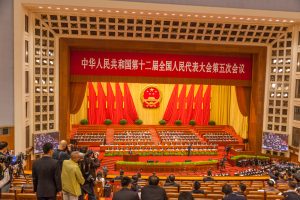
On March 11, during the final moments of its 2025 annual session, China’s National People’s Congress (NPC) passed major amendments to the Law on the Delegates to the NPC and Local People’s Congresses – commonly referred to as the Delegates Law for short. Originally enacted in 1992, this statute provides for the rights and obligations of the delegates to China’s people’s congresses, the nominal “organs of state power” that perform legislative, oversight, and representative functions in China’s political system.
There are now nearly 2.8 million delegates in the approximately 40,000 people’s congresses across China’s five administrative levels: national, provincial, municipal, county, and township. Only delegates at the two lowest levels are directly selected by the electorate, whereas those at each higher level are chosen by the people’s congresses at the next lower level. While engineered to be demographically diverse, the delegates are often dismissed for playing mere rubber-stamping roles.
Despite this common conception, empirical research shows that delegates do in fact respond to their constituents and advocate their interests – albeit within strictly policed bounds. They remain reticent on sensitive topics, but are encouraged to convey public opinion on a range of everyday issues, including education, environment, healthcare, and employment. They, in other words, bring needed information about nonsensitive matters to China’s policymakers.
To gather such information, the delegates engage in various activities when not attending the relevant people’s congress’s short, annual sessions. Under the Delegates Law, the standing body of a congress – the presidium at the township level or the standing committee at each higher level – is responsible for organizing such activities. It is also in charge of distributing the delegates’ policy proposals to the proper government agencies and providing on-the-job training, among others. Such supporting work makes up part of these standing bodies’ “delegates-related work,” which (to a lesser extent) also entails supervising the delegates, such as keeping (literal) tabs on their job performance.
In recent years, the Chinese Communist Party (CCP) under General Secretary Xi Jinping has directed – and the people’s congresses have experimented with – various reforms, both procedural and institutional, to improve “delegates-related work,” though the specifics vary across jurisdictions. The overall goal is to make sure that delegates can – and do, in fact – effectively discharge their representative duties within politically acceptable bounds. Last month’s Delegates Law amendments codified many of those reforms, thereby both placing them on a strong legal footing and upgrading them to statutory requirements that apply nationwide. We highlight a few in this article.
Memorializing Delegates’ Political Duties
The amendments emphasized the broad “political requirements” that delegates must meet in fulfilling their duties. Article 3 as amended explicitly requires them to uphold the CCP’s leadership and adhere to the party’s and the nation’s guiding ideologies, consistent with recent changes to an array of other laws that govern the NPC and its local counterparts. Article 5 instructs them to help implement “whole-process people’s democracy” and “faithfully represent the interests and will of the people.” And, under Article 6, they must also uphold the Constitution and do their part to further law-based governance.
These requirements have long existed in practice, of course, though they previously lacked statutory force. For instance, since 2012, the NPC Standing Committee has in electoral documents expressly directed provincial-level authorities to nominate and elect NPC delegates who “support” the CCP’s leadership. The newly codified obligations also align with the party’s “Four Organs” vision for the people’s congresses, which calls on them to perform a fourfold role, including acting as political organs that “conscientiously” adhere to the CCP’s leadership and as representative organs that “always maintain close ties with the people.” Indeed, helping the people’s congresses fulfill this fourfold role was itself an obligation the amendments imposed on delegates (Article 4).
Codifying the “Two Contacts” Policy
The amendments wrote into law a mechanism intended to open up certain information channels to aid in delegates’ representative activities: the so-called “Two Contacts” policy. As stated in Article 11 of the amended Delegates Law, this policy has two prongs: State institutions – including the standing bodies, committees, and career staffs of people’s congresses, administrative agencies, and judicial bodies – must maintain close contact with delegates; and the latter, in turn, must maintain close contact with the people. “Two Contacts” dates back to the CCP’s 2013 Third Plenum Decision, which initially limited the first prong to the standing committees of people’s congresses alone. Less than a year later, however, this obligation to keep in frequent touch with the delegates was extended to all state organs.
As to the first prong, the amendments further specified that the standing committees of people’s congresses must establish mechanisms to broaden delegates’ participation in their work, including lawmaking and oversight (Article 44). Similarly, the amendments also required all state organs to invite delegates to “participate in the relevant work and activities and listen to their opinions and suggestions,” in addition to their long-standing obligation to “safeguard the delegates’ right to know” by updating the latter on their work and furnishing them with “information and material” (Article 46). (However, the amendments missed an opportunity to clarify key terms like the “materials” that delegates are entitled to receive, thereby prolonging their unequal access to information across the country.)
As to the second prong, the amendments memorialized the responsibility of the people’s congresses’ standing bodies to “periodically organize and assist in” activities through which delegates connect with the people to “listen to and convey their opinions and demands” (Article 28). These activities are especially beneficial to the delegates above the county level, whose ties to local communities are increasingly tenuous due to the multiple layers of indirect election.
The NPC likely drafted these provisions reflecting the “Two Contacts” policy in a general way to leave room for local experimentation. For example, to facilitate delegates’ involvement in the people’s congresses’ day-to-day work, the Standing Committee of the Gansu Provincial People’s Congress aims to establish direct contacts between its specialized committees and delegates with the relevant expertise. And as to delegates’ engagement with communities, the Standing Committee of the Beijing Municipal People’s Congress, as another example, has been organizing all delegates from the city to directly hear their constituents’ views on draft legislation through an initiative called “Ten Thousand Delegates Go to the Grassroots.” Such local innovation is expected to continue under the amended Delegates Law.
Documenting and Disclosing Delegates’ Performance
The amendments added new provisions aimed at improving delegate accountability. The Delegates Law has long required directly elected delegates to keep the voters informed of their work and obligated the delegates’ supervisory bodies to organize regular briefing sessions with their constituents. The amendments not only extended the reporting obligation to cover all delegates (however selected), but also tasked their supervisory bodies with “keeping records on their performance of duties” and “disclosing delegates’ basic information and performance information to the public.”
The record-keeping system originates from a 2016 Central Committee document on better regulating delegates to people’s congresses and members of China’s political advisory bodies. As later elaborated in the implementing rules issued by a few local people’s congresses, a delegate’s performance file may record their attendance at legislative sessions, submission of bills and proposals, participation in training and study sessions, participation in the activities organized by standing legislative bodies and other state organs, and interactions with their constituents. The original and primary goal of creating the performance records appears to inform official decisions on whether to nominate an incumbent delegate for reelection, although publicizing such information could to some extent facilitate the public’s supervision of their representatives.
However, because of the amendments’ vague wording, the scope of disclosure will depend on local implementation and may well vary across regions. The two key terms – a delegate’s “basic information” and “performance information” – were left undefined. As to the former, for example, the NPC currently makes available only a delegate’s name, sex, and ethnicity, while some local people’s congresses also disclose their age, political affiliation, and occupation. In addition, because Chinese delegates have busy day jobs, they may have legitimate excuses for skipping certain activities. Should this information be disclosed along with their absences? The amendments were silent on this question. Local people’s congresses ultimately will need to fill these gaps.
Modestly Broadening Ethics Rules
Article 59 of the amended Delegates Law imposes additional ethical constraints on delegates. Since 2010, this article has barred delegates from interfering in specific court cases or economic activities (such as bidding and tendering) in the name of discharging their official duties. The latest amendments additionally prohibit them from interfering in specific administrative law enforcement actions or indirectly using their positions for commercial activities to seek personal gain, closing the door to such misuse or abuse of the delegates’ official positions.
In practice, there have been instances where delegates took an interest in pending court cases, ostensibly to oversee the courts. These inquiries placed the judges in difficult positions, as it might not have been immediately clear whether the delegates were acting in the public interest. It is conceivable that administrative agencies have faced similar dilemmas.
Other Changes
The amendments also introduced an array of other changes to delegates’ rights and responsibilities. For example, the amendments additionally required them to carry out research by focusing on official priorities (Article 30) and codified the mechanism whereby ineffective delegates may be forced to resign (Article 62). At the same time, the amendments also codified supportive measures such as designating “key delegate proposals” for priority processing (Article 52), reimbursements for travel expenses (Article 41), and assistance for delegates with disabilities (Article 54).
In March 2022, ahead of the elections for the delegates to the current NPC (2023–2028), the NPC Standing Committee urged provincial authorities to pick individuals who not only champion China’s political system and can fulfill their “political responsibilities,” but also “possess relatively strong ability to perform their duties,” including the ability to “maintain close contact with the people.” Last month’s Delegates Law amendments boil down to reinforcing that dual requirement.
* * *
Speech at the Ceremony Marking the 60th Anniversary of the National People's Congress
XI JINPING
Comrades, friends,
Sixty years ago, the founders of the People's Republic of China (PRC), together with more than 1,200 deputies elected to the National People's Congress (NPC) convened the First Session of the First NPC, and adopted the Constitution of the People's Republic of China, thus establishing our country's fundamental political system—the system of people's congresses. This was an epoch-making event in the political history of both China and the world, as China, a country with a history spanning 5,000 years and a population numbering in the hundreds of millions, put in place a new type of political system in which the people became masters of their country.
Today, we meet on this grand occasion to celebrate the 60th anniversary of the NPC. We are here to look back on how the system of people's congresses was established and developed, reaffirm our confidence in the path, theories, and system of socialism with Chinese characteristics, uphold and improve the system of people's congresses from this new historical starting point, and better organize and mobilize Chinese people of all ethnic groups in the push to realize the Two Centenary Goals and the Chinese dream of national rejuvenation.
Comrades, friends,
After modern times began, the Chinese people were confronted with the historic question of what kind of political system should be established in China. The Chinese people carried out arduous explorations as they searched for an answer to this question.
After the Opium War of 1840, China was gradually reduced to a semi-colonial and semi-feudal society. At that time, in order to save the nation from subjugation and achieve its rejuvenation, the Chinese people and countless dedicated patriots worked tirelessly in search of a political system suited to China's national conditions. Prior to the Revolution of 1911, a number of initiatives for this purpose had ended up in failure, including the Taiping Heavenly Kingdom Movement, the Westernization Movement, the Reform Movement of 1898, the Yihetuan Movement, and the new policies of the late Qing Dynasty. After the Revolution of 1911, China experimented with such political forms as constitutional monarchy, restoration of the traditional monarchy, the parliamentary system, the multiparty system, and the presidential system. Various political forces and their representatives appeared on the scene, but none were able to find the right answer. China was still torn apart and stuck in a state of poverty and weakness, foreign powers were still tyrannizing and plundering China, and the Chinese people were still living in misery and humiliation.

Chinese President Xi Jinping, also General Secretary of the CPC Central Committee and Chairman of the CPC Central Military Commission, attends discussions of the Inner Mongolia delegation during the First Session of the 13th NPC on March 5, 2018. PHOTO BY XINHUA REPORTER XIE HUANCHI
The facts have proven that self-improvement movements without penetrating social impact, reformism practiced under different names, old-style peasant wars, democratic revolutions led by bourgeois-revolutionaries, and various other schemes that copied Western political systems were neither able to fulfill the historic tasks of saving China from subjugation and combating imperialism and feudalism, nor able to stabilize it politically or socially. It also goes without saying that they were unable to provide the institutional guarantees necessary for China to bring about national prosperity and public wellbeing.
The Communist Party of China (CPC) was born of the Chinese people's tenacious struggle to move forward. Since its founding, the CPC has committed itself to making the Chinese people masters of their country and achieving the rejuvenation of the Chinese nation. Dedicated to "pursuing an ideal China," the CPC endeavored to "awaken tens of millions of workers and peasants" and called upon them to participate in arduous revolutionary struggle, eventually toppling the "three great mountains" of imperialism, feudalism, and bureaucrat-capitalism and founding a new China in which control of the country and society was in the hands of hundreds of millions of Chinese people. This great historical event has fundamentally altered the tragic fate that met China at the beginning of modern times when it suffered from both domestic turmoil and foreign aggression and was vulnerable to abuse.
After the CPC led the Chinese people to victory in founding the New China, the fundamental questions concerning the future of the country and the fate of its people became how to organize state power and how to govern the country. Through practical and theoretical inquiries, Chinese Communists found the answer. In fact, as early as 1940, Mao Zedong said, "There is no state which does not have an appropriate apparatus of political power to represent it. China may now adopt a system of people's congresses, from the national people's congress down to the provincial, county, district and township people's congresses, with all levels electing their respective governmental bodies."
The birth of the PRC provided the conditions necessary for the Chinese people to put this idea into practice. In September 1949, the Common Program of the Chinese People's Political Consultative Conference, which served as an interim constitution, proclaimed the PRC's implementation of the system of people's congresses. In September 1954, the Constitution of the People's Republic of China adopted at the First Session of the NPC clearly stipulated, "All power in the People's Republic of China belongs to the people. The National People's Congress and the local people's congresses at various levels are the organs through which the people exercise state power."

Mao Zedong poses for a group photo with deputies to the First Session of the First National People's Congress of the People's Republic of China on September 21, 1954. Seated in the front row from left to right are Dong Biwu, Zhou Enlai, Li Jishen, Liu Shaoqi, Mao Zedong, Soong Ching-ling, Zhang Lan, and Lin Boqu. XINHUA / PHOTO BY HOU BO
China's implementation of the system of people's congresses represented a monumental innovation in human political history made by the Chinese people, and reflected all the painful lessons drawn from China's political process since modern times began. It was the result of Chinese society's dramatic transformation and development over more than a century, and the inevitable choice made by the Chinese people who had finally become masters of their country and taken control of their own density.
Over the past 60 years, and particularly in the more than 30 years since the launch of reform and opening up, the system of people's congresses has been continuously consolidated and developed while demonstrating great vitality. Over the past six decades, it has been proven through practice that this system is a sound one that accords with China's national conditions and realities, embodies our country's socialist character, safeguards the role of the people as masters of their country, and guarantees the rejuvenation of our nation. Deng Xiaoping once said, "We have a unicameral legislature, the National People's Congress, which best conforms to China's realities. As long as it keeps to the right policies and direction, such a legislative body helps greatly to make the country prosper and to avoid much wrangling." Jiang Zemin emphasized that the system of people's congresses "is the crystallization of our Party's long experience in developing the state power of the people, as well as a unique feature and advantage of the way the Party directs state affairs." Hu Jintao also pointed out, "The system of people's congresses is an important means and ultimate form which enables the people to fulfill their role as masters of their country, and an important institutional vehicle for China's socialist political culture."
As we embark on new endeavors, we must fully exert the role of the system of people's congresses as our fundamental political system, and continue to use this system as a means of keeping the future of the country and nation safely in the hands of our people. This is a glorious mission entrusted to us by the times in which we live.
Comrades, friends,
In China, in order to develop socialist democracy, guarantee the role of the people as masters of their country, and ensure that the country's political affairs are not only full of vitality, but also stable and orderly, it is crucial that we closely integrate the leadership of the CPC, the supremacy of the people, and the rule of law. The system of people's congresses is a fundamental institutional arrangement for fulfilling this task.
—To uphold and improve the system of people's congresses, we must resolutely uphold the leadership of the CPC. The leadership of the CPC is the defining feature of socialism with Chinese characteristics. Without the CPC, the New China would not exist, nor would the prosperity we enjoy today. Upholding the CPC's role as the strong leading core is key for the future of the Chinese nation. The leadership of the CPC aims to support and guarantee the role of the people as masters of their country. We must uphold the core role of the Party in exercising overall leadership and coordinating overall initiatives, and use the system of people's congresses to ensure that the Party's guideline, principles, policies, decisions, and arrangements are fully applied and effectively implemented in national affairs. We must provide backing and support for bodies of state power so that they perform their functions in an active, independent, responsible, and coordinated manner and in accordance with the Constitution and the law. We must continue to strengthen and improve the leadership of the Party, so that we become more capable of turning the propositions of the Party into the will of the state and making Party nominated candidates assume leadership positions in bodies of state power through statutory procedures, using bodies of state power to exercise the leadership of the Party over the country and society, and using the principle of democratic centralism to uphold the authority of the Party and government and guarantee unity within the Party and throughout the country.

Deputies to the National People's Congress enter Huairen Hall in Zhongnanhai during the First Session of the First NPC, which was held from September 15 to 28, 1954. Huairen Hall was the venue for NPC meetings from the First Session of the First NPC to the First Session of the Second NPC. The Great Hall of the People was completed in September 1959, and became the venue for all plenary sessions of the NPC since the Second Session of the Second NPC in 1960.
PHOTO BY XINHUA REPORTER QI GUANSHAN
—To uphold and improve the system of people's congresses, we must safeguard and develop the role of the people as masters of their country. The supremacy of the people constitutes the core and essence of socialist democracy. People's democracy represents the life force of socialism. Without democracy, there would be no socialism, socialist modernization, or national rejuvenation. We must uphold the principle that all power in the country belongs to the people, guarantee the people's dominant role, and support and guarantee their exercise of state power through people's congresses. We must expand people's democracy by improving democratic systems, enriching forms of democracy, and creating more channels for the practice of democracy, and enable broader, orderly political participation of citizens at all levels and in all domains, with a view to developing a people's democracy that is wide in scope, full in substance, and refined in practice. In all of the country's initiatives, we must implement the Party's mass line, build close links with the people, reach out to them, respond to their expectations, and resolve problems that are of the greatest, most direct, and most practical concern to them, in an effort to pool the wisdom and strength of the broadest possible majority of the people.
—To uphold and improve the system of people's congresses, we must comprehensively advance law-based governance of the country. To develop people's democracy, we must uphold law-based governance and safeguard the authority of the Constitution and the law, consolidate the institutional and legal foundations of democracy, and ensure that relevant institutions and laws do not change when the leadership changes, or when the leaders adjust their views or shift the focus of their attention. The Constitution is the fundamental law of the country. To uphold the rule of law, we must first uphold the rule of the Constitution; and to govern on the basis of the law, we must first govern on the basis of the Constitution. We must adhere to the rule of law as a basic principle by which the CPC leads the people in managing the country, and law-based governance as the basic method of national governance, in a continued effort to build a China governed by the rule of law. We must promote the spirit of socialist rule of law through the system of people's congresses, launch and advance all undertakings and initiatives of the country in line with laws and regulations formulated by people's congresses and their standing committees, guarantee the rights of the people to participate and to develop as equals, safeguard social equity and justice, respect and protect human rights, and put all of the country's initiatives on a legal footing.
—To uphold and improve the system of people's congresses, we must uphold democratic centralism. Democratic centralism is the basic principle underpinning the organization and operation of China's state organs. People's congresses exercise state power in a unified manner, with the NPC being the supreme body of state power and local people's congresses at various levels being local bodies of state power. We must uphold the following principles: the people exercise state power through people's congresses; people's congresses at all levels are formed through a process of democratic election, and are accountable to the people and subject to their scrutiny; administrative, judicial, and procuratorial organs at all levels are created by people's congresses, accountable to them, and subject to their scrutiny; the powers of decision-making, execution of policy, and supervision are reasonably divided among state organs, which exercise these powers in a coordinated manner; local governments are encouraged to fully exert their initiative and enthusiasm under the unified leadership of the central government, so as to ensure that all undertakings are organized and advanced by the state in an integrated and effective manner.

An election meeting was held in Xigou Township, Pingshun County, Shanxi Province on September 27, 1953. National model agricultural workers Li Shunda and Shen Jilan were elected as deputies to the Xigou Township People's Congress. Newly elected deputies (from left to right) Shen Jilan, Li Shunda, Han Chunlan, and Zhang Qiuquan look at their notices of election with great excitement. PHOTO BY XINHUA REPORTER XIANG HUAGENG
Comrades, friends,
The system of people's congresses is an important component of the system of socialism with Chinese characteristics, and the fundamental political system underpinning China's governance system and governance capacity. As we face new circumstances moving forward, we must resolutely uphold the system of people's congresses while improving it in pace with the times. At present and over the coming period, we must focus on the following important tasks.
First, we must strengthen and improve legislative work. As an ancient Chinese saying goes, "No country is strong or weak forever. When those who uphold the law are strong, the country is strong; when they are weak, the country is weak." Through long-term efforts, a socialist legal system with Chinese characteristics has been formed, and we now have laws to go by in almost all aspects of our national and social affairs. This is a major achievement we have made and a new starting point from which we can continue to move forward. As circumstances and the times change, our legal system must continue to adapt in line with contemporary and practical developments.
We must strengthen legislation in important areas, ensure that there is a legal basis for national development and major reforms, and better integrate decisions related to development and reform with legislative decision-making. Through a problem-oriented approach, we need to make our legislation more targeted, responsive, systematic, and practicable, and exert the role of legislation in guiding and driving our initiatives. We must focus on the key task of raising the quality of legislation, advance legislation in a more effective and democratic manner, improve legislative systems and procedures, and strive to ensure that every piece of legislation conforms to the spirit of the Constitution, reflects the will of the people, and earns the support of the public.
Second, we must strengthen and improve the implementation of laws. The vitality and authority of the law lie in its implementation. As an ancient Chinese saying goes, "Strict implementation of laws leads to order while lax implementation of laws leads to disorder." As important actors in the implementation of laws, administrative, judicial, and procuratorial organs at all levels must fulfill their legally prescribed duties in implementing laws. They must put an end to situations in which laws go ignored, enforcement is lax, and violations go unpunished; take resolute action against officials who abuse power for personal gain, place their power above the authority of the law, or bend the law to suit their own ends; and strictly prohibit infringement of the legitimate rights and interests of the people.
We must fully implement the basic principle of law-based governance, ensure that all are equal before the law, expedite efforts to establish China as a socialist country under the rule of law, and continue to promote sound lawmaking, strict law enforcement, impartial administration of justice, and observance of the law by everyone. We must advance law-based administration, and accelerate the development of a law-based government in China. Administrative agencies at all levels must carry out their duties in accordance with the law, performing their legally-prescribed functions while refraining from taking action without legal authorization. No organization or individual may be allowed to have extralegal privileges. We must promote the impartial administration of justice, further judicial reform, expedite the establishment of an impartial, efficient, and authoritative judicial system, improve judicial systems for the protection of human rights, strictly punish judicial corruption, and ensure that people feel they are being treated fairly and justly in each judicial case.
Third, we must strengthen and improve supervision. The eyes of the public are everywhere and miss nothing, making the people an important supervisory force. A government can only be diligent when it is supervised by the people, and governance can only be sustained when everyone assumes their responsibility. An important principle of the system of people's congresses and a basic requirement of its institutional design is that the power of all state organs and their employees must be subject to supervision and constraints.
People's congresses at all levels and their standing committees must carry out the supervisory duties entrusted to them by the Constitution and the law, safeguard the unity, dignity, and authority of the country's legal system, strengthen supervision over the law enforcement and judicial work of people's governments, courts, and procuratorates, and ensure that laws and regulations are implemented effectively and that administrative, judicial, and procuratorial powers are exercised appropriately. Local people's congresses and their standing committees must ensure that the Constitution, laws, administrative regulations, and resolutions of higher-level people's congresses and their standing committees are observed and enforced within their respective administrative regions. We must strengthen CPC discipline supervision, administrative supervision, auditing-based supervision, judicial supervision, and various forms of disciplinary supervision within state organs. We must broaden the channels through which the people supervise the use of power, ensuring that citizens have the right to offer criticisms and suggestions on any state organ or state functionary, and to lodge complaints, accusations, or reports with relevant state organs against any state organ or state functionary for violations of laws and dereliction of duty. We must improve mechanisms for lodging complaints, accusations, and reports, and strengthen procuratorial supervision, ensuring that power and accountability go hand in hand, that the exercise of power is subject to supervision, that compensation is provided for the infringement of rights, and that unlawful administrative actions are investigated.
The future of a political party or government is determined by whether it enjoys public support. We must be resolute in preventing and combatting the practices the people oppose and resent. What the people feel most resentful is corruption, so we must resolutely fight corruption. We must ensure that all matters, powers, and officials are governed on the basis of institutions, and step up efforts to form effective mechanisms for ensuring that officials do not have the opportunity, desire, or audacity to commit acts of corruption. We must guarantee public supervision over the exercise of power to ensure transparency, and confine power to an institutional cage. We must work to simultaneously "cage the tigers" and "swat the flies," ensure that all acts of corruption are strictly punished, and see that all acts of embezzlement are cracked down upon. We must devote our utmost effort to fighting corruption, and promote integrity in the Party, government, and society, using our progress in this regard to earn greater confidence from the people.

Voters belonging to the Miao ethnic group cast their ballots at the Longwu Village central polling station in the first electoral district of Jilue Township. Elections were held on October 28, 2016 as both the city and township-level people's congresses in Jishou City, Hunan Province changed terms. PHOTO BY YAO FANG
Fourth, we must strengthen the ties between deputies to people's congresses and the public. The key to the people's congress system's strong vitality and marked strengths is that it is deeply rooted in the people. The name of our country and the names of our state organs at all levels start with "the people," which indicates the basic orientation of China's socialist government. The more than 2.6 million deputies to people's congresses at all levels must faithfully represent the interests and will of the people, and participate in the exercise of state power according to law. State organs at all levels and their employees, regardless of their function, are ultimately working in service of the people. We must ensure that this basic orientation never wavers or weakens.
It is an inherent requirement for implementing the system of people's congresses and a basic demand of the people on the representatives they have elected and delegated that state organs at all levels should strengthen ties with deputies to people's congresses and the general public. State organs at all levels and their employees must exercise power for the people, perform duties for the people, and serve the people; regard their efforts to strengthen ties with deputies to people's congresses and the general public as an important part of them being accountable to the people and subject to the people's supervision; listen to the opinions and suggestions of deputies to people's congresses and the general public; actively respond to public concerns, willingly subject themselves to the supervision of the people, and earnestly rectify shortcomings and errors in their work.
Fifth, we must strengthen and improve the work of people's congresses. New circumstances and tasks have placed higher demands on the work of people's congresses at all levels and their standing committees. In line with the principle of reviewing, carrying forward, refining, and enhancing what we have already achieved, we must promote theoretical and practical innovation in the system of people's congresses, and bring the work of people's congresses to a higher level.
People's congresses at all levels and their standing committees must maintain the correct political orientation, enhance their sense of political responsibility for exercising state power on behalf of the people, and perform the duties entrusted to them by the Constitution and the law. We must improve mechanisms for members of the standing committees of people's congresses to be in contact with deputies to people's congresses at the same level, broaden channels for relaying information about social conditions and public opinion, provide support and backing for deputies to people's congresses to perform their duties in a law-based manner, improve the composition of the standing committees and special committees of people's congresses, and improve the organizational systems, working systems, and deliberation procedures of people's congresses. CPC committees at all levels must strengthen and improve the Party's leadership over the work of people's congresses, and support and guarantee law-based exercise of power and performance of duties by people's congresses and their standing committees.
Comrades, friends,
People's democracy is a guiding principle that the CPC has always upheld. On the road ahead, we must firmly follow the Chinese socialist path of political advancement, and continue to promote socialist democracy and develop a socialist political culture.
The kind of thinking we adopt in planning and advancing China's socialist democracy has fundamental and far-reaching significance for national political affairs. There are numerous examples throughout history and today from around the world that the wrong choice in the path of political development leads to social unrest, crumbling states, and failed governments. China is a large developing country, and therefore choosing the right path for its political progress is a major issue of fundamental and overall importance.
In designing and developing the political system of a country, it is imperative to focus on the integration of history and reality, theory and practice, and form and content. We must take into account our national conditions and realities, carrying on our long-established heritage and remaining mindful of the political experience we have accumulated and political principles we have established over our past course of development, while at the same time responding to current demands and focusing on current issues. We must not break with history or simply copy other political systems. Political systems are used to regulate political relations, establish political order, promote national development, and maintain national stability, and therefore they cannot be one-size-fits-all or abstractly judged without reference to specific social and political conditions. There is a view that we are not as good as certain other countries because we don't practice their political systems, and that we should make up for this deficiency by copying them. Meanwhile, some believe that some of our political systems are superfluous because they are not used in other countries, and therefore we should get rid of them. Both views are simplistic, biased, and therefore incorrect.
Undoubtedly, we need to draw on the achievements of other political civilizations, but we should never abandon the fundamentals of China's own political system. Given that China is such a vast and complex country with more than 9.6 million square kilometers of land area and 56 ethnic groups, whose model can we copy? And who is qualified to throw their weight around and tell us what to do? In this rich and varied world, we should uphold inclusiveness, learn from the strengths of others with an open mind, and digest and absorb what we learn through an objective mindset so that we can turn it into our own strength rather than just blindly copying others. It is not feasible for China to copy the political systems of other countries, since those systems are not suited to our national conditions. Any attempt like this would at best lead to poor imitation, and might even ruin the country's future. The most reliable and effective systems for a country are always the ones that take root in and draw nourishment from their own soil.
No two political systems in the world are identical, and there is no such thing as a political system that is suited to all countries. As the ancient Chinese philosopher Mencius once said, "That things are different is the nature of things." Since conditions in each country are different, their political systems are unique. A country's political system is chosen by its people and is the result of a long-term process of evolution and improvement on the basis of its history, cultural traditions, and economic and social development. The socialist political system with Chinese characteristics is viable, vibrant, and efficient precisely because it has grown out of Chinese soil, and it must remain rooted in this soil so that it can continue to thrive in the future.

Comrades, friends,
The main criteria for judging whether a political system is democratic and effective are whether the country can conduct leadership transitions in a lawful and orderly manner; whether the people can administer national, social, economic, and cultural affairs in accordance with the law; whether people can openly express their demands; whether various sectors of society can participate effectively in national political affairs; whether state decision-making is rational and democratic; whether talent from a variety of sectors can enter systems of national leadership and administration through fair competition; whether the governing party can exercise leadership over national affairs in accordance with the Constitution and the law; and whether the exercise of power is subject to effective constrains and supervision.
Through our long-term efforts, decisive progress has been made in resolving these key issues. We have abolished de facto life tenure for leading officials and adopted limited tenure to achieve orderly transitions within state organs and at the leadership level. We have expanded opportunities for orderly political participation by the people, allowing them to be involved in decision-making on a wide range of issues and at multiple levels. We have developed the broadest possible patriotic united front and a unique socialist consultative democracy, effectively bringing together the wisdom and strength of all political parties, organizations, ethnic groups, social strata, and people from all walks of life. We have worked hard to build decision-making mechanisms that connect with popular sentiment, reflect public opinion, pool the people's wisdom, and value their strength, thereby raising the level of transparency and public participation in decision-making, and ensuring that our decisions conform to the interests and wishes of the people. We have developed dynamic mechanisms for the selection and appointment of exemplary talent, allowing us to enlist outstanding people from a wide range of sectors in the causes of the Party and country. We have pursued coordinated progress in law-based governance, law-based exercise of state power, and law-based government administration, and promoted the integrated development of rule of law for the country, the government, and society, thereby enhancing the rule of law across the board. We have established and refined a multilevel supervision system, and improved systems for ensuring openness in various administrative affairs, so as to guarantee that leading bodies of the Party and government and their employees exercise their power according to legally prescribed limits and procedures.
China practices the state system of a people's democratic power led by the working class and based on the alliance of workers and farmers, the system of people's congresses as the system of state power, the system of multi-party cooperation and political consultation under the leadership of the CPC, the system of regional ethnic autonomy, and the system of community-level self-governance, all of which have distinctive Chinese characteristics. Such a set of institutional arrangements has the following strengths: it can effectively guarantee that the people enjoy more extensive and substantial rights and freedoms, ensuring their broad participation in national and social governance; it can effectively regulate the country's political relations through the development of vibrant relations between political parties, ethnic groups, religious sectors, social strata, and Chinese people at home and abroad, thereby boosting national cohesiveness and creating political stability and solidarity; it can pool national strength behind major undertakings, effectively liberate and develop productive forces, advance various undertakings involved in the modernization process, and continually improve living standards and quality of life; and it can effectively safeguard national independence, China's sovereignty, security, and development interests, and the wellbeing of the Chinese people and the Chinese nation.
Thanks to more than 30 years of reform and opening up, China's economic and overall national strengths, and our people's living standards have ascended to new heights. We have consistently overcome uncommon difficulties and obstacles as we have pushed forward. All ethnic groups in China have worked together for common prosperity and development, and social harmony and stability have been maintained on a long-term basis. These facts have proven that China's socialist democracy has enormous vitality and that the Chinese socialist path of political advancement is the right path, as it conforms to China's national conditions and guarantees the position of the people as masters of their country.
Comrades, friends,
A country's political system is determined by and reacts to its economic and social foundations. Among all of a country's various institutions, its political system plays the key role. Therefore, to boost confidence in the system of socialism with Chinese characteristics, we must first boost our confidence in the Chinese socialist political system, and enhance our confidence and determination in following the Chinese socialist path of political advancement.
Socialist democracy with Chinese characteristics is something new, and something good. Of course, this is not to say that China's political system is flawless and needs no further improvement or development. That we are confident in our system does not make us smug or complacent, nor does it mean that we are resistant to change and progress. Rather, it demands that we combine this confidence with continued reform and innovation, and that we develop and improve our political institutions on the basis of upholding our fundamental and basic political systems. It has always been our belief that the development of China's socialist democracy and rule of law has yet to fully meet the requirement of expanding people's democracy and promoting social and economic development. Socialist democracy still needs to be refined in terms of its systems, mechanisms, procedures, norms, and specific operations, and our efforts to guarantee the people's democratic rights and give expression to their creativity are still inadequate and need to be further improved. As we work to comprehensively further reform, we must advance political reform in an active yet prudent manner, make safeguarding the people's role as masters of their country our fundamental focus, and work toward invigorating the Party and the country and motivating the people, in a continued effort to develop our socialist political culture.
Developing socialist democracy is an essential part of our efforts to modernize China's governance system and governance capacity. The overall goal of comprehensively furthering reform, which was set at the Third Plenary Session of the 18th CPC Central Committee, is comprised of two parts: improving and developing the system of socialism with Chinese characteristics, and modernizing China's governance system and capacity. The first part designates the fundamental orientation, which is the path of socialism with Chinese characteristics and no other path. The second part makes clear the direction we will take to improve and develop the system of socialism with Chinese characteristics under the guidance of this fundamental orientation. Together the two parts constitute a whole.
The key to developing socialist democracy is to increase and expand our strengths and unique qualities, rather than weaken and reduce them. We must uphold the core role of the Party in exercising overall leadership and coordinating overall initiatives, enhance its capacity to govern in a scientific, democratic, and law-based manner, and ensure that the Party leads the people in governing the country effectively, so as to prevent the Chinese people from becoming aimless like a ship with nobody at the helm or divided like a heap of loose sand. We must uphold the principle that all power in the country belongs to the people, guaranteeing not only law-based democratic elections but also law-based democratic decision-making, democratic management, and democratic supervision, so as to avoid the phenomenon of politicians making wild promises in the elections process that they are unable to deliver later on. We must uphold and improve the system of multi-party cooperation and political consultation under the leadership of the CPC, and strengthen cooperation and coordination of various social forces, so as to avoid factional strife between different political parties. We must uphold and improve the system of regional ethnic autonomy, consolidate socialist ethnic relations of equality, solidarity, mutual assistance, and harmony, and enable people of all ethnic groups to live together happily, work together for a common cause, and develop in harmony, so as to guard against estrangement and conflict between ethnic groups. We must uphold and improve the system of community-level self-governance, develop community-level democracy, and ensure that the people directly exercise their democratic rights in accordance with the law, so as to prevent the emergence of a situation in which the people have nominal but not real power. We must uphold and improve the system and principles of democratic centralism, urging various state organs to become more capable and efficient, enhance coordination and cooperation, and form strong synergy in national governance, so that they do not hold each other back or waste valuable energy on quibbling with each other.
In short, we must continue to underpin socialist democracy with well-defined institutions, standards, and procedures, give greater play to the strengths of the Chinese socialist political system, and provide better institutional guarantees for the prosperity, development, and enduring stability of the Party and country.
Comrades, friends,
In traditional Chinese chronology, every 60 years marks the beginning of a new cycle. Let us take this moment to revisit Mao Zedong's remarks at the First Session of the First NPC 60 years ago. He said, "We are fully confident that we can overcome all difficulties and hardships and make our country a great socialist republic. We are advancing. We are now engaged in a great and most glorious cause, never undertaken by our forefathers. Our goal must be attained. Our goal can unquestionably be attained."
The Chinese Communists and Chinese people of today must shoulder this lofty mission, work continuously to develop a vibrant socialist democracy, and join hands to create a brighter future for the Chinese people and the Chinese nation in the great struggle to achieve the Chinese Dream. Let us work together, and work hard!
(Originally appeared in Qiushi Journal, Chinese edition, No. 18, 2019)
習近平在慶祝全國人民代表大會成立六十周年大會上的講話
2019年09月15日16:41 來源:《求是》
在慶祝全國人民代表大會成立六十周年大會上的講話
(2014年9月5日)
習近平
同志們,朋友們:
60年前,我們人民共和國的締造者們,同經過普選產生的1200多名全國人大代表一道,召開了第一屆全國人民代表大會第一次會議,通過了《中華人民共和國憲法》,從此建立起中華人民共和國的根本政治制度——人民代表大會制度。中國這樣一個有5000多年文明史、幾億人口的國家建立起人民當家作主的新型政治制度,在中國政治發展史乃至世界政治發展史上都是具有劃時代意義的。
今天,我們在這裡隆重集會,慶祝全國人民代表大會成立60周年,就是要回顧人民代表大會制度建立和發展的歷程,堅定中國特色社會主義道路自信、理論自信、制度自信,在新的歷史起點上堅持和完善人民代表大會制度,更好組織和動員全國各族人民為實現“兩個一百年”奮斗目標、實現中華民族偉大復興的中國夢而奮斗。

2014年9月5日,中共中央、全國人大常委會在人民大會堂隆重舉行慶祝全國人民代表大會成立60周年大會。中共中央總書記、國家主席、中央軍委主席習近平在大會上發表重要講話。 新華社記者 謝環馳/攝
同志們、朋友們!
在中國建立什麼樣的政治制度,是近代以后中國人民面臨的一個歷史性課題。為解決這一歷史性課題,中國人民進行了艱辛探索。
1840年鴉片戰爭后,中國逐步成為半殖民地半封建社會。那個時代,為了挽救民族危亡、實現民族振興,中國人民和無數仁人志士孜孜不倦尋找著適合國情的政治制度模式。辛亥革命之前,太平天國運動、洋務運動、戊戌變法、義和團運動、清末新政等都未能取得成功。辛亥革命之后,中國嘗試過君主立憲制、帝制復辟、議會制、多黨制、總統制等各種形式,各種政治勢力及其代表人物紛紛登場,都沒能找到正確答案,中國依然是山河破碎、積貧積弱,列強依然在中國橫行霸道、攫取利益,中國人民依然生活在苦難和屈辱之中。
事實証明,不觸動舊的社會根基的自強運動,各種名目的改良主義,舊式農民戰爭,資產階級革命派領導的民主主義革命,照搬西方政治制度模式的各種方案,都不能完成中華民族救亡圖存和反帝反封建的歷史任務,都不能讓中國的政局和社會穩定下來,也都談不上為中國實現國家富強、人民幸福提供制度保障。
在中國人民頑強前行的偉大斗爭中,中國共產黨誕生了。自成立之日起,中國共產黨就以實現中國人民當家作主和中華民族偉大復興為己任,為“索我理想之中華”矢志不渝,“喚起工農千百萬”,進行艱苦卓絕的革命斗爭,終於徹底推翻了帝國主義、封建主義、官僚資本主義三座大山,建立了人民當家作主的新中國,億萬中國人民從此成為國家和社會的主人。這一偉大歷史事件,從根本上改變了近代以后中國內憂外患、任人宰割的悲慘命運。
中國共產黨領導中國人民取得革命勝利后,國家政權應該怎樣組織?國家應該怎樣治理?這是一個關系國家前途、人民命運的根本性問題。經過實踐探索和理論思考,中國共產黨人找到了答案。早在1940年,毛澤東同志就說到:“沒有適當形式的政權機關,就不能代表國家。中國現在可以採取全國人民代表大會、省人民代表大會、縣人民代表大會、區人民代表大會直到鄉人民代表大會的系統,並由各級代表大會選舉政府。”

中華人民共和國第一屆全國人民代表大會第一次會議全體代表於1954年9月21日合影。 毛澤東主席和代表們在一起。前排左起:董必武、周恩來、李濟深、劉少奇、毛澤東、宋慶齡、張瀾、林伯渠。 新華社稿 侯波/攝
新中國的誕生,為中國人民把這一構想付諸實踐奠定了前提、創造了條件。1949年9月,具有臨時憲法地位的《中國人民政治協商會議共同綱領》庄嚴宣告,新中國實行人民代表大會制度。1954年9月,一屆全國人大一次會議通過的《中華人民共和國憲法》明確規定:“中華人民共和國的一切權力屬於人民。人民行使權力的機關是全國人民代表大會和地方各級人民代表大會。”
在中國實行人民代表大會制度,是中國人民在人類政治制度史上的偉大創造,是深刻總結近代以后中國政治生活慘痛教訓得出的基本結論,是中國社會100多年激越變革、激蕩發展的歷史結果,是中國人民翻身作主、掌握自己命運的必然選擇。
60年來特別是改革開放30多年來,人民代表大會制度不斷得到鞏固和發展,展現出蓬勃生機活力。60年的實踐充分証明,人民代表大會制度是符合中國國情和實際、體現社會主義國家性質、保証人民當家作主、保障實現中華民族偉大復興的好制度。鄧小平同志曾經說過:“我們實行的就是全國人民代表大會一院制,這最符合中國實際。如果政策正確,方向正確,這種體制益處很大,很有助於國家的興旺發達,避免很多牽扯。”江澤民同志強調:人民代表大會制度“是我們黨長期進行人民政權建設的經驗總結,也是我們黨對國家事務實施領導的一大特色和優勢”。胡錦濤同志也指出:“人民代表大會制度是中國人民當家作主的重要途徑和最高實現形式,是中國社會主義政治文明的重要制度載體。”
在新的奮斗征程上,必須充分發揮人民代表大會制度的根本政治制度作用,繼續通過人民代表大會制度牢牢把國家和民族前途命運掌握在人民手中。這是時代賦予我們的光榮任務。
同志們、朋友們!
在中國,發展社會主義民主政治,保証人民當家作主,保証國家政治生活既充滿活力又安定有序,關鍵是要堅持黨的領導、人民當家作主、依法治國有機統一。人民代表大會制度是堅持黨的領導、人民當家作主、依法治國有機統一的根本制度安排。
——堅持和完善人民代表大會制度,必須毫不動搖堅持中國共產黨的領導。中國共產黨的領導是中國特色社會主義最本質的特征。沒有共產黨,就沒有新中國,就沒有新中國的繁榮富強。堅持中國共產黨這一堅強領導核心,是中華民族的命運所系。中國共產黨的領導,就是支持和保証人民實現當家作主。我們必須堅持黨總攬全局、協調各方的領導核心作用,通過人民代表大會制度,保証黨的路線方針政策和決策部署在國家工作中得到全面貫徹和有效執行。要支持和保証國家政權機關依照憲法法律積極主動、獨立負責、協調一致開展工作。要不斷加強和改善黨的領導,善於使黨的主張通過法定程序成為國家意志,善於使黨組織推薦的人選通過法定程序成為國家政權機關的領導人員,善於通過國家政權機關實施黨對國家和社會的領導,善於運用民主集中制原則維護黨和國家權威、維護全黨全國團結統一。
——堅持和完善人民代表大會制度,必須保証和發展人民當家作主。人民當家作主是社會主義民主政治的本質和核心。人民民主是社會主義的生命。沒有民主就沒有社會主義,就沒有社會主義的現代化,就沒有中華民族偉大復興。我們必須堅持國家一切權力屬於人民,堅持人民主體地位,支持和保証人民通過人民代表大會行使國家權力。要擴大人民民主,健全民主制度,豐富民主形式,拓寬民主渠道,從各層次各領域擴大公民有序政治參與,發展更加廣泛、更加充分、更加健全的人民民主。國家各項工作都要貫徹黨的群眾路線,密切同人民群眾的聯系,傾聽人民呼聲,回應人民期待,不斷解決好人民最關心最直接最現實的利益問題,凝聚起最廣大人民智慧和力量。
——堅持和完善人民代表大會制度,必須全面推進依法治國。發展人民民主必須堅持依法治國、維護憲法法律權威,使民主制度化、法律化,使這種制度和法律不因領導人的改變而改變,不因領導人的看法和注意力的改變而改變。憲法是國家的根本法,堅持依法治國首先要堅持依憲治國,堅持依法執政首先要堅持依憲執政。我們必須堅持把依法治國作為黨領導人民治理國家的基本方略、把法治作為治國理政的基本方式,不斷把法治中國建設推向前進。要通過人民代表大會制度,弘揚社會主義法治精神,依照人民代表大會及其常委會制定的法律法規來展開和推進國家各項事業和各項工作,保証人民平等參與、平等發展權利,維護社會公平正義,尊重和保障人權,實現國家各項工作法治化。
——堅持和完善人民代表大會制度,必須堅持民主集中制。民主集中制是中國國家組織形式和活動方式的基本原則。人民代表大會統一行使國家權力,全國人民代表大會是最高國家權力機關,地方各級人民代表大會是地方國家權力機關。我們必須堅持人民通過人民代表大會行使國家權力﹔各級人民代表大會都由民主選舉產生,對人民負責、受人民監督﹔各級國家行政機關、審判機關、檢察機關都由人民代表大會產生,對人大負責、受人大監督﹔國家機關實行決策權、執行權、監督權既有合理分工又有相互協調﹔在中央統一領導下,充分發揮地方主動性和積極性,保証國家統一高效組織推進各項事業。
同志們、朋友們!
人民代表大會制度是中國特色社會主義制度的重要組成部分,也是支撐中國國家治理體系和治理能力的根本政治制度。新形勢下,我們要毫不動搖堅持人民代表大會制度,也要與時俱進完善人民代表大會制度。當前和今后一個時期,要著重抓好以下幾個重要環節的工作。
第一,加強和改進立法工作。“國無常強,無常弱。奉法者強則國強,奉法者弱則國弱。”經過長期努力,中國特色社會主義法律體系已經形成,我們國家和社會生活各方面總體上實現了有法可依,這是我們取得的重大成就,也是我們繼續前進的新起點。形勢在發展,時代在前進,法律體系必須隨著時代和實踐發展而不斷發展。
我們要加強重要領域立法,確保國家發展、重大改革於法有據,把發展改革決策同立法決策更好結合起來。要堅持問題導向,提高立法的針對性、及時性、系統性、可操作性,發揮立法引領和推動作用。要抓住提高立法質量這個關鍵,深入推進科學立法、民主立法,完善立法體制和程序,努力使每一項立法都符合憲法精神、反映人民意願、得到人民擁護。
第二,加強和改進法律實施工作。法律的生命力在於實施,法律的權威也在於實施。“法令行則國治,法令弛則國亂。”各級國家行政機關、審判機關、檢察機關是法律實施的重要主體,必須擔負法律實施的法定職責,堅決糾正有法不依、執法不嚴、違法不究現象,堅決整治以權謀私、以權壓法、徇私枉法問題,嚴禁侵犯群眾合法權益。
我們要全面落實依法治國基本方略,堅持法律面前人人平等,加快建設社會主義法治國家,不斷推進科學立法、嚴格執法、公正司法、全民守法進程。要深入推進依法行政,加快建設法治政府。各級行政機關必須依法履行職責,堅持法定職責必須為、法無授權不可為,決不允許任何組織或者個人有超越法律的特權。要深入推進公正司法,深化司法體制改革,加快建設公正高效權威的司法制度,完善人權司法保障制度,嚴肅懲治司法腐敗,讓人民群眾在每一個司法案件中都感受到公平正義。
第三,加強和改進監督工作。人民的眼睛是雪亮的,人民是無所不在的監督力量。隻有讓人民來監督政府,政府才不會懈怠﹔隻有人人起來負責,才不會人亡政息。人民代表大會制度的重要原則和制度設計的基本要求,就是任何國家機關及其工作人員的權力都要受到制約和監督。
各級人大及其常委會要擔負起憲法法律賦予的監督職責,維護國家法制統一、尊嚴、權威,加強對“一府兩院”執法、司法工作的監督,確保法律法規得到有效實施,確保行政權、審判權、檢察權得到正確行使。地方人大及其常委會要依法保証憲法法律、行政法規和上級人大及其常委會決議在本行政區域內得到遵守和執行。要加強黨紀監督、行政監察、審計監督、司法監督和國家機關內部各種形式的紀律監督。要拓寬人民監督權力的渠道,公民對於任何國家機關和國家工作人員有提出批評和建議的權利,對於任何國家機關和國家工作人員的違法失職行為有向有關國家機關提出申訴、控告或者檢舉的權利。要健全申訴控告檢舉機制,加強檢察監督,切實做到有權必有責、用權受監督、侵權要賠償、違法必追究。

2018年3月17日,十三屆全國人大一次會議在北京人民大會堂舉行第五次全體會議。習近平當選中華人民共和國主席、中華人民共和國中央軍事委員會主席。這是習近平准備投票。 新華社記者 蘭紅光/攝
一個政黨,一個政權,其前途命運取決於人心向背。人民群眾反對什麼、痛恨什麼,我們就要堅決防范和打擊。人民群眾最痛恨腐敗現象,我們就必須堅定不移反對腐敗。要堅持用制度管權管事管人,抓緊形成不想腐、不能腐、不敢腐的有效機制,讓人民監督權力,讓權力在陽光下運行,把權力關進制度的籠子裡。要堅持“老虎”、“蒼蠅”一起打,堅持有腐必反、有貪必肅,下最大氣力解決腐敗問題,努力營造風清氣正的黨風政風和社會風氣,不斷以反腐倡廉的新成效取信於民。
第四,加強同人大代表和人民群眾的聯系。人民代表大會制度之所以具有強大生命力和顯著優越性,關鍵在於它深深植根於人民之中。我們國家的名稱,我們各級國家機關的名稱,都冠以“人民”的稱號,這是我們對中國社會主義政權的基本定位。中國260多萬各級人大代表,都要忠實代表人民利益和意志,依法參加行使國家權力。各級國家機關及其工作人員,不論做何種工作,說到底都是為人民服務。這一基本定位,什麼時候都不能含糊、不能淡化。
各級國家機關加強同人大代表的聯系、加強同人民群眾的聯系,是實行人民代表大會制度的內在要求,是人民對自己選舉和委派代表的基本要求。各級國家機關及其工作人員一定要為人民用權、為人民履職、為人民服務,把加強同人大代表和人民群眾的聯系作為對人民負責、受人民監督的重要內容,虛心聽取人大代表、人民群眾意見和建議,積極回應社會關切,自覺接受人民監督,認真改正工作中的缺點和錯誤。
第五,加強和改進人大工作。新的形勢和任務對各級人大及其常委會工作提出了更高要求。要按照總結、繼承、完善、提高的原則,推進人民代表大會制度理論和實踐創新,推動人大工作提高水平。
各級人大及其常委會要堅持正確政治方向,增強代表人民行使管理國家權力的政治責任感,履行憲法法律賦予的職責。要健全人大常委會組成人員聯系本級人大代表機制,暢通社情民意反映和表達渠道,支持和保証人大代表依法履職,優化人大常委會、專門委員會組成人員結構,完善人大組織制度、工作制度、議事程序。各級黨委要加強和改善黨對人大工作的領導,支持和保証人大及其常委會依法行使職權、開展工作。
同志們、朋友們!
人民民主是中國共產黨始終高舉的旗幟。在前進道路上,我們要堅定不移走中國特色社會主義政治發展道路,繼續推進社會主義民主政治建設、發展社會主義政治文明。
以什麼樣的思路來謀劃和推進中國社會主義民主政治建設,在國家政治生活中具有管根本、管全局、管長遠的作用。古今中外,由於政治發展道路選擇錯誤而導致社會動蕩、國家分裂、人亡政息的例子比比皆是。中國是一個發展中大國,堅持正確的政治發展道路更是關系根本、關系全局的重大問題。
設計和發展國家政治制度,必須注重歷史和現實、理論和實踐、形式和內容有機統一。要堅持從國情出發、從實際出發,既要把握長期形成的歷史傳承,又要把握走過的發展道路、積累的政治經驗、形成的政治原則,還要把握現實要求、著眼解決現實問題,不能割斷歷史,不能想象突然就搬來一座政治制度上的“飛來峰”。政治制度是用來調節政治關系、建立政治秩序、推動國家發展、維護國家穩定的,不可能脫離特定社會政治條件來抽象評判,不可能千篇一律、歸於一尊。在政治制度上,看到別的國家有而我們沒有就簡單認為有欠缺,要搬過來﹔或者,看到我們有而別的國家沒有就簡單認為是多余的,要去除掉。這兩種觀點都是簡單化的、片面的,因而都是不正確的。
“橘生淮南則為橘,生於淮北則為枳”。我們需要借鑒國外政治文明有益成果,但絕不能放棄中國政治制度的根本。中國有960多萬平方公裡土地、56個民族,我們能照誰的模式辦?誰又能指手畫腳告訴我們該怎麼辦?對豐富多彩的世界,我們應該秉持兼容並蓄的態度,虛心學習他人的好東西,在獨立自主的立場上把他人的好東西加以消化吸收,化成我們自己的好東西,但決不能囫圇吞棗、決不能邯鄲學步。照抄照搬他國的政治制度行不通,會水土不服,會畫虎不成反類犬,甚至會把國家前途命運葬送掉。隻有扎根本國土壤、汲取充沛養分的制度,才最可靠、也最管用。
世界上不存在完全相同的政治制度,也不存在適用於一切國家的政治制度模式。“物之不齊,物之情也。”各國國情不同,每個國家的政治制度都是獨特的,都是由這個國家的人民決定的,都是在這個國家歷史傳承、文化傳統、經濟社會發展的基礎上長期發展、漸進改進、內生性演化的結果。中國特色社會主義政治制度之所以行得通、有生命力、有效率,就是因為它是從中國的社會土壤中生長起來的。中國特色社會主義政治制度過去和現在一直生長在中國的社會土壤之中,未來要繼續茁壯成長,也必須深深扎根於中國的社會土壤。
同志們、朋友們!
評價一個國家政治制度是不是民主的、有效的,主要看國家領導層能否依法有序更替,全體人民能否依法管理國家事務和社會事務、管理經濟和文化事業,人民群眾能否暢通表達利益要求,社會各方面能否有效參與國家政治生活,國家決策能否實現科學化、民主化,各方面人才能否通過公平競爭進入國家領導和管理體系,執政黨能否依照憲法法律規定實現對國家事務的領導,權力運用能否得到有效制約和監督。
經過長期努力,我們在解決這些重點問題上都取得了決定性進展。我們廢除了實際上存在的領導干部職務終身制,普遍實行領導干部任期制度,實現了國家機關和領導層的有序更替。我們不斷擴大人民有序政治參與,人民實現了內容廣泛、層次豐富的當家作主。我們堅持發展最廣泛的愛國統一戰線,發展獨具特色的社會主義協商民主,有效凝聚了各黨派、各團體、各民族、各階層、各界人士的智慧和力量。我們努力建設了解民情、反映民意、集中民智、珍惜民力的決策機制,增強決策透明度和公眾參與度,保証了決策符合人民利益和願望。我們積極發展廣納群賢、充滿活力的選人用人機制,廣泛把各方面優秀人才集聚到黨和國家各項事業中來。我們堅持依法治國、依法執政、依法行政共同推進,堅持法治國家、法治政府、法治社會一體建設,全社會法治水平不斷提高。我們建立健全多層次監督體系,完善各類公開辦事制度,保証黨和國家領導機關和人員按照法定權限和程序行使權力。
中國實行工人階級領導的、以工農聯盟為基礎的人民民主專政的國體,實行人民代表大會制度的政體,實行中國共產黨領導的多黨合作和政治協商制度,實行民族區域自治制度,實行基層群眾自治制度,具有鮮明的中國特色。這樣一套制度安排,能夠有效保証人民享有更加廣泛、更加充實的權利和自由,保証人民廣泛參加國家治理和社會治理﹔能夠有效調節國家政治關系,發展充滿活力的政黨關系、民族關系、宗教關系、階層關系、海內外同胞關系,增強民族凝聚力,形成安定團結的政治局面﹔能夠集中力量辦大事,有效促進社會生產力解放和發展,促進現代化建設各項事業,促進人民生活質量和水平不斷提高﹔能夠有效維護國家獨立自主,有力維護國家主權、安全、發展利益,維護中國人民和中華民族的福祉。

2018年3月5日,中共中央總書記、國家主席、中央軍委主席習近平參加十三屆全國人大一次會議內蒙古代表團的審議。 新華社記者 謝環馳/攝
改革開放30多年來,中國經濟實力、綜合國力、人民生活水平不斷跨上新台階,我們不斷戰勝前進道路上各種世所罕見的艱難險阻,中國各民族長期共同團結奮斗、共同繁榮發展,中國社會長期保持和諧穩定。這些事實充分証明,中國社會主義民主政治具有強大生命力,中國特色社會主義政治發展道路是符合中國國情、保証人民當家作主的正確道路。
同志們、朋友們!
一個國家的政治制度決定於這個國家的經濟社會基礎,同時又反作用於這個國家的經濟社會基礎,乃至於起到決定性作用。在一個國家的各種制度中,政治制度處於關鍵環節。所以,堅定中國特色社會主義制度自信,首先要堅定對中國特色社會主義政治制度的自信,增強走中國特色社會主義政治發展道路的信心和決心。
中國特色社會主義民主是個新事物,也是個好事物。當然,這並不是說,中國政治制度就完美無缺了,就不需要完善和發展了。制度自信不是自視清高、自我滿足,更不是裹足不前、固步自封,而是要把堅定制度自信和不斷改革創新統一起來,在堅持根本政治制度、基本政治制度的基礎上,不斷推進制度體系完善和發展。我們一直認為,我們的民主法治建設同擴大人民民主和經濟社會發展的要求還不完全適應,社會主義民主政治的體制、機制、程序、規范以及具體運行上還存在不完善的地方,在保障人民民主權利、發揮人民創造精神方面也還存在一些不足,必須繼續加以完善。在全面深化改革進程中,我們要積極穩妥推進政治體制改革,以保証人民當家作主為根本,以增強黨和國家活力、調動人民積極性為目標,不斷建設社會主義政治文明。

山西省平順縣西溝鄉西溝區在1953年9月27日舉行選舉大會。全國著名農業勞動模范李順達、申紀蘭被選為西溝鄉人民代表大會的代表。圖為在西溝區選舉大會上被選為代表的(自左起)申紀蘭、李順達、韓春蘭和張秋全在觀看當選証書的情形。 新華社記者 項化庚/攝
發展社會主義民主政治,是推進國家治理體系和治理能力現代化的題中應有之義。黨的十八屆三中全會提出的全面深化改革總目標,是兩句話組成的一個整體,即完善和發展中國特色社會主義制度、推進國家治理體系和治理能力現代化。前一句規定了根本方向,我們的方向就是中國特色社會主義道路,而不是其他什麼道路。后一句規定了在根本方向指引下完善和發展中國特色社會主義制度的鮮明指向。兩句話都講,才是完整的。
發展社會主義民主政治,關鍵是要增加和擴大我們的優勢和特點,而不是要削弱和縮小我們的優勢和特點。我們要堅持發揮黨總攬全局、協調各方的領導核心作用,提高黨科學執政、民主執政、依法執政水平,保証黨領導人民有效治理國家,切實防止出現群龍無首、一盤散沙的現象。我們要堅持國家一切權力屬於人民,既保証人民依法實行民主選舉,也保証人民依法實行民主決策、民主管理、民主監督,切實防止出現選舉時漫天許諾、選舉后無人過問的現象。我們要堅持和完善中國共產黨領導的多黨合作和政治協商制度,加強社會各種力量的合作協調,切實防止出現黨爭紛沓、相互傾軋的現象。我們要堅持和完善民族區域自治制度,鞏固平等團結互助和諧的社會主義民族關系,促進各民族和睦相處、和衷共濟、和諧發展,切實防止出現民族隔閡、民族沖突的現象。我們要堅持和完善基層群眾自治制度,發展基層民主,保障人民依法直接行使民主權利,切實防止出現人民形式上有權、實際上無權的現象。我們要堅持和完善民主集中制的制度和原則,促使各類國家機關提高能力和效率、增進協調和配合,形成治國理政的強大合力,切實防止出現相互掣肘、內耗嚴重的現象。
總之,我們要不斷推進社會主義民主政治制度化、規范化、程序化,更好發揮中國特色社會主義政治制度的優越性,為黨和國家興旺發達、長治久安提供更加完善的制度保障。
同志們、朋友們!
60年一甲子。此時此刻,讓我們一起來重溫毛澤東同志60年前在第一屆全國人民代表大會第一次會議上講的一段話,他說:“我們有充分的信心,克服一切艱難困苦,將我國建設成為一個偉大的社會主義共和國。我們正在前進。我們正在做我們的前人從來沒有做過的極其光榮偉大的事業。我們的目的一定要達到。我們的目的一定能夠達到。”
當代中國共產黨人和中國人民一定要把這個崇高使命擔當起來,不斷發展具有強大生命力的社會主義民主政治,在實現中國夢的偉大奮斗中,共同創造中國人民和中華民族更加幸福美好的未來,大家一起努力吧!


No comments:
Post a Comment