Showing posts with label AmericaFirst. Show all posts

Saturday, August 15, 2026

Just Released: Academic Network for Latin America and the Caribbean on China (Red ALC-China) (1) Monitor of Chinese Overseas Foreign Direct Investment in Latin America and the Caribbean 2026; and (2) Monitor of Chinese Infrastructure Projects in Latin America and the Caribbean 2026


 The Academic Network for Latin America and the Caribbean on China (Red ALC-China) just published two brief reports in Spanish, Chinese and English:

1. Monitor of Chinese Overseas Foreign Direct Investment in Latin America and the Caribbean 2026. The brief analysis includes a detailed, public and free data set with detailed information for 742 transactions for 2000-2025. The Monitor can can be downloaded at: https://redalc-china.org/monitor/historico-de-ejemplares-del-monitor/

MONITOR OF CHINESE OFDI IN LATIN AMERICA AND THE
CARIBBEAN 2026
Enrique Dussel Peters1
April 15th, 2026
The global landscape from 2025 through March 2026 has been highly volatile, marked by
the military conflict between the United States and Israel and Iran, as well as Russia’s
military invasion of Ukraine and Israel’s conflict in Palestine. The multiple “executive
orders” issued by the Trump administration since January 2025 and various erratic tariff
measures, as well as the Supreme Court’s decision on February 20, 2026, which overturned
most of the tariffs, are also key factors in understanding the rise in oil and gas prices, the
uncertainty surrounding international GDP dynamics and trade and foreign direct investment
flows. The systemic confrontation between the United States and China, beyond possible
meetings between Trump and Xi Jinping in the first half of 2026, remains latent and affects
the new triangular relationships among multiple regions and countries, including in Latin
America and the Caribbean (LAC).
Now in its tenth edition, this issue of the Monitor examines China’s outward foreign direct
investment (OFDI) flows to LAC during the period 2000–2025. To facilitate a concise and
focused analysis, the document is divided into two sections. The first section addresses a set
of international issues relevant to understanding international investment flows, specifically
Chinese OFDI in LAC. The second section examines in detail the performance of Chinese
OFDI in LAC through 2025, based on the extensive database that the Academic Network of
Latin America and Caribbean on China (Red ALC-China) makes available to the public free
of charge.2
The Monitor has been published annually in Chinese, Spanish, and English since 2017 and
aims to provide a concise overview of the main developments and structures of Chinese
OFDI in Latin America and the Caribbean through 2025. Previous issues contain specific
references and discussions that are not repeated in subsequent issues.
We strongly encourage you to make use of the Monitor’s database to gain a deeper
understanding of and improve your analysis of Chinese OFDI in Latin America and the
Caribbean by sector, country, company, and the geographic origin of Chinese companies
within China.

1 This document was prepared with the valuable assistance of Patricio Axayácatl Morales López, Jahaziel Emmanuel Jiménez Román, Asmara Miroslava Ayala Gracia, and Juan Pablo Miranda Villagómez. These efforts were coordinated by Alma Delia Sevilla Ríos. The author is solely responsible for the content.
2 This document and the database containing information on each of the 742 transactions can be found at: https://redalc-china.org/monitor/historico-de-ejemplares-del-monitor/. 


Monitor de la OFDI china en América Latina y el Caribe 2026
Enrique Dussel Peters1
15 de abril, 2026
El entorno global durante 2025 y hasta marzo de 2026 ha oscilado significativamente, como
en el caso del conflicto militar de Estados Unidos e Israel con Irán, así como de la invasión
militar de Rusia a Ucrania y el enfrentamiento de Israel en Palestina. Las múltiples “órdenes
ejecutivas” por parte del gobierno de Trump desde enero de 2025 y diversas erráticas medidas
arancelarias, así como la decisión de la Corte Suprema del 20 de febrero de 2026 que anuló
la mayor parte de los aranceles también son elementos importantes para comprender el
incremento de los precios de petróleo y gas, la incertidumbre en la dinámica del PIB
internacional y en los flujos comerciales y de la inversión extranjera directa. La confrontación
sistémica entre Estados Unidos y China, más allá de posibles encuentros entre Trump y Xi
Jinping en el primer semestre de 2026, sigue latente y afecta las nuevas relaciones
triangulares de múltiples regiones y países, incluyendo América Latina y el Caribe (ALC).
Ya en su décima versión, la contribución del Monitor es examinar la salida de inversión
extranjera directa (u OFDI, por sus siglas en inglés) de China hacia ALC durante 2000-2025.
En aras de permitir un análisis breve y puntual, el documento se divide en dos secciones. La
primera aborda un grupo de temas internacionales relevantes para comprender los flujos
internacionales de inversión y específicamente de la OFDI china en ALC. La segunda parte
examina con detalle el desempeño de la OFDI china en ALC hasta 2025 y con base en el
amplio banco de datos que la Red Académica de América Latina y el Caribe sobre China
(Red ALC-China) pone a disposición pública y gratuita.2
El Monitor se publica anualmente en chino, español e inglés desde 2017 y busca una lectura
ágil sobre los principales acontecimientos y estructuras de la OFDI china en ALC hasta 2025.
En ejemplares anteriores se encontrarán referencias y discusiones específicas que no se
retoman en cada uno de los ejemplares posteriores.2
Invitamos encarecidamente a hacer uso del banco de datos del Monitor para profundizar y
mejorar el análisis de la OFDI china en ALC por sectores, países, empresas y según el origen
geográfico de las empresas chinas en China.
1 El documento contó con la valiosa asistencia de Patricio Axayácatl Morales López, Jahaziel Emmanuel Jiménez Román, Asmara Miroslava Ayala Gracia y Juan Pablo Miranda Villagómez. La coordinación de estos esfuerzos la realizó Alma Delia Sevilla Ríos. El autor es el único responsable de los contenidos.
2 Este documento y el banco de datos con la información para cada una de las 742 transacciones se encuentran en: https://redalc-china.org/monitor/historico-de-ejemplares-del-monitor/.

2026 年中国在拉丁美洲和加勒比地区直接投资报告
Enrique Dussel Peters1
2026 年 4 月 15 日
2025 年至 2026 年 3 月期间,全球局势动荡加剧,尤其以美国和以色列与伊朗之
间的军事冲突、俄罗斯军事入侵乌克兰以及以色列在巴勒斯坦的对抗最为显著。自
2025 年 1 月以来,特朗普政府颁布的多项“行政命令”和各种变化无常的关税措施,
以及最高法院于 2026 年 2 月 20 日推翻大部分关税的裁决,也是理解油气价格上涨、
世界经济变化不确定性以及对贸易和国际直接投资流动影响的重要因素。即便习近
平主席和特朗普总统可能在 2026 年上半年举行会晤,中美之间的系统性对抗依然悬
而未决,并影响着包括拉丁美洲和加勒比(拉美和加勒比)在内的多个地区和国家
间的新型三角关系。
本报告已是第十次发布,旨在考察 2000 年至 2025 年间中国对拉美和加勒比地区
的直接投资情况。为便于进行简明扼要的分析,报告分为两部分。第一部分探讨了
一系列与理解国际投资流动,特别是中国在拉美和加勒比地区直接投资的重要议题。
第二部分则基于拉美和加勒比地区中国学术网(Red ALC-China)提供的公开免费大
型数据库,详细分析了截至 2025 年中国在该地区的直接投资表现2。
报告自 2017 年起每年以中文、西班牙文和英文发布,旨在概述截至 2025 年中国
在拉美和加勒比地区直接投资的主要发展趋势和结构。以往报告中包含的具体参考
资料和讨论内容在后续发布的报告中不再重复。
我们诚挚邀请您使用本报告数据库,这将有助于我们不断改善和深入从行业、
国家、企业以及投资企业地理来源等维度对中国在拉美和加勒比地区直接投资展开
的研究。

1 本报告获得了 Patricio Axayacatl Morales López, Jahaziel Emmanuel Jiménez Román, Asmara Miroslava Ayala Gracia
y Juan Pablo Miranda Villagómez 的宝贵帮助。Alma Delia Sevilla Ríos 负责协调了他们的工作。作者是报告内容唯
一负责人。
2 本报告以及附有 742 笔中国在拉美和加勒比直接投资交易完整信息的数据库可在如下网址查阅:https://redalc-
china.org/monitor/historico-de-ejemplares-del-monitor/。


2. Monitor of Chinese Infrastructure Projects in Latin America and the Caribbean 2026. Brief analysis includes a detailed, public and free data set with detailed information for 327 infrastructure projects during 2005-2025. The Monitor can be downloaded at: https://redalc-china.org/monitor/monitor-de-infraestructura/.

MONITOR OF CHINESE INFRASTRUCTURE IN LATIN
AMERICA AND THE CARIBBEAN 2026

July 31st, 2026
Enrique Dussel Peters1
Global infrastructure projects have taken on increasing importance, particularly those
involving China in Latin America and the Caribbean (LAC), due to regional demand, the
significant supply from Chinese companies, and the systemic confrontation between the
United States and China that has been ongoing since at least 2017. Surprisingly, however,
these projects have not received sufficient attention from the public sector, business
organizations, and academia, starting with the lack of a clear definition of infrastructure
projects—unlike foreign direct investment—as well as the lack of statistics and analysis at
the micro, meso, macro, and territorial levels.
The Monitor of Chinese Infrastructure in Latin America and the Caribbean—hereinafter
referred to as the Monitor—contributes to our understanding of the subject and focuses on
China’s infrastructure projects in LAC through 2025. In its seventh annual edition—we
encourage you to consult previous editions for specific aspects that remain relevant today—
the analysis begins with a precise definition of infrastructure projects and focuses on their
characteristics, particularly the year, project cost, jobs created, host country in LAC,
ownership, and geographic origin of the Chinese company that carried out the respective
projects, among other variables. The analysis is based on infrastructure projects compiled by
the Latin American and Caribbean Academic Network on China (LAC-China Network).2
The two sections of the Monitor’s analysis address international aspects relevant to China’s
infrastructure projects in Latin America and the Caribbean, and the second section examines
the main trends for 2005–2025.
MONITOR DE LA INFRAESTRUCTURA CHINA EN AMÉRICA
LATINA Y EL CARIBE 2026
Julio 31, 2026
Enrique Dussel Peters1
Los proyectos de infraestructura a nivel global han cobrado una creciente relevancia y
particularmente los de China en América Latina y el Caribe (ALC), tanto por su demanda en
la región y la importante oferta por parte de empresas chinas, como por la confrontación
sistémica entre Estados Unidos y China, al menos desde 2017. No obstante, estos proyectos
han recibido sorprendentemente poca atención por parte del sector público, los organismos
empresariales y la academia. Entre las principales deficiencias se encuentran la ausencia de
una definición clara de los proyectos de infraestructura y, a diferencia de lo que ocurre con
la inversión extranjera directa, la falta de estadísticas y análisis a nivel micro, meso, macro y
territorial..
El Monitor de la infraestructura China en América Latina y el Caribe —en lo que sigue el
Monitor— contribuye al conocimiento sobre la temática y se concentra en los proyectos de
infraestructura de China en ALC hasta 2025. En su séptima versión anual —invitamos a
revisar las versiones anteriores con aspectos específicos relevantes en la actualidad— el
análisis parte de una definición puntual de los proyectos de infraestructura y se concentra en
sus características, particularmente en el año, monto de los proyectos, empleo generado, país
destino en ALC, propiedad y origen geográfico de la empresa china que ha realizado los
respectivos proyectos, entre otras variables. La base del análisis son los proyectos de
infraestructura recopilados por la Red Académica de América Latina y el Caribe sobre China
(Red ALC-China)2.
Los dos apartados del análisis del Monitor abordan aspectos internacionales relevantes para
los proyectos de infraestructura de China en ALC y, el segundo, sus principales tendencias
durante 2005-2025.


2026 年中国在拉丁美洲和加勒比地区基础设施项目报告
2026 年 7 月 31 日
Enrique Dussel Peters1
基础设施项目在全球范围内的重要性不断提升,尤其是在拉丁美洲和加勒比地
区(拉美和加勒比),这主要归因于区域需求、中国企业的大量投入以及 2017 年以来
中美之间的系统性竞争与对抗。然而,令人惊讶的是这些项目并未得到公共部门、
商业组织和学术界的足够重视。究其原因首先是对基础设施项目缺乏明确的定义
(与外国直接投资不同),此外微观、中观、宏观和地域层面的统计数据和分析仍然
不足。
《中国在拉丁美洲和加勒比地区基础设施报告》(以下简称“报告”)旨在增进
对该领域的了解,并重点关注截至 2025 年中国在拉美和加勒比的基础设施项目。本
报告为第七年度发布(诚邀您查阅往年报告,其中包含在现今仍未重要的多方面具
体内容),今年报告首先对基础设施项目进行精确定义,然后着重分析其特征,特别
是项目年份、项目金额、创造就业、所在国家/地区、中国企业所有权类型和地理来
源等指标。本报告基于拉美与加勒比中国学术网(Red ALC-China)汇编的基础设施
项目数据2。
本报告通过两部分来探讨 2005-2025 年间中国在拉美和加勒比地区基础设施项目
的相关国际因素及其主要发展趋势。

Friday, August 14, 2026

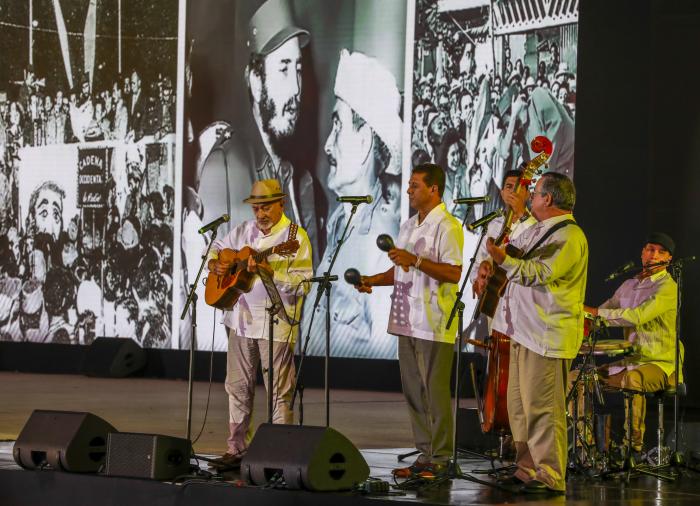
La reconfiguración de la Revolución Cubana como una revolución contra la civilización—Reflexiones sobre el Informe del Departamento de Estado: “Cuba: The Capital of 21st Century Communism” [Cuba: La Capital del Comunismo del Siglo XXI] (julio de 2026)


Foto crédito aquí


ENGLISH LANGUAGE VERSION HERE 


“To mistake Cuba’s poverty for harmlessness is to misunderstand the threat entirely. Its material weakness was never the measure of its danger. Its power was always ideological, subversive, and parasitic — and it has proven remarkably durable, outlasting the Soviet empire that helped build it and grafting itself onto every new enemy of the United States that has arisen since. Today it serves as the connective tissue of a broader anti-American coalition, a staging ground where the ambitions of Moscow, Beijing, and Tehran converge with the radical movements operating inside our own borders.”  

[Confundir la pobreza de Cuba con la inocuidad es malinterpretar completamente la amenaza. Su debilidad material nunca fue la medida de su peligro. Su poder siempre fue ideológico, subversivo y parasitario —y ha demostrado ser notablemente duradero, sobreviviendo al imperio soviético que ayudó a construirlo e injertándose en cada nuevo enemigo de Estados Unidos que ha surgido desde entonces. Hoy sirve como tejido conectivo de una coalición antiestadounidense más amplia, un terreno de operaciones donde convergen las ambiciones de Moscú, Pekín y Teherán con los movimientos radicales que operan dentro de nuestras propias fronteras.] (Cuba: The Capital of 21st Century Communism [Cuba: La Capital del Comunismo del Siglo XXI])

Pix credit here
La cita inicial de esta publicación refleja tanto la intensidad como, a veces, las anteojeras de una administración estadounidense que, a diferencia de las que la precedieron, se ha movilizado para atender con mayor vigor el “problema” de Cuba para Estados Unidos (sin incluir los esfuerzos de las administraciones Obama, que resultaron ser tanto torpes como demasiado tardíos, y a su manera tan ideológicamente ciegos (hacia la izquierda) como los esfuerzos actuales entre algunos que, al menos, se inclinan hacia errores (hacia la derecha)). Su título sugiere un descuido que es discursivamente potente dentro de la política estadounidense pero que también distorsiona de maneras cuyas consecuencias quizás no se han considerado plenamente. Cuba es ciertamente una capital del “Comunismo” Caribeño del siglo XXI y, como tal, el último vestigio real del modelo fracasado del sistema estatal marxista-leninista soviético europeo (capturando discursivamente también esa variopinta colección de teóricos del Hemisferio Occidental-Europa-MENA-África, compañeros de viaje y la habitual tropa de oportunistas políticos); pero difícilmente es la capital de los Estados marxista-leninistas o del Comunismo del siglo XXI, un título que en mi opinión se ha desplazado del centro soviético hacia el este de Asia.

Pero nada de eso importa para Estados Unidos, sin embargo, ante el problema que es Cuba… al menos para y desde la perspectiva de Estados Unidos. Y desde esa perspectiva es un problema; uno mayor y más trágico para su pueblo.

Aun así, este parece ser un momento al menos para lo que aparenta ser la actuación de acción, una actuación que se ha presentado como un proceso en cámara lenta, puntuado por crisis en otras partes del mundo que requieren atención, pero que persiste de todos modos. Con esos fines, el Departamento de Estado ha buscado reformular la narrativa sobre Cuba en Estados Unidos. Un paso en esa dirección es el Informe, Cuba: The Capital of 21st Century Communism [Cuba: La Capital del Comunismo del Siglo XXI], publicado en julio de 2026. Fue desarrollado en torno a una tesis central expuesta en el comunicado de prensa del Informe: “Cuba’s assault on the United States was never, at root, a quarrel over economic policy or sovereignty or even ownership of a particular territory. It was a revolution against Western civilization itself — waged, in part, via the novel and insidious method of persuading the children of the West to turn against their own inheritance.” [El asalto de Cuba contra Estados Unidos nunca fue, en su raíz, una disputa sobre política económica o soberanía ni siquiera sobre la posesión de un territorio en particular. Fue una revolución contra la civilización occidental misma —librada, en parte, mediante el novedoso e insidioso método de persuadir a los hijos de Occidente para que se volvieran contra su propia herencia.]

Cuba: The Capital of 21st Century Communism [Cuba: La Capital del Comunismo del Siglo XXI] es una extensa evaluación de seguridad nacional—de aproximadamente 100 páginas—que desarrolla una tesis general única: Cuba no es meramente un Estado caribeño pobre o en vías de fracaso, sino más bien un aparato integrado de inteligencia, subversión y guerra ideológica cuyo objetivo principal desde 1959 ha sido Estados Unidos. El informe no contiene un resumen ejecutivo etiquetado por separado, una sección formal de metodología ni un conjunto enumerado de recomendaciones. En su lugar, está organizado en capítulos históricos y temáticos que colectivamente presentan a Cuba como el “corazón palpitante” de una red revolucionaria global.

El Informe puede entenderse de manera más útil dentro del proyecto más amplio de la Administración Trump de caracterizar el activismo doméstico de izquierda como una forma de terrorismo con raíces extranjeras. En julio de 2026, el Secretario Rubio convocó una “Ministerial on the Resurgence of Political Terrorism” [Reunión Ministerial sobre el Resurgimiento del Terrorismo Político] en el Departamento de Estado—una conferencia explícitamente dedicada a la proposición de que la violencia política y el extremismo originados desde la izquierda constituyen una categoría distinta y resurgente de terrorismo que requiere una respuesta internacional coordinada. En sus declaraciones durante la conferencia, Rubio trazó líneas directas entre los movimientos revolucionarios extranjeros, las organizaciones radicales domésticas y lo que la administración enmarca como la corrupción ideológica de las instituciones democráticas occidentales por fuerzas hostiles a la civilización liberal. El informe sobre Cuba funciona como la base probatoria de un capítulo de esta campaña más amplia. Pero está claro que Cuba puede ser importante pero no es única. La solución al problema de Cuba deja sin resolver el problema mayor de la dialéctica política entre Estados y la integridad de los procesos políticos autóctonos en la democracia representativa liberal, y quizás irresoluble bajo las condiciones actuales. Eso resulta en política bastante útil.

Esta publicación introduce mi análisis crítico de Cuba: The Capital of 21st Century Communism [Cuba: La Capital del Comunismo del Siglo XXI], configurado en gran parte por mi propio trabajo. Ese informe, ¿La Revolución Contra la Civilización?: Un Análisis Crítico del Informe del Departamento de Estado de 2026 sobre Cuba, se presenta a continuación.

Mi “comunicado de prensa” ofrece una buena idea de lo que el informe más extenso elaborará:

Este nuevo análisis crítico examina el informe del Departamento de Estado de 2026 sobre Cuba—el relato más exhaustivo jamás publicado por el gobierno estadounidense sobre la subversión cubana—y concluye que, si bien sus afirmaciones fácticas sobre el espionaje cubano, las alianzas extranjeras y las redes de influencia están sustancialmente fundamentadas, su marco analítico es internamente circular, políticamente instrumental y peligrosamente incompleto. El análisis revela lo que el informe oculta: que el conflicto entre Estados Unidos y Cuba no es un asalto unidireccional, sino una dialéctica de sesenta y siete años de cambio de régimen mutuo en la que ambas partes han corrompido a la otra sin lograr transformarla. De manera más provocadora, el análisis identifica la función política más profunda del informe—no meramente catalogar las amenazas cubanas, sino caracterizar a la izquierda estadounidense como portadora sintomática de una infección ideológica extranjera, suministrando así el capítulo cubano de una narrativa más amplia sobre la corrupción de la democracia estadounidense. El retrato que el informe hace de Cuba como “less a nation-state than an all-encompassing intelligence and subversion operation” [menos un Estado-nación que una operación integral de inteligencia y subversión] es poderoso pero infalsificable; mi contrarretrato de un rígido partido-Estado leninista atrapado en un “estado estable de miseria” es más preciso analíticamente pero menos instrumentalizable políticamente. La imagen completa requiere sostener ambas perspectivas simultáneamente—y confrontar la incómoda posibilidad de que la política estadounidense pueda reforzar inadvertidamente el mismo sistema que dice oponerse. El análisis es lectura esencial para cualquier persona que busque comprender de qué se trata realmente la política cubana de la Administración Trump.

Sin embargo el calculo en EEUU ha cambiado: "For the first time in Cuba's history, Cuba lacks two things they've always relied on: an outside sponsor and the U.S.'s lack of attention on it as a top priority,' Rubio said. ["'Por primera vez en la historia de Cuba, el país carece de dos elementos de los que siempre había dependido: un patrocinador externo y el hecho de que Estados Unidos no lo considere una prioridad absoluta", dijo Rubio."] (Axios) 

Pix credit here

 La tabla de contenidos ofrece un indicio del alcance del análisis:

Tabla de Contenidos

1. Resumen ejecutivo para formuladores de políticas y lectores generales

2. Resumen del Informe del Departamento de Estado sobre Cuba

    —Estructura y afirmaciones principales

    —La estructura entrelazada: cómo las ocho partes forman un argumento único

    —Base de fuentes y metodología

3. Análisis crítico a la luz de la producción académica de Larry Catá Backer

4. Marco analítico: narrativa de seguridad vs. análisis ideológico

5. El problema de la explicación monocausal y la campaña de “terrorismo político”

6. La “mentalidad embarguista,” la constitución mutua y el estado estable de miseria

7. La cuestión de las misiones médicas y el trabajo en Cuba

8. Los derechos humanos como instrumento político

9. El tercermundismo: ¿arma o ideología?

10. El marco “America First” (Estados Unidos primero), la plantilla venezolana y la guerra contra las pandillas

11. Lo que el análisis omitió: el lado estadounidense del espejo

    —A. La corrupción del sistema estadounidense

    —B. La dialéctica del cambio de régimen mutuo

12. Lo que ambos relatos comparten—y lo que queda sin resolver

13. La dicotomía de caracterización: agudizada

14. La ambigüedad que persiste


Pix Credit here (Washington Post Op-Ed)

 El Informe del Departamento de Estado, Cuba: The Capital of 21st Century Communism [Cuba: La Capital del Comunismo del Siglo XXI], puede consultarse en línea AQUÍ. Mis Reflexiones sobre ese Informe, ¿La Revolución Contra la Civilización?: Un Análisis Crítico del Informe del Departamento de Estado de 2026 sobre Cuba, pueden consultarse AQUÍ y se presentan a continuación.


Thursday, August 13, 2026

The Recasting of the Cuban Revolution as a Revolution Against Civilization--Reflections on the State Department Report: "Cuba: The Capital of 21st Century Communism" (July 2026)


VERSIÓN EN ESPAÑOL AQUÍ 

To mistake Cuba's poverty for harmlessness is to misunderstand the threat entirely. Its material weakness was never the measure of its danger. Its power was always ideological, subversive, and parasitic – and it has proven remarkably durable, outlasting the Soviet empire that helped build it and grafting itself onto every new enemy of the United States that has arisen since. Today it serves as the connective tissue of a broader anti-American coalition, a staging ground where the ambitions of Moscow, Beijing, and Tehran converge with the radical movements operating inside our own borders. (Cuba: The Capital of 21st Century Communism)

Pix credit here (Castro and Khrushchev, 1960)
The opening quote of this post reflects both the intensity and sometimes the blinders, of an American Administration that has, in contradistinction to those that came before it, roused itself to more vigorously attend to the "problem" of Cuba for the United States (not including the Obama Administrations efforts which proved to be both ham handed, and far too late and in its own way as ideologically blind (to the left) as current efforts among some at least veers toward errors (to the right)). It's title suggests a carelessness that is discursively potent within American politics but is also distorting in ways the consequences of which may be have been fully considered. Cuba is certainly A capital of of 21st Century Caribbean "Communism" and as such the last real vestige of the failed model of Soviet European Marxist Leninist  state system (capturing discursively as well that motley collection of Western Hemispheric-European-MENA-Africa theorists, fellow travelers, and the usual crew of political grifters); but it is hardly the capital of Marxist-Leninist States or of 21st Century Communism, a title that in my view has drifted from the Soviet Center to East Asia.  

But none of that matters for the United States, though, in the face of the problem that is Cuba. . . at least for and from the perspective of the United States.  And from that perspective it is a problem; a larger and more tragic one for its people. 

Still, this does appear to be a time at least for what appears to be the performance of action, a performance has has appeared as a slow motion process, punctuated by crises in other parts of the world requiring attention, but persisting all the same.  To those ends, the State Department has sought top reframe the Cuba narrative in the U.S. One step in that direction is the Report, Cuba: The Capital of 21st Century Communism, published July 2026. It was developed around a core thesis set out in the Report's media release:  "Cuba’s assault on the United States was never, at root, a quarrel over economic policy or sovereignty or even ownership of a particular territory. It was a revolution against Western civilization itself — waged, in part, via the novel and insidious method of persuading the children of the West to turn against their own inheritance."

Cuba: The Capital of 21st Century Communism, is a lengthy national-security assessment—approximately 100 pages—that advances a single overarching thesis: Cuba is not merely a poor or failing Caribbean state but rather an integrated intelligence, subversion, and ideological-warfare apparatus whose primary target since 1959 has been the United States. The report does not contain a separately labeled executive summary, formal methodology section, or enumerated set of recommendations. Instead, it is organized into historical and thematic chapters that collectively present Cuba as the "beating heart" of a global revolutionary network.

Pix Credit here (Washington Post Op-Ed)
The Report may be most usefully understood understood within the Trump Administration's larger project of characterizing left-wing domestic activism as a form of terrorism with foreign roots. In July 2026, Secretary Rubio convened a "Ministerial on the Resurgence of Political Terrorism" at the State Department—a conference explicitly dedicated to the proposition that political violence and extremism originating from the left constitutes a distinct and resurgent category of terrorism requiring coordinated international response. In his remarks at the conference, Rubio drew direct lines between foreign revolutionary movements, domestic radical organizations, and what the administration frames as the ideological corruption of Western democratic institutions by forces hostile to liberal civilization. The Cuba report functions as the evidentiary foundation for one chapter of this larger campaign. But it is clear that Cuba may be important but is not unique. The solution to the problem of Cuba leaves the larger problem of political dialectic between states and the integrity of indigenous political processes in representative liberal democracy unresolved, and perhaps unresolvable under current conditions. That makes for quite useful politics.

This post introduces my critical analysis of Cuba: The Capital of 21st Century Communismshaped in large part by my own work. That report, The Revolution Against Civilization?: A Critical Analysis of the 2026 State Department Report on Cuba follows below. 

My "media release" gives one a good sense of what the larger report will elaborate:

This new critical analysis examines the 2026 State Department report on Cuba—the most comprehensive U.S. government account of Cuban subversion ever published— finds that while its factual claims about Cuban espionage, foreign alliances, and influence networks are substantially grounded, its analytical framework is internally circular, politically instrumental, and dangerously incomplete. The analysis reveals what the report obscures: that the U.S.-Cuba conflict is not a one-directional assault but a sixty-seven-year dialectic of mutual regime change in which both sides have corrupted the other while failing to transform it. Most provocatively, the analysis identifies the report's deepest political function—not merely cataloging Cuban threats, but characterizing the American left as the symptomatic carrier of a foreign ideological infection, thereby supplying the Cuba chapter of a broader narrative about the corruption of American democracy. The report's portrait of Cuba as "less a nation-state than an all-encompassing intelligence and subversion operation" is powerful but unfalsifiable; my counter-portrait of a rigid Leninist party-state trapped in a "stable state of misery" is more analytically precise but less politically actionable. The full picture requires holding both simultaneously—and confronting the uncomfortable possibility that American policy may inadvertently reinforce the very system it claims to oppose. The analysis is essential reading for anyone seeking to understand what the Trump Administration's Cuba policy is actually about.

And yet, the American calculus has changed: "For the first time in Cuba's history, Cuba lacks two things they've always relied on: an outside sponsor and the U.S.'s lack of attention on it as a top priority," Rubio said." (Axios) 

Pix credit here


 The table of contents provides a hint of the scope of analysis:

Table of Contents

1. Executive Summary for Policymakers and General Readers
2. Summary of the State Department Report on Cuba
    --Structure and Principal Claims
    --The Interlacing Structure: How the Eight Parts Form a Single Argument
    --Source Base and Methodology
3. Critical Analysis in Light of Larry Catá Backer's Scholarship
4. Analytical Framework: Security Narrative vs. Ideological Analysis
5. The Problem of Monocausal Explanation and the "Political Terrorism" Campaign
6. The "Embargo Mentality," Mutual Constitution, and the Stable State of Misery
7. The Question of Cuba's Medical Missions and Labor
8. Human Rights as Political Instrument
9. Third Worldism: Weapon or Ideology?
10. The "America First" Frame, the Venezuela Template, and the War on Gangs
11. What the Analysis Missed: The American Side of the Mirror
    --A. The Corruption of the American System
    --B. The Dialectic of Mutual Regime Change
12. What Both Accounts Share—and What Remains Unresolved
13. The Characterization Dichotomy: Sharpened
14. The Ambiguity That Persists


Pix credit here

The State Department Report, Cuba: The Capital of 21st Century Communism, may be accessed online HERE. My Reflections on that Report, The Revolution Against Civilization?: A Critical Analysis of the 2026 State Department Report on Cuba  may be accessed HERE and follows below.

Friday, August 07, 2026

President Trump Signs Two Executive Orders on Birth Tourism and Birthright Citizenship


Pix credit here


 On 6 August 2026, President Donald J. Trump signed two Executive Orders to continue to protect the meaning and value of American citizenship after Trump v. Barbara. The first Executive Order non-exhaustively identifies certain categories of children of aliens who are not entitled to birthright citizenship consistent with historical exceptions to birthright citizenship recognized by the Supreme Court in Barbara.
The second Executive Order delegates presidential authorities to the Secretary of State and Secretary of Homeland Security and directs them to halt the practice of birth tourism. (Fact Sheet: President Donald J. Trump Ends Birth Tourism and Protects the Meaning and Value of American Citizenship ).

In the Executive Order Ending Birth Tourism,  birth tourism is defined as  

(a) the entry of any foreign national into the United States via a nonimmigrant visa for the purpose of giving birth on American soil; or

(b) any effort by any foreign national to facilitate the entry of any foreign national into the United States via a nonimmigrant visa for the purpose of giving birth on American soil.

There is a complementary provision in the Executive Order,  Continuing to Protect the Meaning and Value of American Citizenship, which orders that 

no executive department or agency shall issue documents recognizing United States citizenship to, or accept documents issued by State, local, or other governments or authorities purporting to recognize United States citizenship regarding, persons when neither parent of that person is a citizen and any of the following applies:

* * * 

 (c)  either parent of that person engaged in a commercial transaction to purchase or access birthright citizenship for the person, or engaged in fraudulent activity to obtain citizenship, to include:

(i)   when the parent(s) of the person engage in a commercial transaction to ensure that the person’s mother is present in the United States, or a territory of the United States, to give birth; or

(ii)  when the parent(s) engage in a commercial transaction with a surrogate present in the United States, or a territory of the United States, to give birth;

 It is not clear what "commercial transaction" means. It could include the purpose to airplane tickets, or other means of transport. It could include only commercial transactions with facilitators.  The Trump Administration is likely to favor a very broad definition, one that will likely be the subject of litigation.

There is much more in both. The text of the two Executive Orders and the Fact Sheet follow below. News media commentary here, here, here and here. A 2022 Senate Minority Report on Birth Tourism (BIRTH TOURISM IN THE UNITED STATES MINORITY STAFF REPORT COMMITTEE ON HOMELAND SECURITY AND GOVERNMENTAL AFFAIRS UNITED STATES SENATE) may be accessed here. The text of the Barring American Citizenship by Keeping Out Foreign Fraudsters (BACK OFF) Act (May 2026) is available HERE.

Monday, July 27, 2026

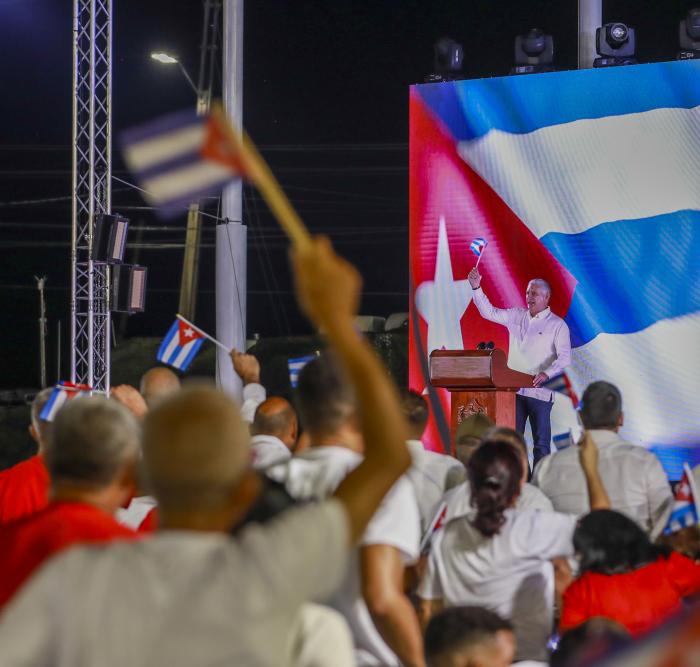
Reflexiones sobre el pathos recursivo: El discurso del 26 de julio del Primer Secretario del Partido Comunista Cubano, Miguel Díaz-Canel: «Que cada amanecer nos encuentre en pie de lucha» [May Every Dawn Find Us Ready to Fight]


ENGLISH LANGUAGE VERSION HERE

«Queridos pinareños: reciban este 26 de Julio, el cariño y mi reconocimiento por haber ganado, con su esfuerzo, consagración a la causa revolucionaria y trabajo creador, el gran honor de ser la sede del acto central por el 73 aniversario del asalto a los cuarteles Moncada y Carlos Manuel de Céspedes, Día de la Rebeldía Nacional. Un fuerte abrazo a todos, Raúl Castro Ruz».[“Dear residents of Pinar del Río: on this July 26th, receive my affection and appreciation for having earned, through your effort, dedication to the revolutionary cause, and creative work, the great honor of hosting the central event for the 73rd anniversary of the assault on the Moncada and Carlos Manuel de Céspedes barracks, National Rebellion Day. A big hug to all, Raúl Castro Ruz.”]
Con ese sentido mensaje del Líder al frente de la Revolución, General de Ejército Raúl Castro Ruz, inició su discurso en el Acto Central Nacional por el 26 de Julio, el Primer Secretario del Comité Central del Partido y Presidente de la República, Miguel Díaz-Canel Bermúdez. [With that heartfelt message from the Leader at the head of the Revolution, Army General Raúl Castro Ruz, the First Secretary of the Central Committee of the Party and President of the Republic, Miguel Díaz-Canel Bermúdez, began his speech at the National Central Act for July 26th.] (Address of Diaz Canel on 26 July Anniversary)

 Así comienza la cobertura de lo que en su día fue una conmemoración mucho más robusta y, vista desde la perspectiva de lo que terminó siendo la revolución militar de 1959, gloriosa, del inicio de lo que se convertiría en el período revolucionario de la historia cubana contemporánea. Su punto culminante, como de costumbre, es un discurso más bien largo pronunciado por un líder de la nomenklatura, ocupando un espacio que durante décadas ocuparon primero Fidel y luego Raúl Castro. Este año las conmemoraciones son menos gloriosas y se producen en condiciones no solo de crisis interna, sino también de una certeza mucho mayor de que la presión externa bien podría forzar un cambio significativo en el carácter y el rumbo de la gloriosa revolución cuyo inicio se conmemora tradicionalmente el 26 de julio.

Hace muchos años, en un ensayo que titulé Ciudades Prohibidas (15 de octubre de 2008), reflexioné sobre los espacios semióticos de los espacios recursivos y su influencia corruptora en el curso de la vida de los imperios, incluso los pequeños, como el de Cuba. Si bien el objeto de aquel ensayo eran las manifestaciones físicas de espacios físicos que primero manifiestan la gloria, luego se convierten en prisiones y después forman una barrera que separa la realidad circundante de los habitantes de sus grandes espacios. Y sin embargo, los espacios ideológicos pueden ser tan asfixiantes como los espacios interiores de la Ciudad Prohibida, de Versalles y del Palacio de Topkapi. Señalé entonces:

Y ahí radica la perversa ironía de los grandes espacios. Lo que parece maximizar la expresión del poder hacia afuera, del gobernante hacia los súbditos, perversamente también actúa en contra de ese poder. Estos palacios son, en efecto, aislados, remotos, inaccesibles. Grandes extensiones de tierra y edificaciones deliberadamente aisladas de aquellos sometidos al poder de sus ocupantes. Y los habitantes, del más al menos poderoso, están tan aislados como la arquitectura dentro de la cual transcurren sus vidas. Y ahí está el problema. Se trata de un espacio autorreferencial, y sus habitantes terminan reflejando cada vez más esa orientación de su entorno. Aislados en su poder, los habitantes de estos palacios habitan un pequeño mundo de su propia creación. Dependen de otros para obtener información sobre el mundo exterior que controlan. Y tienen poca idea de las condiciones de las poblaciones que dependen de ellos: ¿por qué habrían de cultivar tal idea, si la noción de su posición frente a los súbditos es tan sólida como el edificio que sirve de expresión física de esa posición? Llevados de una ceremonia a otra, funcionan como engranajes de una máquina que produce la apariencia del poder mientras se alejan cada vez más de sus fuentes. Los más poderosos terminan reducidos a un estado de dependencia total, incapaces de funcionar salvo en su papel dentro de la producción de la apariencia del poder. Es más, en una etapa avanzada, hasta los más poderosos quedan reducidos a metáfora. Son tan cautivos como gobernantes.

No sorprende entonces que quienes ejercen tan vasto poder oficial desde estos lugares terminen siendo esencialmente irrelevantes en la vida de los gobernados: figuras casi míticas que pueden descartarse cuando resultan inconvenientes o cuando la población sometida ha seguido adelante (sin ellos). O se convierten en fuentes de un poder arbitrario y que no responde a nadie. Gobernar dentro de una arquitectura que magnifica la experiencia autorreferencial del poder hace que su expresión fuera de los muros del palacio quede desconectada. Y cuanto más desconectada esté la expresión del mando, mayor será la tendencia de la población a reaccionar mal. Esa mala reacción, a su vez, se observa con alarma y sospecha, y puede reforzar la tendencia del palacio a buscar con más ahínco la protección de sus muros y de las visiones que allí se generan. El palacio se convierte tanto en refugio como en expresión hacia afuera del poder. Y así, la dinámica de la decadencia queda bien mezclada en la argamasa de los edificios palaciegos. Lo que pudo haber comenzado como la expresión del poder proyectado hacia afuera por una estructura de gobierno que concibió el palacio para reflejar la fuerza de esa expresión de voluntad política, se convierte en su opuesto: un lugar al que el poder se repliega para protegerse del exterior y que se proyecta hacia adentro, hasta que queda poco que gobernar salvo los propios recintos del palacio.

El discurso del Primer Secretario del 26 de julio de 2026 es, en cierto sentido, un estudio de la semiótica del pathos que inevitablemente producen los sistemas cerrados que no tienen adónde ir salvo dar vueltas sobre sí mismos, no porque no puedan proceder de otra manera, sino porque cognitivamente eso se ha vuelto "imposible" sin perderse a sí mismos en el "otro" autoconstruido. Podría decirse, entonces, que las declaraciones exhiben características importantes de una "Ciudad Prohibida" discursiva, un espacio discursivo que solo se ve a sí mismo, que es enteramente recursivo, y que es incapaz de tender puentes entre sus propios espacios interiores y lo que ocurre a su alrededor. Cuanto mayor es la brecha, con más fuerza se aferran quienes están dentro de estos palacios a la ilusión del poder, de la gloria, y a la sensación de que desde dentro de sus muros aún pueden proyectar poder o autoridad, incluso cuando el alcance de esa autoridad se reduce al interior de esos espacios.

Esa es la lección del discurso del Primer Secretario, uno servido como si fuera un mitin de ánimo (pep rally) antes de un partido de fútbol americano en una gran universidad estatal de Estados Unidos, con la certeza de que los jugadores no saldrán con nada que se parezca a una victoria. El discurso del Primer Secretario Díaz-Canel en el 73 aniversario del asalto al Cuartel Moncada (Día de la Rebeldía Nacional en Pinar del Río) giró en torno a tres temas centrales: la continuidad histórica, las severas crisis internas y una retórica antimperialista agresiva. Son temas que se han convertido en tropos discursivos finamente afinados, que se repiten con regularidad desde la década de 1960, pero ahora actualizados para la crisis actual.

Encuadre ideológico e hitos históricos simbólicos. Presentó los desafíos actuales de Cuba como un "nuevo Moncada": una lucha que exige resistencia para alimentar la eventual recuperación. Vinculó el acto con aniversarios significativos: el próximo centenario del natalicio de Fidel Castro (nacido en 1926) y el 95 cumpleaños de Raúl Castro (quien envió un saludo inicial). Y honró a figuras históricas, como el Comandante Ramiro Valdés, a la vez que elogió a la juventud llamada a liderar el desarrollo local. 

Reconocimiento de severas crisis internas. El Primer Secretario abordó directamente el deterioro de las condiciones socioeconómicas: apagones generalizados, estancamiento industrial y los frecuentes fallos del Sistema Electroenergético Nacional (SEN). Destacó escaseces críticas en el sector de la salud, señalando más de 100,000 cirugías demoradas, la falta de tratamientos oncológicos de primera línea y un salto en la tasa nacional de mortalidad infantil de 4.5 a 9.3 por cada 1,000 nacidos vivos (aunque señaló que Pinar del Río logró mantener su tasa más baja, en 4.8).  

Responsabilización del embargo estadounidense y las presiones externas. La semiótica crítica del Lebenswelt cubano es que Cuba existe en y como la sombra de los Estados Unidos: sus victorias se logran a pesar de los Estados Unidos, sus desafíos y derrotas son el resultado directo de las maquinaciones estadounidenses. Así, el Primer Secretario atribuyó el colapso económico, la escasez de combustible y las crisis médicas enteramente a un "genocidio fríamente calculado" y a una "política de máximo estrangulamiento económico" por parte de Estados Unidos. Denunció las sanciones internacionales dirigidas contra funcionarios de salud cubanos, envíos de combustible e inversiones extranjeras, e hizo un llamado a los actores globales para que no se conviertan en "cómplices". 

 Logros locales y llamado a la acción. Como es costumbre en estos discursos, y ciertamente desde 2008, el Primer Secretario se centró en cuestiones operativas envueltas en objetivos ideológicos. Elogió los esfuerzos de recuperación de Pinar del Río tras el huracán Ian (2022), su producción de tabaco y arroz, y su transición hacia las energías renovables (por ejemplo, 87 MW en nuevos parques solares). Y concluyó con un llamado a la autosuficiencia, la sustitución de importaciones y la participación ciudadana activa bajo la consigna: "Que cada amanecer nos encuentre en pie de guerra".


Un análisis político directo resulta bastante sencillo: el discurso del Primer Secretario refleja a un régimen que intenta mantener su legitimidad política en medio de una de las crisis económicas y sociales más agudas que ha vivido Cuba desde el "Período Especial" de los años noventa. La mención explícita en el discurso de apagones de más de 24 horas, colapsos de la red del SEN y severa escasez de medicamentos subraya cuán ineludibles se han vuelto estos problemas en el discurso nacional. Y sin embargo, la realidad ineludible es esta: las envejecidas termoeléctricas de Cuba y los severos déficits en la importación de combustible han paralizado la vida cotidiana y la producción industrial. Al citar abiertamente el aumento de la mortalidad infantil y las cirugías canceladas, la dirigencia reconoce la profundidad del malestar público —probablemente para adelantarse a la indignación popular— mientras traslada el 100% de la culpa a las sanciones extranjeras, en lugar de a la mala gestión interna sistémica o a las fallas de la planificación central agrícola.

El fuerte énfasis en el centenario de Fidel Castro (1926-2026) sirve como una herramienta retórica vital para el gobernante Partido Comunista de Cuba (PCC). También parece ser una especie de estrategia discursiva de continuidad: a medida que la generación de la Revolución de 1959 (la "generación histórica") va desapareciendo, la dirigencia posterior a los Castro, encabezada por Díaz-Canel, enfrenta una crisis de legitimidad histórica. Invocar el legado de Fidel y el respaldo personal de Raúl Castro es un intento de reavivar el sentimiento nacionalista, reforzar la disciplina partidista y apelar a la juventud para que se mantenga leal en tiempos de extrema dificultad.

El alineamiento geopolítico y la retórica antimperialista son a la vez trillados y probablemente reconfortantes para la nomenklatura y para otros sectores que tienen mucho que perder ante una rectificación mayor del sistema. El comentario geopolítico más amplio del Primer Secretario ("Primero fue Gaza, el Líbano, Irán; hoy es Cuba") busca posicionar a la isla dentro de un bloque antihegemónico global más amplio. También evoca las formas tradicionales de contraofensiva diplomática cubana que en el pasado han funcionado relativamente bien: ante el aislamiento y las estrictas restricciones financieras impuestas por Washington, La Habana sigue apoyándose en gran medida en las redes de solidaridad internacional, en el voto antibloqueo de la Asamblea General de la ONU y en los vínculos estratégicos con socios no occidentales para mantener a flote su economía. Presentar el embargo como un problema global de "derechos humanos" sigue siendo la principal palanca diplomática de Cuba.

El condimento discursivo casi siempre es local, y cada vez más pequeño: la respuesta local, a cargo de la dirigente provincial Yamilé Ramos Cordero, destacó esfuerzos pragmáticos como la adopción de energía fotovoltaica (solar) y cadenas locales de suministro de alimentos. Esto pone de relieve el doble enfoque del gobierno: mantener en la cúpula un discurso político antimperialista rígido, mientras se exhorta a las provincias a adoptar medidas de supervivencia descentralizadas —como energía renovable fuera de la red y las iniciativas agrícolas locales— para sobrevivir a la crisis inmediata.

Nada de esto resulta particularmente interesante, salvo como noticia y como evidencia del estado avanzado del síndrome de la "Ciudad Prohibida". Mucho más interesante me resulta un análisis a través del lente de los signos, la creación de mitos y la construcción narrativa. Hemos llegado a entender que, en la semiótica jurídica, los textos no se limitan a comunicar información; organizan sistemas de signos que construyen y validan la realidad. En este discurso, el aparato estatal cubano utiliza marcadores semióticos para gestionar la crisis pública y reforzar su legitimidad institucional.

[Significante / Ritual] [Significado / Sentido] Discurso del 26 de julio ──────────► Revolución continua (sin transición) "El Moncada" ──────────► Sufrimiento legítimo / lucha necesaria El "enemigo externo" ──────────► Exoneración de los fracasos de la política interna

El significante "Moncada": el sufrimiento recontado como deber revolucionario. Ya he señalado antes que los sistemas estatales marxista-leninistas dependen en gran medida de mitos históricos para transformar las penurias materiales en obligaciones morales. Ese ha sido ciertamente el caso de Cuba, de una manera particularmente distintiva (véase, por ejemplo, From Hatuey to Che: Indigenous Cuba Without Indians and the U.N. Declaration on the Rights of Indigenous Peoples, 33(1) American Indian Law Review 201-238 (2008)). La metáfora: el Primer Secretario presenta el colapso actual de Cuba (apagones, déficits de combustible, escasez médica) no como fallos administrativos, sino como un "nuevo Moncada". La función semiótica: el histórico asalto al Moncada de 1953 fue una derrota táctica que sentó las bases de una eventual victoria estratégica. Al mapear semióticamente la parálisis económica de 2026 sobre el Moncada, el Estado resignifica el sufrimiento popular como sacrificio revolucionario. La privación se convierte, de motivo de protesta, en prueba de resistencia patriótica.

Anclajes textuales estructurales: la autoridad de la "vanguardia". El discurso no se abre con las palabras del propio Díaz-Canel, sino con un mensaje del General Raúl Castro Ruz, quien a su vez invoca a Fidel Castro Ruz. Esto evidencia un hilo común en la cadena de bloques de la autoridad. En el marxismo-leninismo cubano, esa cadena de bloques debe partir del nodo central de la autoridad: la legitimidad fluye de manera lineal y secuencial: el Líder de la Vanguardia, el Partido, el aparato del Estado (y en Cuba, también el estamento militar). El Primer Secretario parece actuar, o servir, como un operador administrativo cuya legitimidad depende enteramente de hacer referencia a los "signos" fundacionales (Raúl y Fidel). Esto refuerza la idea de que el Partido Comunista (PCC) sigue siendo el centro moral único e ininterrumpido de la nación, aunque uno que ahora se personifica.

No obstante, esa secuencia incluye un bucle de retroalimentación masiva (véase aquí): una retórica pública dirigida que impone el alineamiento entre la ciudadanía y las directrices del Partido. Hacia el final del discurso, Díaz-Canel traslada la responsabilidad de vuelta a la población: "El llamado ahora es a la acción... a buscar alternativas con audacia y creatividad... a confiar en nuestra propia fuerza." El Estado fija los límites ideológicos, pero exige que las comunidades locales (como Pinar del Río) se autoorganicen para resolver problemas prácticos (por ejemplo, construir parques solares, desarrollar la agricultura local) dentro de esas rígidas líneas políticas. Esto es vino viejo en botellas todavía más viejas. Pero sigue siendo interesante observar cómo su poder discursivo se ha ido diluyendo. La cohesión, por supuesto, es un componente externo crítico en el marxismo caribeño. El embargo de Estados Unidos funciona no solo como crítica económica, sino como un mecanismo institucional esencial para la cohesión interna. Al atribuir las fallas del sistema electroenergético (SEN), las cirugías canceladas y el aumento de la mortalidad infantil directamente al "estrangulamiento máximo" de Washington, el aparato estatal protege sus propios modelos de planificación económica de toda crítica interna. Reconocer fallas estructurales internas arriesga invalidar el propio modelo socialista. Por lo tanto, todo desglose sistémico interno debe enmarcarse, semiótica y teóricamente, como un acto de guerra extranjero.

Visto a través de este lente teórico, el discurso del presidente Díaz-Canel es menos un plan económico que un ejercicio de autopreservación estructural. Mediante signos semióticos cuidadosamente gestionados —invocando a la jerarquía revolucionaria, ya fallecida y envejecida, reencuadrando la pobreza aguda como una "batalla" activa, y depositando toda culpa a los pies de un antagonista externo— el Estado-Partido cubano busca racionalizar su continuo monopolio del poder en medio de un severo colapso material.

La pregunta ahora es algo mucho más importante: ¿será este el último discurso del 26 de julio que los líderes cubanos pronuncien bajo el actual conjunto de realidades en la construcción ideológica y la puesta en práctica del modelo político-económico cubano tal como está constituido hoy? Esa es la única pregunta que debería haberse abordado.

 Y ese último comentario, mordaz, en forma de pregunta, apunta a una tensión que al principio dudé en enfrentar, pero que ahora sí voy a enfrentar. La pregunta retórica final del ensayo —si este podría ser "el último discurso del 26 de julio" pronunciado bajo el actual modelo ideológico y político-económico— trata implícitamente la profundidad de la crisis reconocida (apagones, mortalidad infantil, cirugías canceladas) como evidencia de que el sistema se acerca a algún tipo de punto de quiebre. Es un punto de quiebre que en efecto podría desembocar en una ruptura, con un elemento nuevo: la presión sostenida de Estados Unidos. Pero esto choca con mi propia tesis sobre la peculiaridad de la situación cubana y la resiliencia de su praxis marxista-leninista caribeña. En "Cuba and the Constitution of a Stable State of Misery: Ideology, Economic Policy, and Popular Discipline", argumenté explícitamente que lo que parece ser inestabilidad en el modelo político cubano en realidad "se está convirtiendo en un estado estable de miseria", en el cual el control se mantiene "sobre la base de una realidad de miseria lo suficientemente desafiante como para mantener a la población bien controlada y al sistema político razonablemente bien ordenado". Sugerí que esta lectura, además, invierte la interpretación convencional de la protesta popular, tratando el estallido popular periódico no como una señal prerrevolucionaria del colapso del régimen, sino como un mecanismo disciplinario que el propio Estado utiliza para calibrar los límites externos de la miseria tolerable. Si esa tesis se sostiene, mi insinuación final aquí, la de que podría haber un ocaso para el sistema actual, la pregunta con la que cierra el ensayo, sugiere una respuesta, y una respuesta negativa: el reconocimiento de la crisis en el discurso de Díaz-Canel no es evidencia de una ruptura inminente, sino precisamente el tipo de admisión gestionada y cuantificada de las penurias (100,000 cirugías demoradas, una tasa de mortalidad infantil que sube a 9.3 por cada 1,000) que un modelo de "estado estable de miseria" predeciría que el régimen haría abiertamente, como parte de sostener el equilibrio, y no de socavarlo. El punto de inflexión de ese cálculo se desplaza entonces de dentro de Cuba hacia sus irritantes externos, y en particular, hacia Estados Unidos.

El texto del discurso, en el español original y en traducción al inglés, aparece a continuación.

Sunday, July 26, 2026

Reflections on Recursive Pathos: The 26 of July Speech of Cuban Commuinist Party First Secretary Miguel Díaz-Canel: «Que cada amanecer nos encuentre en pie de lucha» [“May every dawn find us ready to fight”]

Pix credit Granma here

 VERSION EN ESPAÑOL AQUÍ

«Queridos pinareños: reciban este 26 de Julio, el cariño y mi reconocimiento por haber ganado, con su esfuerzo, consagración a la causa revolucionaria y trabajo creador, el gran honor de ser la sede del acto central por el 73 aniversario del asalto a los cuarteles Moncada y Carlos Manuel de Céspedes, Día de la Rebeldía Nacional. Un fuerte abrazo a todos, Raúl Castro Ruz».[“Dear residents of Pinar del Río: on this July 26th, receive my affection and appreciation for having earned, through your effort, dedication to the revolutionary cause, and creative work, the great honor of hosting the central event for the 73rd anniversary of the assault on the Moncada and Carlos Manuel de Céspedes barracks, National Rebellion Day. A big hug to all, Raúl Castro Ruz.”]
Con ese sentido mensaje del Líder al frente de la Revolución, General de Ejército Raúl Castro Ruz, inició su discurso en el Acto Central Nacional por el 26 de Julio, el Primer Secretario del Comité Central del Partido y Presidente de la República, Miguel Díaz-Canel Bermúdez. [With that heartfelt message from the Leader at the head of the Revolution, Army General Raúl Castro Ruz, the First Secretary of the Central Committee of the Party and President of the Republic, Miguel Díaz-Canel Bermúdez, began his speech at the National Central Act for July 26th.] (Address of Diaz Canel on 26 July Anniversary)

So begins the coverage of what had once been a much more robust and from the perspective of what became of the military revolution of 1959, glorious commemoration of the start of what would become the revolutionary period of contemporary Cuban history.  It's high point, as usual is a longhish speech by a leader of the nomenklatura, taking up a space once occupied for decades first by Fidel and then Raúl Castro. This year the commemorations are less glorious and delivered under conditions not just of internal crisis but also of a much greater certainty that external pressure may well force significant change to the character and direction of the glorious revolution the start of which is traditionally observed on 26 July. 

Many years ago in an essay I entitled Forbidden Cities (15 October 2008), I considered the semiotic spaces of recursive spaces and their corrupting influence on the course of the life of empire--even small ones like that of Cuba. While the object in that essay were the physical manifestations of physical spaces that first manifest glory, then become prisons and then form a barrier that separates the reality around them from the inhabitants of its gramd spaces. And yet ideological spaces can be as confining as the interior spaces of the Forbidden City, of Versailles and of the Topkapi Palace. I noted: 

And there lies the perverse irony of grand spaces. What appears to maximize the expression of power outward form ruler to subjects, perversely enough, also works against that power. These palaces are indeed isolated, remote, inaccessible. Great heaps of land and buildings that are deliberately cut off from those subject to the power of the occupants. And the inhabitants from most to least powerful, is as isolated as the architecture within which their lives are played out. And that is the problem. This is a self-referencing space, and its inhabitants increasingly come to reflect that orientation of their environment. Cut off in their power, the inhabitants of these palaces inhabit a small world of their own making. They are dependent on others for information about the outside world they control. And they little idea of the conditions of the dependent populations—why should they cultivate any such idea when the idea of their position in relation to subject is as solid as the building that serves as its physical expression? Trundled about from one ceremony to another, they serve as cogs of a machine that produces the appearance of power while growing more and more remote from its sources. The most powerful eventually are reduced to a state of ultimate dependence—unable to function except in their roles in the production of power’s appearance. Indeed, in an advanced stage, even the most powerful are reduced to metaphor. They are as much captive as ruler.

It is then hardly surprising that the people wielding such vast official power from these places eventually became essentially irrelevant in the lives of those governed—almost mythic figures that could be discarded when inconvenient or when the subject population had moved on (without them). Or they become sources of arbitrary and non responsive power. Ruling within an architecture that magnifies the self-referencing experience of power makes its expression outside the palace walls disconnected. And the more disconnected the expression of rule, the greater the tendency to react badly in the population. That bad reaction, in turn, is viewed with alarm and suspicion and might reinforce the tendency of the palace to seek more intently for the protection of its walls and the views generated therein. The palace becomes a refuge as well as an outward expression of power. And thus is the dynamic of decay well mixed in the mortar of the palace buildings. What might have started out as the expression of power projected outward by a ruling structure that meant the palace to reflect the strength of that expression of political will becomes its opposite—a place to which power retreats for protection against the outside and is projected inward, until there is little left to rule but the precincts of the palace itself. 

The First Secretary's speech for 26 July 2026  is, in a sense, a study in the semiotics of the pathos inevitably produced by closed systems that have nowhere to go but round and round, not because they can't proceed differently but because cognitively that has become "impossible" without losing themselves to the self constructed "other." The remarks, then, might be said to exhibit important characteristics of a discursive "Forbidden City", a discursive space that sees only itself, that is entirely recursive, and that is incapable of bridging its own interior spaces with what is going on around them. The larger the gap the harder those within these palaces grasp at the illusion of power, of glory, and of the sense that from within its walls they might still project power or authority, even as the scope of that authority shrinks down to the interior of those spaces. 

That is the lesson of the First Secretary's Speech, one serve dup like a pep rally at a large State university in the United States before a football game the certainty of which is that the players will not emerge with anything resembling victory. First Secretary Díaz-Canel’s address at the 73rd Anniversary of the Moncada Barracks Assault (National Rebellion Day in Pinar del Río) centered on three core themes: historical continuity, severe domestic crises, and aggressive anti-imperialist rhetoric. These are themes that have become finely tuned discursive tropes that have recurred with regularity since the 19660s, but now updated for the current crisis. 


Ideological Framing & Historical Symbolic Milestones. He framed Cuba's present challenges as a "new Moncada"—a struggle requiring resistance to fuel eventual recovery. Hel linked the event to significant anniversaries: the upcoming centenary of Fidel Castro (born 1926) and the 95th birthday of Raúl Castro (who sent an opening greeting). And he honored historical figures, such as Commander Ramiro Valdés, while praising youth to lead local development.

Acknowledgment of Severe Domestic Crises. The First Secretary directly addressed the deteriorating socio-economic conditions: widespread blackouts, industrial stagnation, and the frequent failures of the National Electric System (SEN).  He ighlighted critical shortages in the healthcare sector, pointing to over 100,000 delayed surgeries, lack of first-line cancer treatments, and a spike in the national infant mortality rate from 4.5 to 9.3 per 1,000 live births (while noting Pinar del Río managed to keep its rate lower at 4.8).

Blame on the U.S. Embargo & External Pressuresd. The critical semiotics of the Cuban Lebenswelt is that Cuba exists in and as the shadow of the UINited States; its victories are achievesd despite the United States, its challenges and defeats are the direct result of the machinations of the U.S. Thus, the First Secretary attributed the economic collapse, fuel shortages, and medical crises entirely to a "coldly calculated genocide" and a "policy of maximum economic strangulation" by the United States. He dDenounced international sanctions targeting Cuban health officials, fuel shipments, and foreign investments, calling on global actors not to be "accomplices."

Local Achievements & Call to Action. As is customary in these speeches, andcertainly since 2008, the First Secretary focused on operaiotnal issues wrapped around ideologocal objecytioves. He praised Pinar del Río’s recovery efforts following Hurricane Ian (2022), its tobacco and rice production, and its transition toward renewable energy (e.g., 87 MW in new solar parks). And he concluded with a call for self-reliance, import substitution, and active civil participation under the rally cry: "May every dawn find us on a war footing."

A straightforard political analysis is fairly simple to make: The First Secretary's address reflects a regime attempting to maintain political legitimacy amidst one of the most acute economic and social crises in Cuba since the 1990s "Special Period." The speech’s explicit mention of 24+ hour blackouts, SEN grid collapses, and severe medicine shortages underscores how unavoidable these issues have become in national discourse. And yet the unavoidable reality: Cuba’s aging thermoelectric plants and severe fuel import deficits have paralyzed everyday life and manufacturing. By openly citing rising infant mortality rates and cancelled surgeries, the leadership acknowledges the depth of public distress—likely to pre-empt public outrage—while shifting 100% of the blame onto foreign sanctions rather than systemic domestic mismanagement or agricultural central planning flaws.

The heavy emphasis on Fidel Castro’s Centenary (1926–2026) serves as a vital rhetorical tool for the ruling Cuban Communist Party (PCC). It also appears to be a sort of discursive contionuity strategy: As the generation of the 1959 Revolution (the "historic generation") ages out, the post-Castro leadership under Díaz-Canel faces a crisis of historical legitimacy. Invoking Fidel's legacy and Raúl Castro’s personal endorsement is an attempt to rally nationalist sentiment, enforce party discipline, and appeal to the youth to remain loyal during times of extreme hardship.

The geopolitical alignment & anti-imperialist rhetoric is both well worn and likely comfortong for the nomenklatura and other elements with lots ot lose in a major system rectification. The First Secretary's broader geopolitical commentary ("First it was Gaza, Lebanon, Iran; today it is Cuba") aims to position the island within a wider global anti-hegemonic bloc. It also evokes the traditional Cuban forms of diplomatic counter-offensive that works relatively well in the past: Facing isolation and tight financial restrictions from Washington, Havana continues to rely heavily on international solidarity networks, the UN General Assembly anti-blockade vote, and strategic ties with non-Western partners to keep its economy afloat. Framing the embargo as a global "human rights issue" remains Cuba's primary diplomatic lever.

The discursive spice is almost always local, and increasingly small: The local response delivered by provincial leader Yamilé Ramos Cordero highlighted pragmatic efforts like photovoltaic (solar) energy adoption and localized food supply chains. This highlights the government's dual approach: maintaining rigid anti-imperialist political discourse at the top, while urging local provinces to decentralized survival measures—such as off-grid renewable energy and local agricultural initiatives—to survive the immediate crisis.

None of this is particularly interesting other than as reporting and other than as evidencing the advanced state of "Forbidden City" syndrome.  Far more interesting to me is an analysis through the lens of signs, myth-making, and narrative construction. We have come to understand that in legal semiotics, texts do not merely communicate information; they organize sign systems that construct and validate reality. In this speech, the Cuban state apparatus uses semiotic markers to manage public crisis and reinforce its institutional legitimacy.

[Signifier / Ritual]                                 [Signified / Meaning]

July 26th Address ──────────► Continuous Revolution (No transition)

"El Moncada" ──────────► Legitimate Suffering / Necessary Struggle

The "External Enemy" ──────────► Exoneration of Internal Policy Failures
The "Moncada" Signifier: Retelling Suffering as Revolutionary Duty. I have noted before that Marxist-Leninist state systems rely heavily on historical myths to transform material hardship into moral obligations. That has certainly been the case for Cuba in a partoicularly distinctive way (See, e.g., From Hatuey to Che: Indigenous Cuba Without Indians and the U.N. Declaration on the Rights of Indigenous Peoples, 33(1) American Indian Law Review 201-238 (2008)). The Metaphor: the First Secretary frames Cuba’s current collapse (blackouts, fuel deficits, medical shortages) not as administrative failures, but as a "new Moncada." The Semiotic Function: The historical Moncada assault of 1953 was a tactical defeat that laid the groundwork for eventual strategic victory. By semiotically mapping 2026's economic paralysis onto Moncada, the state re-signifies popular suffering into revolutionary sacrifice. Deprivation is converted from a reason to protest into proof of patriotic endurance.

Structural Textual Anchors: The Authority of the "Vanguard". The speech opens not with Díaz-Canel’s own words, but with a message from General Raúl Castro Ruz, who himself invokes Fidel Castro Ruz. That evidences a common thread in authority block chain. In Cuban Marxist Leninism that block chain must proceed from the core node of authority--legitimacy flows linearly and sequentially: Vanguard Leader--The Party --The State Apparatus (and in Cuba, the military establishment as well.  The First Secretary appears to act or serve  as an administrative operator whose legitimacy depends entirely on referencing the foundational "signs" (Raúl and Fidel). This reinforces that the Communist Party (PCC) remains the singular, uninterrupted moral center of the nation; but one that is personified. 

Nonetheless, that sequencing includes a mass feedback loop (see here): targeted public rhetoric enforces  alignment between the citizenry and party directives. Toward the end of the address, Díaz-Canel shifts responsibility back onto the population: "The call now is to action... to seek alternatives with audacia and creativity... to rely on our own strength." The state sets the ideological boundaries, but demands that local communities (like Pinar del Río) self-organize to solve practical problems (e.g., building solar parks, localized farming) within those rigid political lines. This is old wine in older bottles. But still it is interesting to watch its discursove power now watered down. 

Cohesion, of course, as a critical external component in Caribbean Marxism. The United States embargo not just as an economic critique, but as an essential institutional mechanism for internal cohesion. By attributing  the electro-energy system (SEN) failures, canceled surgeries, and rising infant mortality directly to Washington's "maximum strangulation," the state apparatus shields its own economic planning models from internal critique. Acknowledging internal structural flaws risks invalidating the socialist model itself. Therefore, all internal systemic breakdowns must semiotically and theoretically be framed as foreign acts of war.

Viewed through this theoretical lens, President Díaz-Canel’s address is less an economic blueprint and more an exercise in structural self-preservation. Through carefully managed semiotic signs—invoking the dead and aging revolutionary hierarchy, re-framing acute poverty as an active "battle," and laying all failure at the feet of an external antagonist—the Cuban state-party seeks to rationalize its continued monopoly on power amidst severe material collapse. 

The question is now something far more important --is this the last 26 of July speech that Cuban leaders will deliver under  the current set of realities in the ideological construction and operationalization fo the Cuban political-economic model as it is now constituted? That is the one question that ought to have been addressed. 

And that last, mordant, comment in the form of a question suggests a tension that I was initially hestant to confront but now will.  The essay's final rhetorical question — whether this might be "the last 26 of July speech" delivered under the current ideological and political-economic model — implicitly treats the depth of the acknowledged crisis (blackouts, infant mortality, cancelled surgeries) as evidence that the system is approaching some kind of breaking point. It is a breaking point that can actually lead to rupture with a new element, the sustained prodding of the United States. But this sits uneasily against my own thesis about the peculiarity of the Cuban situaiton and the resiliency of its Caribbean Marxist-Leninist  praxis. In "Cuba and the Constitution of a Stable State of Misery: Ideology, Economic Policy, and Popular Discipline." There, I argued explicitly that what looks like instability in Cuba's political model is "actually becoming a stable state of misery," in which control is maintained "on the basis of a reality of misery just challenging enough to keep a population really well managed and the political system reasonably well ordered." I suggested that this reading further inverts the conventional reading of popular protest, treating periodic popular explosion not as a pre-revolutionary signal of regime collapse but as a disciplinary mechanism the state itself uses to gauge the outer limits of tolerable misery. If that thesis holds, my closing intimation here, that there may be a sunset to the current system, the essay's closing question, suggests an answer, and answer in the negative: the acknowledgment of crisis in Díaz-Canel's speech is not evidence of imminent rupture but is precisely the kind of managed, quantified admission of hardship (100,000 delayed surgeries, an infant mortality rate rising to 9.3 per 1,000) that a "stable state of misery" model would predict the regime to make openly, as part of sustaining rather than undermining the equilibrium. The tilting of that calculation then shifts from inside Cuba to its outside irritants--and partkcularly the United States.

The text of the Address in the original Spanish and in an English translation follows below.