
Delighted to pass along the announcement of the availability of Vol 112(4) of Academe.
The fall issue of Academe considers the “brave new world” of higher education and the collective courage required in a time of rising authoritarianism. Contributors discuss topics such as the defense of noncitizens, organizing for the future reconstruction of US research infrastructure, strategies for countering attacks on academic freedom, and the history and continuing importance of the 1966 Statement on Government of Colleges and Universities.
Contributions with links follow below.
Among the more interesting articles was the quite thoughtful article, Wen-Ying Sylvia Chou, Vani Pariyadath, Natalie Aviles, and Ian Mullins, Toward the Reconstruction of US Research Infrastructure: How to ensure that funding decisions are expert-led and democratic. It is reproduced below.
The essay opens with a diagnosis. The authors contend that, since the start of the second Trump administration, the US research funding infrastructure has been subjected to a political assault, including censorship of researchers, what they describe as an ideological takeover of the National Institutes of Health (NIH) and other federal funders, and a proposed Office of Management and Budget (OMB) rule tightening political control over federal grants and contracts (Chou et al. 2026, 1). They frame this through historical parallels with the brain drain from 1930s Germany and from Hungary under Viktor Orbán (Chou et al. 2026, 1–2). In their view the structure for evaluating merit is “thoroughly broken,” and their constructive proposal is to reimagine university-style shared governance at the federal level, formally establishing the academic community’s central role in ensuring that public investment in research serves the public good (Chou et al. 2026, 2).I also include my own reflections on the Chou et al essay, which I have included below as well and titled Expertise, Democracy, and the Public Purse.
One might entertain a premise the essay does not address, though it is not necessarily hostile to it: that the state, when it expends public money on research, acts first as a principal pursuing public objectives, and only secondarily, if at all, as a patron obliged to follow the internal trajectories of the disciplines. Provided the state does not block research it declines to fund, and provided that philanthropic, corporate, institutional, and individual channels of support remain undisturbed, it seems at least arguable that the principal function of state research funding is to meet state needs as the state articulates them, and that the articulation of such needs is not a corruption of research governance but perhaps one of the clearer expressions of the democratic republican mechanism, in which officials elected by and answerable to the people are charged in good faith with fidelity to the Republic and its aggregate welfare as they understand it. * * *
Once that possibility is entertained, some of what the essay calls politicization, including a system in which “political appointees prioritize the presidential agenda” and a rule allowing presidential priorities to override peer review judgments (Chou et al. 2026, 4–5), might instead be understood as the ordinary operation of democratic principalship over public funds. The reframing would not necessarily excuse every action the essay describes. Practices amounting to censorship of research content, or the conditioning of institutional funding on limits to academic freedom and speech, as the essay describes the Compact (Chou et al. 2026, 6), may well fall outside the premise, because they reach beyond the choice of what the state will fund into what others may say, study, or teach, and so disturb the alternative channels whose openness makes the premise defensible. The premise therefore seems to call for a more careful distinction between the state declining to fund, which may be a legitimate exercise of republican choice, and the state penalizing, which raises different and perhaps graver concerns. * * *
Perhaps the most that can be offered is an invitation rather than a conclusion: the suggestion that public research funding is, at its foundation, a political act, not in any pejorative or partisan sense, but in the older republican sense of collective judgment by accountable officials about what the commonwealth needs to know, and that the expert’s distinctive contribution may lie less in deciding which questions the public should pay to answer than in ensuring that whatever questions are chosen are pursued with rigor, honesty, and methodological integrity. If so, the contest the essay describes might be less a struggle between democracy and its adversaries than a disagreement between two conceptions of democratic legitimacy, one grounded in expertise and organized professional voice and the other in electoral accountability and republican office, each of which may hold part of the truth and each of which may become more persuasive once it has tried to understand the other on the other’s own terms.

Fall 2026 | Volume 112, No. 4
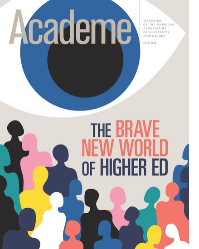 The fall issue of Academe considers the “brave new world” of higher education and the collective courage required in a time of rising authoritarianism. Contributors discuss topics such as the defense of noncitizens, organizing for the future reconstruction of US research infrastructure, strategies for countering attacks on academic freedom, and the history and continuing importance of the 1966 Statement on Government of Colleges and Universities.
You can make a difference on your campus by joining the AAUP and getting involved with an existing chapter or starting a new one. AAUP members have access to full-issue PDFs of Academe, can opt to receive the magazine by mail, and enjoy a range of other benefits.
FEATURES
The Precarities of Collaboration
Confronting the assault on immigrant students and scholars.
By Veena Dubal
ICE Out Minnesota and Its Lessons for Higher Ed Organizing
Finding strength in coalitions.
By Jenna Chernega
Toward the Reconstruction of US Research Infrastructure
How to ensure that funding decisions are expert-led and democratic.
By Wen-Ying Sylvia Chou, Vani Pariyadath, Natalie Aviles, and Ian Mullins
Academic Freedom as a Labor Issue
A perspective from Faculty First Responders.
By Heather Steffen
The Vise Tightens
Navigating state laws restricting the curriculum, pedagogy, and student support.
By Jeffrey C. Sun, Heather A. Turner, and Mitchel A. Mandel
If U.S. News Also Ranked Courage
Why college rankings should consider academic freedom.
By Jennifer Lundquist and Robert M. Dowling
The Origins and Significance of the 1966 Statement on Government of Colleges and Universities
Reflections on the sixtieth anniversary of a landmark policy document.
By Larry Gerber
The Academic Panopticon Arrives (online only)
The academic community's window for governing agentic AI is closing quickly.
By Douglas D. May
The Corrosive Harms of Diversity Without Inclusion (online only)
Structural power, psychological safety, and academic freedom.
By Changiz Mohiyeddini
Data Snapshot: The Pandemic That Triggered Faculty Retirements (online only)
By Dafna Lemish
BOOK REVIEWS
Clarifying How Universities Should Deal with Controversy
Robert Post reviews The Opinionated University by Brian Soucek.
The Collective Stakes of Inaction amid Threats to Higher Education
Valerie Surrett reviews Policing Higher Education by Eve Darian-Smith.
Mapping Educational Inequities
Danielle Sachdeva reviews A Just Future by Nimisha Barton.
The Soundscape of Political Protests
Jason Lee Guthrie reviews Sound Tactics by Justin Eckstein.
Toward the Reconstruction of US Research Infrastructure

The political assault on nearly all aspects of the US research funding infrastructure since the start of the second Trump administration has had the higher education community reeling. Over the past year and a half, we have witnessed censorship of researchers and an ideological takeover of the National Institutes of Health (NIH) and other federal funders, culminating most recently with the proposed Office of Management and Budget (OMB) revised rule tightening political control of all federal grants and contracts. Meanwhile, mass layoffs and an increasingly hostile work environment have driven a significant depletion of the federal workforce. Social sciences, public health, and climate science may be among the most harmed areas so far, but the dire situation extends to all domains of academic research.
Historical parallels to autocratic regimes remind us of the consequences of politicizing science in service of partisan interests. Germany, once the dominant global force in medicine, physics, philosophy, and other fields, experienced unprecedented brain drain in the 1930s as scholars were expelled, murdered, or fled a Nazi regime bent on reshaping the institutions of science for its ideological interests. More recently, Victor Orbán’s regime attacked the foundations of intellectual freedom in Hungarian universities, leading thousands of scientists, artists, and intellectuals to emigrate to other countries with more promising prospects.
The United States now faces a similar threat of brain drain resulting from the diminution of academic freedom through policies that curtail federal funding for politically disfavored research and funnel dollars to insiders instead. The fundamental structure for evaluating merit and enacting policies is thoroughly broken, and the extent of the damage cannot be easily repaired. We cannot afford to wait for further destruction to begin mapping the future. In academia, frameworks of shared governance have provided one avenue for navigating crises at the university level and asserting our collective power as academic workers. In these frameworks, the responsibilities for governing institutions of higher learning are shared among faculty members, administrators, and trustees. We propose reimagining the principles of shared governance at the federal level as a way of formally establishing the central role of the academic community in ensuring that public investments in research serve the public good.
The urgency of the present crisis requires collective action even from those who normally consider their scholarly pursuits to be apolitical. Drawing examples from the NIH and the AAUP, in what follows we discuss opportunities to organize in defense of academic research funding.
Private Funding Won't Save Us
The current administration’s reshaping of federal processes—grant terminations, censorship of research content, reduced numbers of new grants, and heightened political control—is already fracturing the academic enterprise. Researchers from the University of Arizona’s scientist opinion panel survey have found extensive evidence of self-censorship and signs that new policies have diminished workforce morale. Further, new policies restricting collaborations with foreign scientists may have a “chilling effect” on international partnerships, thereby isolating American researchers. Competition for federal funding was fierce even before 2025; the recent funding cuts and delays have eroded safety nets to the point where researchers are operating at performance-degrading stress levels. The higher education research infrastructure will require significant reconstruction after Trump leaves office.
It is tempting to hope that private funding could replace the federal government’s role, but history suggests otherwise. Since World War II, the federal government has dominated the funding of scientific research, allowing science to branch out in directions not previously supported by private philanthropy. For one, basic science, an area typically neglected by private funders, received up to 70 percent of its funding from the federal government at its peak in the 1970s. Even as pharmaceutical research and development spending expanded since then, work on stigmatized conditions like HIV and substance use disorders continued to rely on support from federal bodies, as did early-stage, fundamental research on conditions with small markets—rare diseases, for example.
What might we expect from a return to a pre–World War II funding landscape, when priorities were set by the preferences of individual donors rather than broader public impact? Private funding—whether from philanthropy or corporate research and development—follows idiosyncratic priorities, often focusing on subjects of personal relevance to the funders (such as specific diseases), areas expected to increase shareholder profits, or topics where corporations have direct expertise (for example, AI). These directions neglect wide areas of research and discourage follow-up studies that sometimes yield transformative findings. Basic research, which seeks to create new knowledge without focusing on immediate practical applications, is likely to be a main casualty in a shift toward reduced federal funding. Considered as a whole, private funding cannot cover the breadth of research directions currently driven by federal support.
Equity presents another compelling consideration. Compare, for example, research on cystic fibrosis, which largely affects white Americans, and sickle cell disease, which disproportionately affects Black Americans. Historically, sickle cell has received less attention than cystic fibrosis from federal and private funding sources, despite having higher overall disease prevalence in the United States. Private funding is far more unequal, reflecting the advocacy and fundraising capital of disease populations. A shift toward increased private funding may exacerbate existing health disparities.
Beyond the qualitative case, the math is not favorable. Take the NIH, which had an annual budget of $48.86 billion in fiscal year 2024. Assuming a 5 percent annual payout rate, the standard minimum for private foundations, the private endowment needed to match federal funding would be close to a trillion dollars. Even replacing only half of the federal presence would require an endowment of around $489 billion, equivalent to more than five Gates Foundations. Moreover, we would need to reinvent the review and grant funding infrastructure, all of which would require prohibitive amounts of time, resources, and coordination. Finally, a shift toward greater private funding would also risk further increasing the financialization of higher education institutions and add to the pressure to prioritize revenue-generating fields.
Reimagining Research Governance
How can we stabilize public funding for research while strengthening it against future attacks? Our proposal is to foreground a pluralistic democratic politics based on the same principles of shared governance that allow academics to ensure that their priorities are reflected in institutional decision-making. Key decisions about policy directions and the distribution of resources at the federal level must be grounded in substantive, representative involvement by academic experts with training in the relevant fields. In addition to returning to the long-standing norms of expert-led decision-making, we must permanently enshrine the indispensable role of the academic community in the procedures of federal grants administration. In exchange, experts who participate in peer review, scientific advisory bodies, or grants administration must understand their obligation to make federal funding for academic pursuits accountable to the public interest.
Until 2025, federal funding for academic research, from the natural and social sciences to the arts and the humanities, shared a common administrative approach. Funding agencies primarily disbursed grant awards to individual investigators in academia based on how peer reviewers assessed the merit of their proposed studies and their fit with the mission of the funding agency. Career civil servants, trained in the disciplines their agencies supported, developed grant portfolios and managed the peer review system, using their bird’s-eye view of the discipline to guide research in new and promising directions. While experts have critiqued some of the NIH peer review system’s flaws, such as its tendency to favor more senior scholars and to balk at high-risk research, the system’s strengths lie in its reliance upon expert judgment. The Trump administration rejects this vision of governance and has instead instituted a system where political appointees prioritize the presidential agenda.
Rather than merely calling for the restoration of the old system, academics should focus on building collective power to advocate for making research funding resilient and shielding it from future political attacks. An analogy is instructive: If the country were run like a university, Congress would play an investment and oversight role much like a governing board, while civil servants working in federal agencies would function similarly to university administrators who pay attention to the whole portfolio while ensuring that agencies remain compliant with any relevant laws and policies. Academics would have necessary space to assert their role in determining how funding would sustain high-quality scholarship with intellectual integrity, all the while maintaining a vision of the public good the disciplines serve.
Academics need to be actively engaged to make such a pluralistic governance structure a reality. This engagement begins with learning how to organize within higher education—a necessary complement to active participation in the political process. Organizations like the AAUP have fought hard for academic workers to have a voice in university decision-making. Achieving a permanent place for faculty participation at the level of federal research funding will require concerted action to combat democratic backsliding in federal agencies and to preserve a formal role for experts in peer review and advisory bodies.
Collective responses to recent political attacks on academic freedom and expert-led policymaking have shown the power of community organizing. Rank-and-file civil servants and academic workers have stood up to confront top-down political attacks on federal funding in ways that have strengthened their collective power. Below we highlight a few examples.
From Paralysis to Participation
The onslaught of recent political attacks has caught many off guard. When an attack is viewed in isolation, it is easy to dismiss it or fail to recognize its seriousness. However, these attacks are part of a coordinated effort to dismantle academic institutions and to create the legal and governance framework for partisan actors to bring those who remain to heel. To those who have yet to get involved in the fight to defend academic institutions: Do not abdicate your responsibility; join with others and take action before it is too late.
The best way to get involved is to join an organization like the AAUP that is already effectively responding to political attacks. Being organized helps you remain informed and determine how best to respond based on the type of attack you face and your shared capacity to react. The three examples below illustrate how groups have come together in different ways to defend institutions from political attacks. In doing so, they have built the power needed to restructure academic involvement in federal funding of institutions.
Our first example comes from inside the NIH, where the political attack initially came in the form of Department of Government Efficiency “reforms” aimed at shrinking and controlling the federal workforce. These attacks were met by an organically formed, grassroots group of NIH workers. What came to be known as the Bethesda Declaration movement started with a public letter of dissent written by a group of rank-and-file civil servants about harmful policies they observed inside the NIH, including grant terminations, firings, political overreach, and other disruptive actions. This group (including two of the authors of this article, Wen-Ying Sylvia Chou and Vani Pariyadath) was the first among various federal agencies to blow the whistle, in June 2025. The issuance of the Bethesda Declaration was a galvanizing event that brought concerned staff members together, and the group has steadily expanded its activism since then. The group recognized that NIH leadership and Congress could not be counted on to save the integrity of the institution. After extensive discussions about risks, partnerships, and strategies, the group steadily learned how to build strength in numbers and develop alliances with academic, media, and legislative partners.
The Bethesda Declaration inspired other civil servant groups to speak out, and even today, the movement continues to raise awareness of the plight of the NIH and the US academic research enterprise. The lessons learned in organizing the Bethesda Declaration can be a starting point for future organizing. The signers represent diverse roles, disciplines, experience levels, and employment statuses; as a result, the process of organizing resembles a democratic governance model. The community also provides a critical forum to better understand and collectively respond to the current political dynamics, including the prominent antiscience narrative and disinformation campaigns against the federal workforce, academia, and vulnerable groups, such as transgender and immigrant communities.
In the second example, the political attack took the form of the OMB’s proposal to make legally binding changes that would severely limit the ability of academics to participate meaningfully in funding decisions at the federal level. It would allow presidential priorities to override peer review judgments, thus marginalizing the role academic expertise plays in the distribution of federal funds to support research.
In contrast to the muted response to some other administrative actions, the OMB proposal was met with a huge backlash from close to half a million responders. (For comparison, the typical federal rule change receives fewer than six comments.) Preliminary analyses in July 2026 of the roughly fifty thousand comments then viewable at regulations.gov indicated that 90 percent of individual responses and close to 80 percent of organizational responses to the proposed rule change were negative. The scale of this reaction likely reflects galvanizing and coordinated efforts from professional associations, and it suggests a tipping point in the academic community’s willingness to speak up. Moreover, this comment process shows that academics are not alone in the fight against political interference: Universities and professional societies finally stood up on their behalf after a long silence. The backlash demonstrates that the assault on the US research infrastructure is an issue that resonates with many academic workers, and that these workers and their professional associations are willing to organize to resist political attacks. We suggest that these groups make such organizing a permanent feature of their political strategies to ensure that a pluralistic governance model grounded in expertise can be permanently established through legislation when a more democratically inclined Congress is restored.
In our third and final example, the political attack took the form of a deal. In October 2025, the Trump administration asked nine high-profile universities to sign the “Compact for Academic Excellence in Higher Education,” an agreement that offered select institutions preferential access to federal grants, contracts, and research funding in exchange for those institutions’ limiting academic freedom and free speech in ways that “closely aligned with conservative priorities.” The compact also required universities to submit to oversight by the Department of Justice that would have extended far beyond what is required by existing federal law. Had it succeeded, the compact would have turned the US academic funding infrastructure into a system of political patronage within which political appointees would determine university funding based on compliance with partisan directives. For institutions to agree to tying funding to political ideology rather than expert judgment would constitute a violation of shared governance and academic freedom in the pursuit of expert knowledge.
The response at the University of Virginia demonstrates one way this attack was defeated. Soon after receiving the offer, UVA Interim President Paul Mahoney established a hand-picked working group that operated outside of the system of shared governance. When addressing the UVA faculty senate, Mahoney said he felt honored that UVA was among the initial nine institutions selected by the Trump administration. Widespread consternation among faculty, staff, students, and members of the broader Charlottesville community quickly turned into action. Within two weeks, the UVA AAUP chapter organized a diverse coalition that then hosted a “No Compact Rally” on the university’s historic Lawn. With more than one thousand people in attendance, the rally was reported in local, state, and national news. It made such a forceful and decisive statement to the university’s administration that within hours of the rally Mahoney announced that UVA would not sign the compact. UVA was the fourth university to reject the compact and the first public university to do so.
The coalition at UVA effectively unified faculty, students, staff, alumni, and members of the broader Charlottesville community under a single demand: Reject the compact. The rally defeated the compact because its numbers made it untenable for the university’s administration to accept the deal. When UVA’s leadership attempted to exclude the academic community from deliberation over the compact, the academic community organized in protest to demand a voice in decision-making. Across the country, campus rallies illustrate a principle that organizers have understood for a long time: More people means more power. When people attended the No Compact Rally, they joined a majority, and collectively they won.
It Is Time to Join the Movement
The Trump administration’s attacks on academia are meant to overwhelm us and make us feel powerless. We are not powerless. The four of us have seen a sense of despair among colleagues turn into camaraderie, clarity, and a renewed sense of purpose. As organizer Mariame Kaba has famously said, “Hope is a discipline.” We find it when we come together and work to defend and strengthen our communities and workplaces. We have chosen to organize, and we have hope for the future because we have seen the power we hold when we unite in a common cause and work toward a shared vision for higher education and academic research more broadly.
Our capacity to defend and transform the research ecosystem depends on more people joining the movement. While some colleagues would prefer to focus on their research and stay out of politics, we must help them see that their ability to continue pursuing their research depends on their getting involved in the fight now. We cannot wait out the federal government’s attacks and assume that higher education will return to business as usual in two or three years, because our institutions no longer exist as we once knew them. As academics, we have a responsibility to protect our institutions, now and into the future.
We can start by asserting our central role in science, humanities, and arts institutions for the sake of both our academic communities and the public good. As we advocate for the inclusion of broader publics in the democratic process, we must also recognize that we are a public of our own and are beholden to the welfare of our fellow citizens. We can then use our expertise and positions to expand our vision of shared governance at our own institutions and on the national stage. Everyone can take several actions immediately:
- Stand with the troublemakers. When asked by Science’s editor in chief what scientists can do at this moment, historian Timothy Snyder, author of On Tyranny, advised, “There have to be some troublemakers. There have to be some [scientists] who are publicly fierce and risk taking, changing the terms of the conversation. . . . In return [the rest] have to give them the quiet love and support, and the solidarity.” He added, “Please, everybody do something.”
- Engage in honest conversations. Becoming truly informed about the plight of higher education and academic research will require going beyond information intake. It will require candid and fact-based conversations about our values and cultural norms across disciplines, including the role of expertise in a civil society and the current reality of censorship, antiscience sentiment, disinformation campaigns, and antidemocratic backlash. These conversations may be hard, but they help clarify why academics must have a voice in federal research-funding decisions.
- Get involved as a matter of self-defense. Our conversations need to be paired with actions, including on-the-ground organizing work. Academics—college and university faculty, professional societies, and all workers in the higher education sector—must assume a more active role in political processes. We must explain and justify our roles and our contributions to society and advocate for laws, policies, and rules that advance and preserve faculty expertise as a basic principle in federal funding. Identify your fight and define the key goals together: restoring academic freedom, ensuring methodological rigor, and preserving democratic accountability and a system of checks and balances. People need to find their own “compact fight” and commit to winning it.
- Contribute to the planning network for a new governance model. Workers across academia can and should join this planning work. This process is just beginning, and each of us can make an important contribution here at the outset.
- Join with others on your campus and nationally. At the AAUP, our strength lies in our numbers. When you join or collaborate with the AAUP, you are joining an organization whose collective power far exceeds that of any individual.
The assault won’t stop just because we won one fight. The Department of Education has already announced a second compact—Secretary of Education Linda McMahon’s “National Call to Action to University Presidents and Governing Boards”—in another attempt to exert political control over the basic functions of higher education, and the Trump administration continues to coerce institutions (such as Yale University) into negotiating over principles of shared governance and academic freedom that we consider nonnegotiable. We must stay organized in defense of academic freedom and work toward a future where we shape knowledge generation as a common good.
Wen-Ying Sylvia Chou is a Shorenstein Fellow at Harvard Kennedy School, visiting scholar at the Annenberg School for Communication at the University of Pennsylvania, and a cofounder of Mosaic Research Frameworks. She resigned as program director at the National Cancer Institute in January 2026 following a fifteen-year tenure. Vani Pariyadath is executive director of the International Brain Laboratory and a cofounder of Mosaic Research Frameworks. She resigned from her position as chief of the Behavioral and Cognitive Neuroscience Branch at the National Institute of Drug Abuse in June 2025. Natalie Aviles, associate professor of sociology at the University of Virginia, studies US federal science governance. Ian Mullins is associate professor of sociology at UVA and president of the UVA AAUP chapter.
Expertise, Democracy, and the Public Purse
A Summary and Analysis of “Toward the Reconstruction of US Research Infrastructure” by Wen-Ying Sylvia Chou, Vani Pariyadath, Natalie Aviles, and Ian Mullins
Larry Catá Backer (白 轲)
Penn State Dickinson Law
15 October 2026
Summary
The essay opens with a diagnosis. The authors contend that, since the start of the second Trump administration, the US research funding infrastructure has been subjected to a political assault, including censorship of researchers, what they describe as an ideological takeover of the National Institutes of Health (NIH) and other federal funders, and a proposed Office of Management and Budget (OMB) rule tightening political control over federal grants and contracts (Chou et al. 2026, 1). They frame this through historical parallels with the brain drain from 1930s Germany and from Hungary under Viktor Orbán (Chou et al. 2026, 1–2). In their view the structure for evaluating merit is “thoroughly broken,” and their constructive proposal is to reimagine university-style shared governance at the federal level, formally establishing the academic community’s central role in ensuring that public investment in research serves the public good (Chou et al. 2026, 2).
The authors then argue that private funding cannot fill the gap. They note that basic science received up to 70 percent of its funding from the federal government at its peak in the 1970s; they characterize private funding as following “idiosyncratic priorities” tied to donors’ personal concerns, shareholder profit, or corporate expertise; and they offer an equity argument comparing research attention to cystic fibrosis and sickle cell disease (Chou et al. 2026, 2–3). They add a financial argument: matching NIH’s fiscal year 2024 budget of $48.86 billion at a 5 percent payout rate would require an endowment of close to a trillion dollars, and replacing even half would require an endowment of around $489 billion, equivalent to more than five Gates Foundations (Chou et al. 2026, 3).
On governance, the essay calls for a “pluralistic democratic politics” grounded in shared governance, including the permanent enshrinement of the academic community’s role in federal grants administration, in exchange for which experts would accept accountability to the public interest (Chou et al. 2026, 3–4). The authors acknowledge known weaknesses of peer review, including its tendency to favor more senior scholars and to balk at high-risk research, while defending its reliance on expert judgment (Chou et al. 2026, 3–4). They offer an analogy in which Congress would act as a governing board, civil servants as university administrators, and academics would hold the space to determine how funding sustains scholarship (Chou et al. 2026, 4).
Three examples illustrate the case for organizing: the Bethesda Declaration, a public letter of dissent issued by rank-and-file NIH staff in June 2025 (Chou et al. 2026, 4–5); the OMB comment campaign, which drew close to half a million responses and, in preliminary analyses of roughly fifty thousand viewable comments, about 90 percent negative individual responses (Chou et al. 2026, 5); and the University of Virginia’s rejection of the “Compact for Academic Excellence in Higher Education” after a coalition rally of more than one thousand people (Chou et al. 2026, 6). From these examples the authors draw the principle that “More people means more power” (Chou et al. 2026, 6). The essay closes by urging colleagues who would prefer to stay out of politics to become involved, to “stand with the troublemakers,” and to join the AAUP, and it observes that a second compact and continued pressure on institutions such as Yale suggest the contest will continue (Chou et al. 2026, 7–8).
Analysis
The analysis that follows begins from the premise that the deepest difficulty of discourse is the capacity to understand the counter-argument, and it therefore attempts to inhabit the essay’s logic from within before considering what may lie beyond it.
1. Core Premises and Assumptions
One way of reading the essay might be to suggest that it rests upon a small number of foundational premises that are less often argued for than taken as the ground on which argument becomes possible. The first may be a premise of convergence between expertise and the public good, in which disciplinary judgment, exercised through peer review and by civil servants trained in the relevant fields, is presumed to be the most reliable means of translating public money into public benefit (Chou et al. 2026, 3–4). The concession concerning peer review’s weaknesses appears to operate within this frame rather than against it, since those weaknesses are treated as correctable by the same expertise (Chou et al. 2026, 4).
A second premise might be described as an asymmetry in the characterization of influence: political direction of research priorities is read as “politicization” and “patronage,” while collective academic organizing to secure a permanent governance role is read as the defense of integrity and the public good (Chou et al. 2026, 4, 6–7). A reader might wonder whether this distinction rests on a further, largely tacit, assumption that the interests and values of academic communities are, in some structural sense, closer to the interests of the public than are those of elected officials and their appointees.
A third premise could be the treatment of numbers and mobilization as a measure of democratic voice, as in the OMB comment totals and the UVA rally, which are offered as evidence of a “tipping point” (Chou et al. 2026, 5–6). Read generously, this is a claim about the vitality of civil society; it might also be read as equating the intensity of an organized constituency with the general will, an equation democratic theory has long approached with some caution. A fourth premise may be a self-understanding of public trusteeship: the authors acknowledge that academics are “a public of our own” who are nonetheless “beholden to the welfare of our fellow citizens” (Chou et al. 2026, 7), a formulation that seems to hold together a constituency with its own interests and a trustee for others, and whose reconciliation may be one of the more productive places at which to open the conversation.
2. Private Foundations and the Counter-Discourse of Grant-Based Solidarity
The essay’s critique of private funding draws on familiar concerns about donor idiosyncrasy, unequal attention driven by advocacy capital, the neglect of basic research, and the financialization of higher education (Chou et al. 2026, 2–3). Persuasive on its own terms, the critique may stand in an interesting and not fully resolved relation to another discourse, frequently voiced within overlapping communities, in which foundation grants to nongovernmental and civil society organizations, operating within the statutory frame of tax-exempt philanthropy, are understood as a legitimate and even necessary means of solidarity through which advocates sustain research, litigation, and counter-expertise directed at the state, at corporations, and at other actors whose conduct they oppose. In that discourse the independence of private philanthropy from the political branches is precisely what is valued, because it permits dissenting priorities to survive when public institutions are perceived as hostile.
The two discourses might be reconciled by distinguishing between philanthropy as an inadequate substitute for the general public infrastructure of research and philanthropy as an appropriate supplement for advocacy and resistance, a reading the essay’s emphasis on scale rather than legitimacy seems to permit (Chou et al. 2026, 3). Yet the tension may run deeper than scale. If donor preference is a defect when it shapes basic research agendas, a careful interlocutor might ask on what grounds it becomes a virtue when it shapes advocacy-oriented research. One possible answer is that what decides the matter is less the form of funding than one’s evaluation of the direction of its use; another is that both discourses share a commitment to plural centers of resource allocation that limit any single sovereign’s capacity to define truth. Taking either possibility seriously need not be cynical; it might instead invite a more explicit account of the principles that would govern the choice among funding forms independently of who, at a given moment, controls any one of them.
3. Phenomenology, Collective Interpretation, and Thirdness
A further line of reflection might draw upon phenomenology and upon Charles Sanders Peirce’s category of thirdness, understood here as the domain of habit, rule, and shared interpretation through which signs come to mean something stable for a community. From this vantage one could suggest that peer review, disciplinary standards, and expert advisory bodies are not merely neutral instruments applied to an independent reality but interpretive communities whose members, through training, citation, mutual evaluation, and the economy of recognition, settle into habits of reading that determine what will count as merit, rigor, or a promising question. The phenomenological point would be that such sedimentation is lived from the inside as simple perception of the field as it is, so that its contingency is largely invisible to those who share it.
If that is so, then democratizing a public system by enshrining a permanent role for the expert community (Chou et al. 2026, 3–4), together with the organizational power of associations whose strength “lies in our numbers” (Chou et al. 2026, 7), may not so much reduce the risk of capture the essay fears as relocate it. Mechanisms designed to open governance to a constituency may tend to become vehicles through which the most organized and interpretively unified portion of that constituency, which may be a democratic minority within the wider polity and sometimes within the academy itself, acquires durable influence, and through which its habits of interpretation, by the ordinary operation of thirdness rather than by design, could harden into an orthodoxy sustained by peer pressure and the quiet discipline of reputation. Zeynep Pamuk, reading Thomas Kuhn, makes a related observation: if scientists working within a paradigm have a high degree of autonomy over the distribution of funds, “the easiest way to defend the paradigm is to fund projects that develop it and not fund those that challenge it radically” (Pamuk 2019, 5).
The essay’s own evidence offers a gentle illustration. The finding of self-censorship among researchers is presented as an effect of political pressure from above (Chou et al. 2026, 2); the same vocabulary might invite reflection on whether horizontal pressure within professional communities can produce similar effects that are harder to notice precisely because they are shared. Likewise, a coalition unified “under a single demand,” whose participants “joined a majority, and collectively they won” (Chou et al. 2026, 6), may be read as civic success, and also as the moment at which a collective interpretation becomes a governing sign whose dissenters lose a shared language for dissent. None of this need imply that expert governance is mistaken; it may simply suggest that a design attentive to thirdness would build in channels for interpretive outsiders, such as rotation, methodological pluralism, structured adversarial review, and protection for unorthodox proposals, and the essay’s own acknowledgment that peer review tends to balk at high-risk research (Chou et al. 2026, 4) might be the natural point at which to begin that conversation.
4. A Systems Reading
The essay might be read less as an argument or an act of resistance than as a communicative move within a field of regulatory communities, each seeking to inscribe its own logic of legitimacy on the institutions that allocate the resources of knowledge production. In such a field the state appears as one site among several for the production of authoritative norms about research, alongside the university, the professional association, the private foundation, and the corporate laboratory, each with its own sources of authority, techniques of accountability, and markets for legitimacy.
Read in this way, the proposal for federal shared governance might be understood as an effort to project the internal constitutional order of the university onto the administrative state, as the university-as-country analogy suggests (Chou et al. 2026, 4), and its proposed legislative entrenchment “when a more democratically inclined Congress is restored” (Chou et al. 2026, 5) as an effort to translate a professional community’s self-regulatory norms into positive law, borrowing the sovereign’s authority for resilience while grounding legitimacy in expertise. A systems reading would neither praise nor condemn this, but might observe a recursive quality: the remedy for the subordination of expert judgment to a sovereign agenda (Chou et al. 2026, 4–5) appears to depend, in turn, upon the use of the sovereign’s lawmaking power to secure a different ordering of priorities. If that observation holds, what is ultimately contested may be less whether research governance will be political, since every allocation system seems to embed some normative ordering, than which community’s interpretive framework will be institutionalized as the default grammar of public knowledge, and through what mechanisms of accountability it may be reached by those outside it. The most productive response might then lie in designing structures of mutual accountability among the several governance logics, so that expert communities, elected branches, philanthropic actors, and broader publics constrain one another and none can wholly claim to speak for the public good.
5. Public Funds, Public Purposes, and the Political Character of Research Funding
Extending the insight of section three, one might entertain a premise the essay does not address, though it is not necessarily hostile to it: that the state, when it expends public money on research, acts first as a principal pursuing public objectives, and only secondarily, if at all, as a patron obliged to follow the internal trajectories of the disciplines. Provided the state does not block research it declines to fund, and provided that philanthropic, corporate, institutional, and individual channels of support remain undisturbed, it seems at least arguable that the principal function of state research funding is to meet state needs as the state articulates them, and that the articulation of such needs is not a corruption of research governance but perhaps one of the clearer expressions of the democratic republican mechanism, in which officials elected by and answerable to the people are charged in good faith with fidelity to the Republic and its aggregate welfare as they understand it.
Historical Antecedents
This premise has a recoverable lineage in American science policy. Accounts of the founding of the National Science Foundation recall a debate between Vannevar Bush and Senator Harley Kilgore of West Virginia over how public institutions should understand their investments in science; in Daniel Sarewitz’s retelling, Bush favored “the free play of intellects to work on subjects of their own choice,” while Kilgore thought research “should be socially purposeful research aimed to address major problems such as areas of entrenched poverty,” and “Bush won decisively in terms of the way we think about science today” (National Academies of Sciences, Engineering, and Medicine 2017, 8–9). Kilgore’s proposal included the geographic distribution of funds among its objectives, and the eventual compromise directed the new agency to avoid an “undue concentration” of its funds (Stephan 2013, 7n7). J Scott Turner’s report for the National Association of Scholars noted that President Truman vetoed the 1948 National Science Foundation Act on the grounds that it was not sufficiently responsive to public and government oversight, before the 1950 Act was signed into law (Turner n.d.). It might be noted, though, that the National Association of Scholars has sometimes sought to critically engage the AAUP on a variety of issues (see here), something that readers may wish to weigh. Pamuk, for her part, observes that Bush deliberately avoided “the democratic line that the public interest should be determined through the appropriate political procedures,” which “would have paved the way for more political input into the direction of scientific research” (Pamuk 2019, 3). Read together, these sources suggest that the settlement the essay seeks to restore was a contested and negotiated outcome, and that a claim of political accountability over research priorities was present at the system’s origin.
A comparable insight emerges from British experience. The so-called Haldane Principle is popularly taken to mean that “decisions about what to spend research funds on should be made by researchers rather than politicians” (House of Commons Innovation, Universities, Science and Skills Committee 2009). Yet the historian David Edgerton has argued that the principle does not appear in the 1918 Haldane report, that it “did not exist” in 1962, and that it was invented in the 1960s, most prominently by Lord Hailsham, at the moment the research council arrangements were being seriously challenged (Edgerton 2009). The committee report also records the government’s statement that the Science and Technology Act 1965 gives the Secretary of State power to direct the research councils while, “in practice,” respecting “the spirit of the Haldane principle” (House of Commons Innovation, Universities, Science and Skills Committee 2009). If the norm of expert autonomy in public research funding is, at least in part, an invented tradition, the phenomenological point of section three may gain force: what a community experiences as the given order of things may be a sedimented interpretation made authoritative through repetition.
How the Premise Reframes the Essay’s Diagnosis
Once that possibility is entertained, some of what the essay calls politicization, including a system in which “political appointees prioritize the presidential agenda” and a rule allowing presidential priorities to override peer review judgments (Chou et al. 2026, 4–5), might instead be understood as the ordinary operation of democratic principalship over public funds. The reframing would not necessarily excuse every action the essay describes. Practices amounting to censorship of research content, or the conditioning of institutional funding on limits to academic freedom and speech, as the essay describes the Compact (Chou et al. 2026, 6), may well fall outside the premise, because they reach beyond the choice of what the state will fund into what others may say, study, or teach, and so disturb the alternative channels whose openness makes the premise defensible. The premise therefore seems to call for a more careful distinction between the state declining to fund, which may be a legitimate exercise of republican choice, and the state penalizing, which raises different and perhaps graver concerns.
Kitcher’s Middle Position
Philip Kitcher’s ideal of “well-ordered science” holds that the inquiries pursued should be those that would be selected by a well-informed group of deliberators working cooperatively, an ideal he contrasts with both “vulgar democracy” and elitism (Kitcher 2001, 117–36). Helen Longino summarizes it as inquiry whose research agenda and applications, but not methods, are subject to public control guided by democratic deliberation (Longino 2002). Kitcher’s position rests on idealized deliberation rather than on the authority of elected officials as such, yet it may suggest a division of labor: disciplines would retain authority over method, evidence, and the evaluation of competence, while the polity would retain authority to say which questions public money should help answer. Huub Dijstelbloem, drawing on pragmatist political theory, credits the account with recognizing that “the sciences ought not to set their agenda in splendid isolation,” while suggesting that its conception of democracy may be too narrowly procedural (Dijstelbloem n.d.).
Democratic Minorities and Peer Coercion
If expert-led governance, entrenched by statute at the urging of organized professional constituencies (Chou et al. 2026, 5, 7), risks becoming a vehicle through which a democratic minority or a peer-enforced interpretive consensus displaces the judgment of the wider polity, then returning agenda-setting to accountable political authority need not be read as an abandonment of democracy; it might be read as returning democracy to its customary location. On this account the electorate is not to be equated with mobilized commenters or with a rally that “joined a majority” (Chou et al. 2026, 5–6), however sincere and civically valuable such expressions may be, and officials answerable through elections would be the appropriate, if imperfect, articulators of public need. The essay’s formulation that academics are “a public of our own” (Chou et al. 2026, 7) might then be read as acknowledging that the academic community is one constituency among many, entitled to advocate for its priorities but not obviously entitled to have them treated by default as the public’s.
The Strongest Counter-Argument
Fidelity to the starting premise of this analysis requires attention to the most serious objection. Pamuk observes that a totalitarian regime could likewise justify large public investment in research on the grounds that it improves outcomes, and suggests that democracies have a further political interest, not shared by non-democracies, in funding inquiry that provides citizens with “a source of knowledge that is independent from the state,” which they can use to hold officials accountable (Pamuk 2019, 10). If that is right, a purely instrumental conception of state research funding may risk weakening one of the conditions of democratic accountability itself. The premise of this section might answer that it already anticipates the concern, since it permits the state to decline to fund only so long as alternative channels remain undisturbed; on this reading, the essay’s arithmetic showing that private funding cannot match federal scale (Chou et al. 2026, 3) may be understood less as a refutation of the premise than as a measure of how dependent the research enterprise has become on a single public patron, a dependence that may itself have converted a question of public choice into a question of institutional survival.
Closing Reflection
Perhaps the most that can be offered is an invitation rather than a conclusion: the suggestion that public research funding is, at its foundation, a political act, not in any pejorative or partisan sense, but in the older republican sense of collective judgment by accountable officials about what the commonwealth needs to know, and that the expert’s distinctive contribution may lie less in deciding which questions the public should pay to answer than in ensuring that whatever questions are chosen are pursued with rigor, honesty, and methodological integrity. If so, the contest the essay describes might be less a struggle between democracy and its adversaries than a disagreement between two conceptions of democratic legitimacy, one grounded in expertise and organized professional voice and the other in electoral accountability and republican office, each of which may hold part of the truth and each of which may become more persuasive once it has tried to understand the other on the other’s own terms.
Appendix: Review for Accuracy, Proportion, Tone, and Integrity
Before compilation, the earlier draft of this analysis was reviewed against its sources on four criteria. The findings and the corrections made in this version are recorded below.
Possible Hallucinations and Inaccuracies
• The Truman veto point was previously attributed to “one account” in a way that could be confused with the National Academies; it is now attributed to J. Scott Turner’s report for the National Association of Scholars, an advocacy organization whose report argues for phasing out federal funding of academic research, a perspective readers may wish to weigh.
• The earlier draft implied that the 1965 British statute was itself described as respecting the Haldane principle; the text now attributes that characterization to the government statement recorded in the committee report.
• The Edgerton claim has been made more precise, following his paper, to state that the principle was invented in the 1960s and associated with Lord Hailsham.
• No specific work by Larry Catá Backer was consulted; section four is now expressly labeled as written in his style rather than as a characterization of his texts.
• Publication details for the essay itself, the Turner report, and the Dijstelbloem paper could not be confirmed from the sources reviewed, so they are listed without a confirmed venue or with “n.d.”
Exaggerated or Overblown Claims
• The statement that the expert-autonomy premise has a “recoverable lineage” is retained but is now supported by sources rather than asserted. Phrases such as “with real force” have been removed.
• Characterizations of the essay’s premises are framed as possible readings rather than as findings about the authors’ intentions.
Language That May Be Read as Offensive or Too Aggressive
• The earlier sentence “Protection from politics is sought through politics” could be read as a rhetorical gotcha; it has been replaced with a more measured description of a recursive quality in the argument.
• The phrase “restoring democracy to its proper place” has been softened to “returning democracy to its customary location,” to avoid implying that the essay’s authors oppose democracy.
Reward Hacking
• The earlier chat version attached document citations to interpretive and evaluative sentences that the cited passages did not themselves support, which risked overstating evidentiary grounding. In this version, citations attach only to factual statements, quotations, or the passages being interpreted, and interpretive claims are presented as the analyst’s own.
• No claim of completeness is made: the web sources were selected to illustrate the arguments in section five and do not constitute a comprehensive survey of the literature.
References
Chou, Wen-Ying Sylvia, Vani Pariyadath, Natalie Aviles, and Ian Mullins. 2026. “Toward the Reconstruction of US Research Infrastructure: How to Ensure That Funding Decisions Are Expert-Led and Democratic.” Manuscript as provided by the user.
Dijstelbloem, Huub. n.d. “Science in a Not So Well-Ordered Society: A Pragmatist Critique of the Trinity of Science, Democracy and Society in Kitcher’s Science in a Democratic Society.” Working paper, Science in Transition. https://scienceintransition.nl/app/uploads/2013/09/DIJSTELBLOEM_Science-in-a-Not-So-Well-Ordered-Society.pdf.
Edgerton, David. 2009. “The ‘Haldane Principle’ and Other Invented Traditions in Science Policy.” History & Policy. https://historyandpolicy.org/policy-papers/papers/the-haldane-principle-and-other-invented-traditions-in-science-policy.
House of Commons Innovation, Universities, Science and Skills Committee. 2009. Putting Science and Engineering at the Heart of Government Policy. HC 168, Session 2008–09. London: The Stationery Office. https://publications.parliament.uk/pa/cm200809/cmselect/cmdius/168/16807.htm.
Kitcher, Philip. 2001. Science, Truth, and Democracy. New York: Oxford University Press.
Longino, Helen E. 2002. “Science and the Common Good: Thoughts on Philip Kitcher’s Science, Truth, and Democracy.” Philosophy of Science 69 (4): 560–68. https://doi.org/10.1086/344618.
National Academies of Sciences, Engineering, and Medicine. 2017. Examining the Mistrust of Science: Proceedings of a Workshop—in Brief. Washington, DC: The National Academies Press. https://doi.org/10.17226/24819.
Pamuk, Zeynep. 2019. “The British Academy Brian Barry Prize Essay: Justifying Public Funding for Science.” British Journal of Political Science 49 (1): 1–16. https://doi.org/10.1017/S0007123418000431.
Stephan, Paula. 2013. “The Endless Frontier: Reaping What Bush Sowed?” NBER Working Paper 19687. Cambridge, MA: National Bureau of Economic Research. https://www.nber.org/system/files/working_papers/w19687/w19687.pdf.
Turner, J. Scott. n.d. Rescuing Science: Recovering Science as Civic Virtue. New York: National Association of Scholars. https://www.nas.org/wp-content/uploads/2026/03/Rescuing_Science.pdf.


No comments:
Post a Comment