Showing posts with label Malaysia. Show all posts

Thursday, August 24, 2023

Just Published: Current History Annual China and East Asia Issue (September 2023)


Current History has just announced publication (September 202) of its annual China and East Asia Issue.  There are several quite interesting articles among them.  Though most are pay walled, one is available for free download (Yige Dong, "Chinese Feminists Face Paradoxical State Policies"--access here:View Article; Open the PDF).

The table of contents follows below.

Friday, November 25, 2022

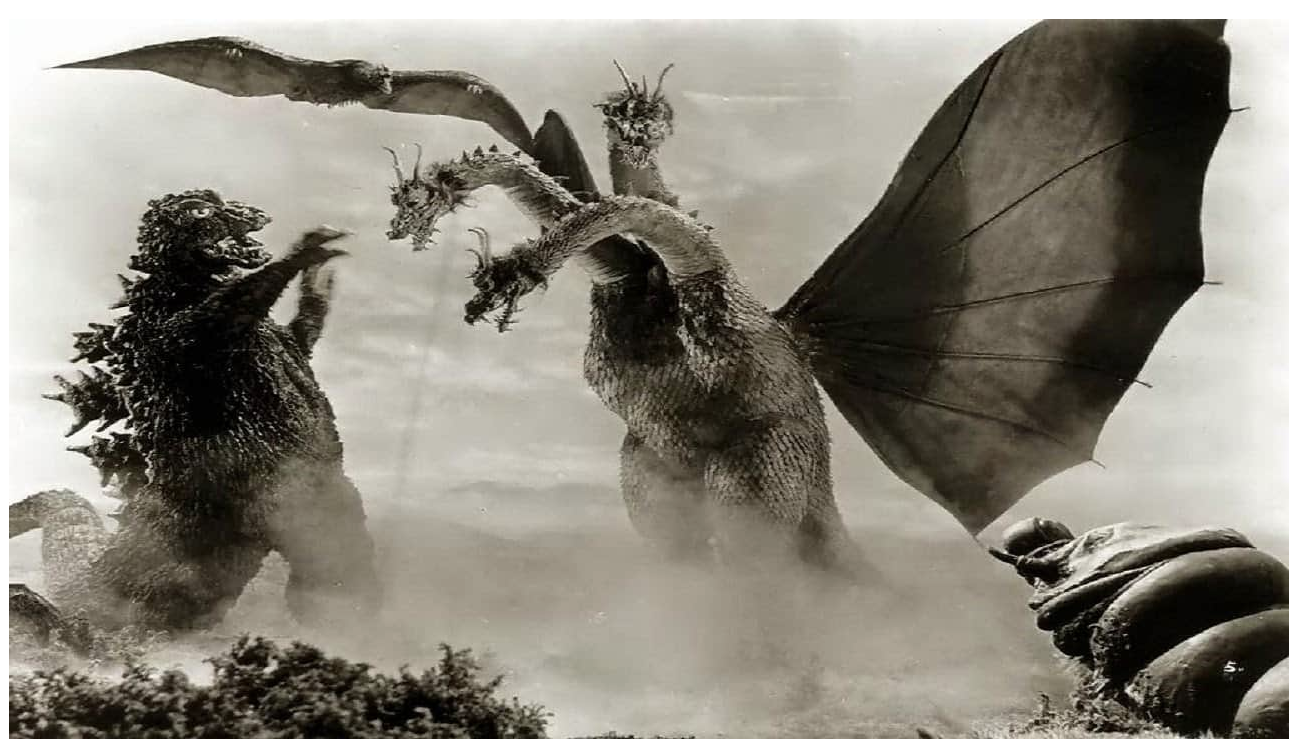
Corruption Wars and the Last Battle of the Malaysian Kaiju: Anwar Ibrahim is Sworn in as Prime Minister as Mahathir Mohamad Loses Re-election Bid

Pix Credit here


In the complicated ecology that is Malaysian politics two recent events are worthy of some note.  First, on 19 November 2022 it was announced that 97 year old and master politician Mahathir Mohamad, long punching well above his weight, had lost a reelection bid, and lost in (as has been typical for him in all his political activity) in spectacular fashion. 

“It’s a major surprise that not only has he [Mahathir] lost, but he has lost in a spectacular fashion,” said Al Jazeera’s Florence Looi, reporting from outside Kuala Lumpur.  “He has not only lost his seat but has lost his deposit because he has not been able to get more than an eighth of the votes cast. His party has also not managed to win a single seat.” It was the 97-year-old’s first electoral defeat in more than half a century. He was Malaysia’s prime minister for 22 years from 1981 until he announced his shock retirement in 2003. (Mahathir Mohamad: Ex-Malaysia PM loses seat in shock defeat)
Second, Mahathir's longtime mentee, frenemy, rival, and ally, Anwar Ibrahim, was sworn in as Malaysia's Prime Minister. "Malaysia's Anwar Ibrahim was sworn in as prime minister on Thursday, capping a three-decade political journey from a protege of veteran leader Mahathir Mohamad to protest leader, a prisoner convicted of sodomy and opposition leader." (Malaysia's Anwar becomes prime minister, ending decades-long wait) Not all is cake and honey. "Anwar's appointment ends five days of unprecedented post-election crisis, but could usher in further instability with his rival, former prime minister Muhyiddin Yassin, challenging him to prove his majority in parliament.


Pix Credit here

The titanic struggle between Anwar Ibrahim and Mahathir Mohamad has spanned decades.  It has brought out both the best and worst of Malaysia's ethno-religious cultural politics. More importantly, it has served as one of the great examples of the weaponization of ideologies of gender and sexual conformity in politics.  For much of this time, Anwar Ibrahim remains on the wrong end of the contest, with Mahathir Mohamad emerging more of less triumphant, and a master manipulator of gendered ethno-religious sensibilities with the occasional utilization of the criminal power of the state to drive home his dominance.

Ideologies of gender remain ascendant throughout the world. For my purposes here ideology might best be understood from the perspective of a community as its "articulated forms of social self-consciousness.". . .  An ideology of gender might, then, be reduced to a cluster of norms, expectations, understandings and the like, derived from the meaning of sex, where sex is used in its multiple and ambiguous senses. These ideologies are imprinted in the law of all states-modem and ancient, religious and secular. These ideologies become increasingly less visible as societies substitute the language of corruption, psychosis, and ethno-national chauvinism for that of gender. Corruption, especially in the political discourse of religion, has reinvigorated gender discipline in some countries. (Larry Catá Backer, Emasculated Men, Effeminate Law in the United States, Zimbabwe and Malaysia, (2005) 17(1) Yale Journal of Law & Feminism 1-63 (2005), pp. 1-2).

Corruption remains the defining issue in the relationship between them, and between the ruling elites and the people and collective structures of Malaysia, as it has since the end of the 1990s. Anwar has focused on institutional and political corruption. "'We will never compromise on good governance, the anti-corruption drive, judicial independence and the welfare of ordinary Malaysians,' he said before leading chants of "Reformasi" - his rallying cry for reform during years of opposition." (Malaysia's Anwar becomes prime minister, ending decades-long wait). Mahathir refined the art of aligning political and personal corruption with sexual corruption--as that concept is understood through the religious lens in Malaysia. "There is irony here: both Anwar and Mahathir deployed the language and imagery of religion to describe the corruption of the other. Anwar focused on the institutional corruption of Mahathir's government and lost. Mahathir focused on the personal corruption of Anwar and won." (Backer, Emasculated Men, Effeminate Law , p. 42-43).

Nonetheless, the public may weigh the conflicting narratives of corruption differently given context--and the clear evidence that the gap between discourse, performance and political realities were both mutable and strategic.  In the 1990s that alignment is understood as political--a metaphor, as well as a physical performance, which when conflated in the body of Anwar produced a spectacularly over the top drag show of a sodomy trial that at the time garnered global attention.  Anwar was "sacked in September 1998, detained without trial and then charged with sodomy and corruption." Succeeding decades exposed the gaps, and strategies. By the beginning of the 21st century, the calculus of corruption moved in a different direction. The rest is the stuff of melodrama.

Anwar was freed in 2004 after Malaysia's top court overturned his sodomy conviction, a year after Mahathir stepped down as prime minister after 22 years in power. But Anwar was imprisoned a second time for sodomy in 2015 — in a case he said was aimed at crushing his alliance which was making gains against the UMNO-led government. Yet, he didn't give up. From his prison cell, Anwar made up with Mahathir. . . Mahathir became the world's oldest leader at 92 after the [2018] victory. Anwar was pardoned shortly after and would have succeeded Mahathir, but infighting led to their government's collapse just after 22 months. (From prisoner to prime minister, Malaysia's Anwar had long ride to top)

 Yet it may be worth noting that the structures and performance of corruption may remain undiminished--culturally at least. 

The use of personal corruption as an intensifier raised the level of Anwar's corruption well above any that could be laid on Mahathir. The intensification effect occurred not only in the court but in the press as well, where the government permitted reporting in a way designed to expose Anwar to the maximum negative effects of the charges.  Mahathir might permit cronyism and even profit from it, but the corruption was not personal, and indeed, the form of corruption itself might be gendered male. (Backer, Emasculated Men, Effeminate Law , p. 43)
That was two decades ago. The balance appears to have shifted; but has the balancing disappeared? The question is not merely important as a matter of the expression of racism, ethno-chauvinism and religious tolerance in developing diverse states--though that is an important enough reason for attention.  It is important as well because those choices will have a significant effect on Malaysia's relations with the rest of the world. Given Malaysia's strategic position for both the Chinese Belt and Road System and the  Trans-Pacific Partnership framework (plus the US), those choices will have significance far beyond the borders of that state (eg here, here, and here).

Tuesday, December 08, 2020

Ruminations 98: Brief Reflections on National Pearl Harbor Remembrance Day

 
AP file photo 1941 (available HERE)

As time passes, what was for the Nation a personal and deeply felt event, one that changed the course of American history, or at least the narrative of the nation and its self conception,  becomes  more an more a historical moment.  That historical moment in turn, becomes the object of narrative rewriting (if the event is to retain meaning in the historical resent) or otherwise recede in the national memory into what eventually will be a footnote used to torment students of history by teachers obsessed by dates and events.

Sometimes, and for a little while, the political branches of the general government will be moved to legislate an importance to such events. And in the process will also seek to legislate its meaning. So it was that as the generation that lived through the Japanese attack on Pearl Harbor in the then fairly new territory of the Hawaiian Islands began to age and die in increasing numbers, Congress sought to legislate memory by enacting Public Law 103-308, as amended, designating December 7 of each year as “National Pearl Harbor Remembrance Day.” Much more advanced in its progress toward the hidden recesses of history has been the 8 December attack on facilities in the US territory of the Philippines on 8 December 1941 initiated within hours of the strike on Pearl Harbor and launched the invasion of the territory by Imperial ground troops (a remembrance here).

The text of the "National Pearl Harbor Remembrance Day.” is worth reading from time to time and on no better day than this:
Public Law 103-308 103d Congress 36 USC 169. Joint Resolution Designating December 7 of each year as "National Pearl Harbor Remembrance

Aug. 23, 1994 Day".

[H.J. Res. 131] Whereas, on December 7, 1941, the Imperial Japanese Navy and Air Force attacked units of the armed forces of the United States stationed at Pearl Harbor, Hawaii; Whereas more than 2,000 citizens of the United States were killed and more than 1,000 citizens of the United States were wounded in the attack on Pearl Harbor; Whereas the attack on Pearl Harbor marked the entry of the United States into World War II; Whereas the veterans of World War II and all other people of the United States commemorate December 7 in remembrance of the attack on Pearl Harbor; and Whereas commemoration of the attack on Pearl Harbor will instill in all people of the United States a greater understanding and appreciation of the selfless sacrifice of the individuals who served in the armed forces of the United States during World War II: Now, therefore, be it Resolved by the Senate and House of Representatives of the United States of America in Congress assembled, That December 7 of each year is designated as "National Pearl Harbor Remembrance Day" and the President is authorized and requested— (1) to issue annually a proclamation calling on the people of the United States to observe the day with appropriate ceremonies and activities; and (2) to urge all Federal agencies, and interested organizations, groups, and individuals, to fly the flag of the United States at halfstaff each December 7 in honor of the individuals who died as a result of their service at Pearl Harbor. Approved August 23, 1994.
Presidents have duly produced the required proclamation in the years since. They do not vary much within the terms of an administration.  The 2020 Proclamation of Mr. Trump may be accessed here; compare the text of the 2012 Proclamation of mr. Obama HERE. Governors will usually then order flags flown at half staff (example here), and perhaps increasingly muted commemorations are held as the pool of those wil direct memories shrinks and their memories as well. Generally they follow the language of the Proclamation and explain it to suit the year, though usually in marginally different ways.  But then, in how many different ways may one proclaim a day of remembrance for the dead during the course of an event that formally brought the United States into war with the Japanese Empire and thereafter with the German Reich? To what ends a reduction of the event to a (well deserved) commemoration of individual sacrifice quite precisely contextualized within history?


Perhaps a way to think about the answer to these questions  depends on the utility of key moments in history to those who manage the construction and reconstruction of national identity, national purpose, and national senses of one's place i the world and in relation to others. The Japanese Imperial attacks on Pearl Harbor, as part of its half century long effort to construct its Greater East Asia Co-Prosperity Sphere then blocked by the Americans, has been overtaken by events.  Japan is now a key American ally and a key partner in the development of economic and cultural globalization. The American war to reconstruct its own sense of its national volk has produced a refocus from the attack on Pearl Harbor to the incarceration of Japanese citizens and residents by the Americans after  that start of the war. And Americans  have cultivated a quite distinct and self critical view (or rather a war among its elites respecting the view) of militarism and imperialism especially after 11 September 2001. New forms of co-prosperity have been put forward since 1945; and these new models of co-prosperity keep coming to suit the times and the reach of those states with the power not just to conceive of new forms of such shared prosperity but of the ideological principles and power relations necessary to give them effect.
 
And yet, despite the fairy wooden and increasingly detached motions of memory practices with increasingly less enthusiasm by Americans to honor their own history and their own historical choices (however flawed they may appear to their descendants, and thus judged, used strategically for modern internal battles for the national soul), there are others  who continue to invest the Great Japanese War of the Pcific with increasing rather than decreasing meaning.  It is to that  movement--to the re invigoration of the "meaning" of the defeat of the Greater East Asia Co-Propserity Sphere, and the contemporary contests for its replacement with a different foundation for East Asian Co-Prosperity centered elsewhere and under a distinctly different ideological basis, that perhaps ought to be worth the moment of contemplation that the commemorations of 7 December 1941 were designed to foster.
 
But that will not happen. And the opportunity to consider the cyclidity of history and the repetition of patterns of long term movements in the region--as well as their effects in the world, will be missed: certainly by the Trump Administration, quite likely by the incoming Biden Administration, and yet not by the administrations of those other national victims of that Japanese experiment in global economic and political control.  As Americans continue their journey to the innermost regions of a national soul now in construction, others may now be (quite vocally and publicly) drawing a different and more aggressively outwardly projected, set of lessons that may one day soon be put to the test.  

To those who died on that day, and in the years that followed, the nation rightly salutes you and acknowledges that supreme sacrifice in defense of the nation. May you find peace everlasting, and may your loved ones find solace  in the great good that emerged through so much pain.

Monday, July 13, 2020

"From the Castros to COVID: An ASCE Virtual Conference" Interview Series: Dr. Prof. Sylvia Pedraza, ASCE President, Speaks to Cuban Outbound Migration Since 1959 and the Cuba-Venezuela Connection


For July and early August 2020, and in the run up to the Association for the Study of the Cuban Economy (ASCE) conference From the Castros to COVID: An ASCE Virtual Conference (13-15 August 2020; Concept Note HERE), ASCE will be organizing a series of interviews of individuals who will be participating in the upcoming conference.


The interviews explore in more detail some of the issues that will be presented at the Conference and also will introduce some of ASCE's key actors. The object is to get to know us better as well as to begin to engage in some of the more important issues facing Cuba, Cuba-US relations, and the regional situation in the Caribbean.  Larry Catá Backer hosts the interviews. All interviews may be accessed free of charge.  They are posted to the ASCE YouTube Channel, and may be accessed as well on the Coalition for Peace and Ethics YouTube Channel. They may also be accessed by scanning the QR Code on your mobile phone or other device.

Our next interview is with Dr. Prof. Sylvia Pedraza, professor of Sociology and American Culture of the University of Michigan (Ann Arbor). Her research interests include the sociology of immigration, race and Ethnicity in the U.S., as well as the sociology of Cuba's revolution and exodus. We spoke about her experiences growing up that led from her childhood immigration experiences to sociology at the University of Michigan and how that shaped her research. She speaks then to the sociology of Cuban migration, focusing on the five distinct ways of migration out of Cuba, from the group who left at the time of the revolution (whom she calls "those who wait") to those who have been leaving now ("those who walk") literally describing the experiences of Cuban migrants walking from South America to the U.S. border (See her marvelous book, Political Disaffection in Cuba's Revolution and Exodus (2007)). Lastly she talks about the parallels and divergences between the experiences of Cuba and of Venezuela and what sociological research has begun to reveal). It was a truly fascinating discussion.

Please enjoy the interview with Larry Catá Backer. Professor Pedraza's short bio follows.

A short video sneak peek of the interview may be accessed HERE.

The entire interview (English only) is available HERE


Thursday, June 13, 2019

CPE Working Group on Empire: Anticipating Empire and Reorganizing Multinational Enterprises--the View From the Economic Sector


(Pix © Larry Catá Backer 2019 (Fringes of Hong Kong Harbor))


This post continues the Coalition for Peace and Ethics Working Group on Empire examination of the question of paths to empire performed through the choices being made by the U.S. and Chinese leadership cores [领导核心] within the theater of the U.S.-China bilateral trade negotiations.  

The Working Group on Empire (WGE) of the Coalition for Peace and Ethics looks to study and theorize the construction of systems of management and control of human activities, that is of empire in the 21st century. In a series of essays that will be made available form time to time (CPE EmpireSeries), WGE considers the re-construction of Empire that has shed its old glosses (which elites everywhere have been taught to conflate with the form and thus to amalgamate a normative judgment about technique with an evaluation of the form of empire) in the context of the now heated contest for the control of the structures of global economic trade within which these new forms of empire might be developed (first described in Economic Globalization Ascendant: Four Perspectives on the Emerging Ideology of the State in the New Global Order). What will emerge is something quite distinct--a form of organization and management of institutions and individuals within a "leadership center" network that will be quite distinct from what preceded it. WGE is composed of members of the Coalition for Peace and Ethics of whom Flora Sapio, Larry Catá Backer, and James Korman have taken a leading role; its work product is collaborative. 

Here we briefly consider what may be evidence of the way in which economic actors within critical production chains are reacting to (and hedging against) the disengagement of the United States and China  from their respective economies and they each approach distinctive paths to empire within multinational and multi-enterprise networks of production. The ramifications for corporate law--and especially the legal organization of economic production across national territories,  will pose significant challenges for lawyers and compliance managers. What is clear, though, is that the new era is arriving (Ruminations 86: An Elegy on the 75th Anniversary of the Allied Invasion of Normandy).


Saturday, June 08, 2019

UN Independent Expert on Foreign Debt and Human Rights Newsletter No. 2-2019


The UN Independent Expert on Foreign Debt and Human Rights, Juan Pablo Bohoslavsky has just distributed his Newsletter No. 2-2019. Some interesting materials and thoughts. Noteworthy is his  call for contributions for the Independent Expert's forthcoming thematic report to the Human Rights Council on private debt and human rights. The Call  is still open until 31 July 2019. Any submission from interested governments, civil society organizations, academic, experts, businesses, and other stakeholders would be most welcome. More details on the call for contributions are available at this link.

The Newsletter follows.

Sunday, June 02, 2019

Joel Slawotsky: On "China's Long March"


Joel Slawotsky, of the Radzyner School of Law, Interdisciplinary Center, Herzliya, Israel, and the Law and Business Schools of the College of Management, Rishon LeZion, Israel has guest blogged for "Law at the End of the Day" on issues relating to globalization, international law and relations, and corporate liability under international law. He has served as Guest Editor of the Sovereign Wealth Fund special issue of Qatar University International Review of Law (IRL) (2015).

He has very kindly produced a marvelously insightful essay: China's Long March. The title is meant to allude both to the famous "long March" of the Chinese Communists in the 1930s, as much as recent reporting on the way in which some have written about a "Long March" strategy that appears to the core of Chinese strategic choices in its engagement with the United States (e.g., The new Long March -- Xi's 15-year battle plan with the US), a connection that Xi Jinping has himself deployed in his for-public-consumption-globally statements (China Faces New ‘Long March’ as Trade War Intensifies, Xi Jinping Says). Professor Slawotsky concludes that "developments described above point to an ascendant China and corroborate China’s status as a potent and effective hegemonic rival. Furthermore, U.S. allies perhaps sensing a transformation underway seem to be hedging their bets or at least unwilling to openly embrace the U.S. open confrontation with China. Therefore, the risks over the longer-term of U.S. allies aligning with China cannot be discounted. U.S. allies’ self-interested embrace of China, should it gain critical mass, would constitute a transformative geo-strategic shift imperiling the hegemonic status of the United States."

To read more essays, see e.g., "Rethinking Financial Crimes and Violations of International Law", Jan. 9, 2013; "Corporate Liability Under The Alien Tort Statute: The Latest Twist" April 26, 2014) and on issues of multilateral trade and finance (Joel Slawotsky Reports From Chinese University of Hong Kong: Asia FDI Forum II--China's Three-Prong Investment Strategy: Bilateral, Regional, and Global Tracks; Joel Slawotsky--Essay "On the potential shift from the present-day architects to new architects on the definition of international law" (March 16, 2017); Joel Slawotsky: "Principled Realism: Thoughts on the New National Security Strategy" (Jan- 11. 2018); Joel Slawotsky: "The Longer-Term Ramifications of China’s BRI Jurisprudence".

The Essay follows below.

Thursday, January 17, 2019

Asia Reassurance Initiative Act (ARIA) and the Re-Construction of Fortress America in the Indo-Pacific Region


We have been writing about the pervasive importance of the Trump Administration's National Security Strategy as a driver of U.S. foreign and strategic policy (here, here, and here).  Now it appears that Congress has also joined in driving NSS strategic decisionmaking.
On the very last day of 2018, U.S. President Donald Trump signed into law the Asia Reassurance Initiative Act (ARIA), which according to the White House “establishes a multifaceted strategy to increase U.S. security, economic interests and values in the Indo-Pacific region.”

The act represents an attempt by the U.S. Congress to exercise a degree of oversight over the White House’s implementation of the Asia policy that is articulated in the 2017 National Security Strategy and the 2018 National Defense Strategy documents. (What ARIA Will and Won’t Do for the US in Asia).
ARIA allocated $1.5 billion for five years for designated programs in the Asia Pacific region. Beyond the expected--a renewed commitment to traditional alliances, a re-commitment to the denuclearization of Korea, and a reaffirmation of support for Taiwanese autonomy--the Act authorized renewed bilateral and multilateral engagement with US partners. Some have suggested that this opens the door to an arrangement between the now effective Trans Pacific Partnership and the United States, something the Trump administration signalled might be plausible as early as October 2018 (e.g., here). A reconstituted TPP would jump start America First in the sense of solidifying a large multilateral trade area within which production chains might be managed in accordance to shared values and insulated, in some respects from competing pressures. But even the threat of a fully reconstituted TPP could put pressure on China's alternative Belt and Road Initiative are least in the sense that it provides potential partners with bargaining leverage and might increase China's costs to assembling its own multilateral trading area.

Of course, all of this might be mooted by both the change in the composition of Congress after January and in the tenor and practice of politics at the national level. And once again, national policy might be held captive to the strategic posturings of elected political aristocracies and those who back them behind the scenes all of whom might as much be motivated as much by personal and party interests as by the long term interests of the nation (with respect to which their own dynastic and factional should carry no weight at all). Still, the indication of an inclination among a sufficent number of members of Congress to the extent that might align with reconsidered positions )or reframed positions) of the Executive, could add an interesting element to the construction of both Belt and Road and America First in the Indo Pacific region.  And at the bottom of all of this is the continued and perhaps growing importance of the NSS as the operating manual of American foreign and military policy in the coming year.

This post includes a useful summary was provided by IndraStra and the text of ARIA.


Wednesday, May 16, 2018

Malaysia Under Anwar Ibrahim and Mahatir Mohamad. . . Again: Sex, the Serpent and the Phoenix.


The political cycles in Malaysia run astonishingly fast.  And yet they appear, during the lives of its greatest protagonists, to merely replay patterns of alliance, rebellion, denunciation, delegitimization, incarceration, exile, and return to power that has marked the tempestuous relations between Anwar Ibrahim and Mahatir Mohamad.  

In the last few days, Anwar Ibrahim, at the head of a coalition likely to take power in Malaysia was freed form prison where he was serving time for the second conviction on sodomy charges.  The release follows a pardon granted by the country’s King Muhammad V at the invitation of Mahatir Mohamad.
“In the past it was said that I put him in prison. Now I have freed him,” Prime Minister Mahathir Mohamad said in a press conference on Wednesday afternoon, after Anwar’s release. Anwar was Mahathir’s deputy premier during his first stint as prime minister, before he was sacked in 1998 and later imprisoned for sodomy and corruption. (Bhavan Jaipragas, "‘Now I have freed him,’ says Malaysia’s Mahathir as Anwar walks," South China Morning Post 16 May 2018
The relationship between Mahatir Mohamad and Anwar Ibrahim is interesting not just for the repeating drama of the past  20 years, but for how clearly the relationship of these two men, the most powerful of their generation in Malaysia (and both loved and reviled by their respective factions among influential groups of Western elites who are embedded in government and media), evidence the interrelations of legitimacy, religion, sex and politics.

I considered the more general implications of this conflation a number of years ago during the course of Anwar Ibrahim's initial fall from grace and imprisonment. That focused on a consideration of the power of these ideologies to discipline people commonly gendered male, and through that disciplining deepen the disciplining of individuals gendered female. I argued then that
Ideologies of gender remain ascendant throughout the world. For my purposes here ideology might best be understood from the perspective of a community as its "articulated forms of social self-consciousness.". . .  An ideology of gender might, then, be reduced to a cluster of norms, expectations, understandings and the like, derived from the meaning of sex, where sex is used in its multiple and ambiguous senses.These ideologies are imprinted in the law of all states-modem and ancient, religious and secular.5 These ideologies become increasingly less visible as societies substitute the language of corruption, psychosis, and ethno-national chauvinism for that of gender.6 Corruption, especially in the political discourse of religion, has reinvigorated gender discipline in some countries. (Larry Catá Backer, Emasculated Men, Effeminate Law in the United States, Zimbabwe and Malaysia,  Yale Journal of Law & Feminism 17(1):1-63 (2005, pp. )1-2).
Further thoughts followed here, here, here, here, here, and here.

A little context from my prior work and the contemporary reporting byBhavan Jaipragas, "‘Now I have freed him,’ says Malaysia’s Mahathir as Anwar walks," follows below, for those who want to stay current.  My own analysis of the sex, gender, religion and legitimacy implicaitons for modern states can be accessed HERE: Emasculated Men, Effeminate Law in the United States, Zimbabwe and Malaysia,  Yale Journal of Law & Feminism 17(1):1-63 (2005)


Tuesday, February 11, 2014

Part 8: Indonesia Investment Agency--Reimaging the State in the Global Sphere: An Inventory of Sovereign Wealth Funds as Regulator and Participant in Global Markets

(Pix (C) Larry Catá Backer 2014)

This Blog Essay site devotes every February to a series of integrated but short essays on a single theme. For 2014 this site introduces a new theme:  Reimaging the State in the Global Sphere: An Inventory of Sovereign Wealth Fund as Regulator and Participant in Global Markets.

There have been a number of studies that have sought to provide an overarching structure for understanding SWFs. The easiest way to to this is to find the largest and most influential funds and then extrapolate universal behaviors or characteristics from them.  This is a useful enterprise, it may erase substantial nuance that itself might provide the basis for a deeper understanding of SWFs within globalization and in the context of a state system in which not all states are created equal.  In this sense, while the large SWFs are better known, they do not define the entire field of emerging SWF activity. This study provides a brief critical inventory of the emerging communities of sovereign wealth funds. Each post will consider a different and less well known SWF.  Taken together, these brief studies might suggest the character and nature of the emerging universe of SWFs, and their possible rationalization.

This Post considers the Indonesia Investment Agency.

Saturday, January 16, 2010

Who Owns the Name of God? Part II: Malaysia and Conflict at the Nexus of Law, Ethnicity, Culture, Politics and Religion

I have written about the controversy that arose in Malaysia over the decision by Christians to use the word Allah as the way to identify their conception of the Deity. Larry Catá Backer, Who Owns the Name of God? The Malaysian Government Knows!, Law at the End of the Day, Nov. 5, 2009). Allah, of course, is an Arabic word (الله‎,)--and over the course of the last millennium and a half has come to be associated with a peculiar reference to the Deity, that is, to the Deity associated with Islamic cosmology. But it is also a referent to the Deity generally. Ownership of the term, and therefore, of the legitimate expression of faith in and a connection to the ultimate Referent itself (that is to the Deity) is tinged with important consequences, none of them particularly Godly: power, legitimacy, subversion of competitor faith communities, categorization for disparate treatment in law, social and political relations, and the like.

All of these issues were in play in Malaysia, a multi-religious, multi-ethnic and sometimes turbulent political society.
The case began two years ago when The Herald, the Roman Catholic Church’s weekly Malaysian publication, filed a suit against the government. The Herald has argued that the word “Allah” predates Islam and is used by Arabic-speaking non-Muslims to refer to God. It filed the suit in order to continue to use the word “Allah” in its Malay language newspaper. The government had issued the ban on the use of “Allah” by non-Muslims in the 1980s, but the law was never enforced. Just in the last few years the government began enforcing the law and confiscating Bibles that contained the word “Allah.” In response to the High Court’s decision, the government appealed the ruling last week. It maintains that “Allah” is an Islamic word and if used by non-Muslims could confuse Muslims into converting to those faiths. Ethan Cole Christian Post, Eight Church Arson Attack After Malaysia's Allah Ruling, Christianity Today, Jan. 12, 2010.
The "ruling has been opposed by Muslim groups, and the Malay-rights group Pribumi Perkasa [in Malay] has called for demonstrations." Malaysia High Court allows non-Muslims to use 'Allah' as translation for 'God', Jurist, Jan. 2, 2010.

The case itself is important in its own right. The High Court suggested a jurisdictional impediment to the law. In this case that impediment centered on the limits of a state's power to mediate between religion in th use of the language employed to indicate reference to the Deity as their faith communities understand the notion. The government's prudential concerns--confusion, practical effects on its ability to limit the effectiveness of Christian evangelism, etc. was not strong enough to overcome this textual impediment. For the moment, however, the decision represents a paper victory. "The High Court ruling in favour of the Herald, which argued for the right to use "Allah" in its Malay-language section, was suspended last week pending an appeal, after the government argued the decision could cause racial conflict. Since then, churches have been hit with Molotov cocktails, splashed with black paint and had windows smashed with stones, triggering tighter security at places of worship nationwide." Romen Bose, Malaysian Catholics' Lawyers Targeted in 'Allah' Row, AFP, Jan. 14, 2010.

The case presented an interesting issue of Constitutional interpretation of articles 11 and 12 of the Malaysian Constitution. Article 11 provides in relevant part: "(1) Every person has the right to profess and practice his religion and, subject to Clause (4), to propagate it. . . . . (4) State law and in respect of the Federal Territories of Kuala Lumpur and Labuan, federal law may control or restrict the propagation of any religious doctrine or belief among persons professing the religion of Islam."   Article 11(2) provides that
Every religious group has the right -
  • (a) to manage its own religious affairs;
  • (b) to establish and maintain institutions for religious or charitable purposes; and
  • (c) to acquire and own property and hold and administer it in accordance with law.
Article 12(2) provides that "Every religious group has the right to establish and maintain institutions for the education of children in its own religion, and there shall be no discrimination on the ground only of religion in any law relating to such institutions or in the administration of any such law."  The issue of religion within the Malaysian constitutional order is explored in Backer, Larry Catá, Theocratic Constitutionalism: An Introduction to a New Global Legal Ordering (July 28, 2008). Indiana Journal of Global Legal Studies, Vol. 16, No. 1, 2008; Islamic Law and Law of the Muslim World Paper No. 08-44 (Section IV.D.).  There I suggested that
an element of toleration within a system of privilege (of Islam) and subordination (of all others) is made necessary by the construction of state organization on the basis of a dominant race religious construct—the Malay. Yet, Islam’s privilege is constrained by the constitution itself.361 And a system of conventionally described fundamental rights is specified.362 Moreover, the courts have resisted a constitutional interpretation that would use Article 3 as the engine through which Islamist constitutionalism could be imported. Backer, Larry Catá, Theocratic Constitutionalism: An Introduction to a New Global Legal Ordering, at Section IV.D.1 (referring to article 3(1) that provides "Islam is the religion of the Federation; but other religions may be practised in peace and harmony in any part of the Federation.").
In working their way through these provisions, the High Court appears to have adopted a middle course, construing all of the provisions together to derive governing principles.  As summarized in a recent report:
High Court judge Datuk Lau Bee Lan also declared that an order by the Home Minister banning the use of the word as illegal, null and void. Lau, in her oral decision today, held that the Herald had the constitutional right to use the word in the magazine to propagate the Christian religion but not Islam. She said that pursuant to Article 11(4) of the Federal Constitution, it is an offence for non-Muslims to use the word 'Allah' to Muslims to propagate the religion. But it is not an offence for non-Muslims to use the word to non-Muslims for the purpose of religion, she added. Pursuant to Articles 11 and 12 of the Federal Constitution, the Herald had the constitutional right to use the word in respect of instruction and education of the congregation in the Christian religion. Article 10 allowed it to use the word in the exercise of its right to freedom of speech and expression, she said. Lau said thus the decision by the Home Minister prohibiting Herald publications from using the word 'Allah' in the magazine was illegal, null and void. She said the minister had also failed to adduce evidence that the use of word would threaten national security and create misunderstanding and confusion among Muslims. Time Leonard and Joseph Masilamany, Court: 'Allah' Not Exclusive to Muslims, Sun to Surf, Dec. 31, 2009.
The opinion, when more readily available may be worth a closer read. Yet it is the limitations of that decision, rather than its widely heralded permissions to the Christian community that deserve more attention. The High Court effectively split the baby. The Court permitted the use of the term 'Allah' within Christian faith communities, but continues the ban on the use of the term in communications between members of different faith communities. Or better put, as between non-Muslims, the use of the term 'Allah' as a referent to the Divinity must be a matter of constitutional indifference to the state. On the other hand, the use of the term 'Allah' is preserved solely to Muslims in communications among Muslims, or with Muslims by members of other faith communities. In a sense, in Malaysia, the constitution allocated ownership rights in the word 'Allah' to Islam, but concedes a limited use right, in private, among members of other faith communities.

Thus understood, it telling that even such a relatively mild concession has provoked a significant degree of action. Muslim groups have opposed the ruling.
The court decision is not right and we are planning to hold a major demonstration to protest this," Syed Hassan Syed Ali, secretary general of Malay rights group Pribumi Perkasa told AFP. He and 50 other Malay activists held a small protest over the ruling outside a central mosque Friday. "We fear that the court victory will mean that Christian missionaries will now use the word, confusing (the identity of) Muslims and undermining religious harmony," he said. Federation of Malay Students' Association advisor Reezal Merican said although the court decision had to be respected, the government needed to appeal it. "We want to live in peace with all religions here but the word Allah has traditionally in Malaysia been used to represent the Muslim God, which is different from Christianity, and this must be addressed," he told AFP. Northern Perak state mufti Harussani Zakaria was also critical of the verdict, calling it "an insult to Muslims in this country," according to the influential Malay-language Utusan Malaysia newspaper. Malaysian Muslim Activists Oppose 'Allah' Ruling, AFP, Jan. 1, 2010.

Perhaps in order to strengthen the political arguments made in court to support a law that meant to manage the relations between and the relative subordination of the different faith communities in Malaysia, certain members of the Muslim community appeared to take the issue directly to the Churches. "Police on Monday reported the eighth arson attack on a church in Malaysia since the High Court ruled that non-Muslims can use the word “Allah” to refer to God." Ethan Cole Christian Post, Eight Church Arson Attack After Malaysia's Allah Ruling, Christianity Today, Jan. 12, 2010.  More importantly, from the perspective of rule of law concerns, religious gropups have sought to attack the lawyers pressing the Christian case. "Malaysia's Catholic Church said Thursday the offices of its lawyers have been burgled and ransacked in the latest of a spate of attacks triggered by a row over the use of the word 'Allah.'" Romen Bose, Malaysian Catholics' Lawyers Targeted in 'Allah' Row, AFP, Jan. 14, 2010.

If this were the end of the story, one might be inclined to shrug the events off as the usual detritus of nasty competitions for dominance, in which law, religion, ethnicity and culture are deployed as the shock troops in battles for power-dominance in both its real and symbolic forms. First, members of the Muslim community have come forward to protect th eproperty of the Christian Churches.
In addition to security provided by police, Muslim non-government organisations have also begun to patrol church areas in the Klang Valley – an area on the west coast that includes the capital Kuala Lumpur – where four churches were targets of arson attacks. Muslim volunteers began patrolling Monday night in two shifts, from 11 pm to 2 am and 4 am until dawn, according to Malaysia’s The Star newspaper. The Muslim NGO’s have committed to be the “eyes and ears” of the government, which has condemned the attacks on churches, to ensure the security of Christian places of worship. Ethan Cole Christian Post, Eight Church Arson Attack After Malaysia's Allah Ruling, Christianity Today, Jan. 12, 2010.
Significantly, Anwar Ibhrahim in his role as opposition leader, has also thrown his support behind the Christian community, and to some extent, behind the decision of the High Court (including its implicit limitations). Anwar Ibrahim, Statement on Church Bombings and Allah Issue, Jan. 10, 2010. His statement nicely weaves the strands of law, religion, politics, ethnicity and religion that are bound up in the issue of the ownership of the Word and the right of religious communities to use it among themselves and with others.
As a nation we struggle to uphold the spirit of unity that our founding fathers envisioned at independence. We must hold fast to Article 11 of the Federal Constitution which guarantees freedom of religion and the right of religious groups to manage their own affairs. In such times the spirit of engagement and dialogue must transcend those voices that would seek to sow discord and enmity across our land. The people of Malaysia must unite against those who exploit race and religion to incite hatred for political gain. We must renew our commitment to religious understanding and religious freedom. This is a time that tests the resolve of all religions for peace and mutual respect. We must remember that the God who we worship is in fact the same God, the Creator and Sustainer of the Universe. With respect to the use of the word Allah, for example, it cannot be disputed that Arabic speaking Muslims, Christians and Jews have collectively prayed to God as Allah throughout the last fourteen centuries. While sensitivities over its usage have arisen in Malaysia, the way to resolve these conflicts is not by burning churches and staging incendiary protests but by reasoned engagement and interreligious dialogue. Anwar Ibrahim, Statement on Church Bombings and Allah Issue, Jan. 10, 2010.
He cites to Koranic injunctions against disrespect of Christians and Jews, and reminds his readers of the actions of the early Caliphs in their relations with these faith communities. He then suggests the political dimension to the legal proceedings and the augmentation of religious sensitivities. "Much of the blame for the recent attacks can be placed at the doorstep of the UMNO-led BN ruling party. Its incessant racist propaganda over the Allah issue and the inflammatory rhetoric issued by government controlled mainstream media especially, Utusan Malaysia, are reprehensible. Such wanton acts of provocation are indeed criminal and demonstrate the duplicity of the 1Malaysia campaign." Id.

And, indeed, the OneMalaysia campaign has all the elements necessary for the cloaking of discord by the language of unity. "Lim Kit Siang, the advisor of DAP said 'Racial politics had only increased in recent times, and that the 'One Malaysia' campaign had failed to unite the country. There is a further polarisation of race and religion, with the hardening of intolerant attitudes and stances, creating situations unseen or unheard of in the previous history of the nation. Let all patriotic Malaysians of goodwill recognise the danger signals to our plural society.'" 1Malaysia campaign not successful in uniting people – Kit Siang, Malaysia Today, Aug. 31, 2009.  It is not a hard matter to go from a campaign of European Union style union in diversity campaigns to old fashioned unity campaigns in which diversity is managed away.

Thursday, November 05, 2009

Who Owns the Name of God? The Malaysian Government Knows!

Who Owns the Name of God? One would at first suspect that the answer is that the Divine Presence owns its own name, or at least all of the variations through which humans attempt to provide a means of communicating about the Divine Presence (or speaking of it with reference to the religious traditions of others). But over the course of the last several centuries, humans have sought to categorize and narrow the attribution of the Divine name so that different variations correspond to the same Presence in different religious traditions. This is particularly odd when the Name of God itself is not a name so much as a descriptor. In a sense, these efforts could be considered pagan, in the sense that even among those who purport to believe in a single Diety are also happy to insist that this Singularity has many aspects, each requiring a different name. On the other hand, it is as likely that efforts of religious communities to "possess" a particular name of God is also an act of chauvinism--at its most crass; it serves as a mere (but nonetheless important) marketing ploy directed to the masses, and to that extent ought to be deplored.

And now, it appears, the state has become involved in issues of ownership rights over the name of God.

The Malaysian government has refused to release 10,000 Bibles which it seized because they contained the word Allah to refer to God. The government, which is dominated by Muslim Malays, claims that the word Allah is Islamic and that its use in Bibles could upset Muslims. The Roman Catholic Church is challenging the ban in court.
Robert Pigott, Malaysia Withholds 'Allah' Bibles, BBC News Online, Nov. 4, 2009. The issue is framed in legal terms, as one involving rights of minorities. "The government has impounded Bibles before, intercepting 5,000 in March as they were imported from Indonesia. . . . The Christian Federation of Malaysia said the religious freedom guaranteed by the Malaysian constitution was meaningless if people were denied Bibles which used their own language. " Id. It is also framed in property terms, as one involving rights to a name, like one can assert rights in a trademark. "Church officials say that although the word Allah originated in Arabic, Malays have used it for centuries to refer generally to God, and Arabic-speaking Christians used it before Islam was founded. " Id.

But, of course, the real issue is one of power and control. Christians long taunted Jews (and some persist to this day) by insisting that there is a necessary substantive distinction between the one "true" and "only" God--a Christian God who is solely worthy of the referent "God" and the false or past notions of Divine Presence whose name was derived from translations of the Hebrew and Aramaic contractions of the Divine Referent in the Old Testament. Consider something as innocuous today as the General Audience (Nuptial Meaning of the Body) Jan. 9, 1980 ("Rereading and analyzing the second narrative of creation, the Yahwist text, we must ask ourselves if the first "man" ('adam), in his original solitude, really "lived" the world as a gift. . . . , Though man was in this situation of original happiness, the Creator himself (God-Yahweh) and then also "man," pointed out that man was alone - instead of stressing the aspect of the world as a subjectively beatifying gift created for man (cf. the first narrative and in particular Gn 26:29)."). Likewise, for some, Allah was a means of distinguishing a false Divine Referent, that of the Muslims, from the true belief whose foundation could only be referred to as "God". Christians, of course, were not the only one who engaged in this sort of linguistic power play. But its symbolic value was powerful. It reduced and distinguished notions of the Divine between religions so that, by extension, each faith could be assured that its own Divine Referent was the only true one, and the purported belief in "God" by others, especially by non-believers, could be distinguished. This is brought out in its sublime subtlety in the Papal Encyclical Nostra Aetate (Paul VI, Declaration on the Relation of the Church to Non-Christian Religions, Oct. 28, 1965) (for example, "The Catholic Church rejects nothing that is true and holy in these religions. She regards with sincere reverence those ways of conduct and of life, those precepts and teachings which, though differing in many aspects from the ones she holds and sets forth, nonetheless often reflect a ray of that Truth which enlightens all men. Indeed, she proclaims, and ever must proclaim Christ "the way, the truth, and the life" (John 14:6), in whom men may find the fullness of religious life, in whom God has reconciled all things to Himself." Id., Para. 2). There is a fine here between beliefs that define a religious community and the appropriate of the descriptors they might share in common with others, but which might, if used in common, suggest an equivalence that is otherwise discouraged as communal-faith destroying.

The fight between Christians and Muslims, then, can be understood as rights not merely to control a Divine Referent, but as as a battle for control over the "accepted" name of that Referent. If Christians, and Jews, began to refer to the Divine Presence by reference to the word "Allah", then Muslims would appear to lose a monopoly of control over a word that powerfully seeks to legitimate their claim of possession to the only true Referent of the Di¡vine and therefore the only true path to a relationship with that Presence. For the Church in Southeast Asia, this is not a new battle. For example, John Paul II used the term in his apostolic blessing on pilgrims from Indonesia in 1995. Address of His Holiness John Paul II to a Group of Pilgrims from Indonesia, July 7, 1995 ("Semoga Allah memberkati Indonesia dengan damaiNya. Semoga Allah memberkati anda sekalian. (May God bless Indonesia with his peace. May God bless you all)." Id.)

The issue, then, though framed in terms of law and rights, is in fact, about the power of religious institutions--and their faith communities, to assert a critical power over language and meaning. To control language and meaning is to control the levers of authentic relations with God. It appears that the Evangelist John might have understood the issues best of all 2000 or so years ago when he wrote:

"In the beginning was the Word, and the Word was with God, and the Word was God. The same was in the beginning with God." John 1:1-2.
The irony here, and the full understanding of these words by the Muslim community, and its translation into the language of law and rights by the state and the Christian community, bespeaks of the glory of the perverse which appears to difficult to resist. Who owns the name of God, or the descriptor, God? It may depend on which community has the power to appropriate the term and limit its use to a particular faith community, and by implication, denying both the use of the term and claims for legitimate connection to the Divine Referent.


Wednesday, July 29, 2009

Sovereign Investing in Times of Crisis: Global Regulation of SWFs, SOEs and the Chinese Experience--Part IV, Regulatory Dissonance

This is the FOURTH of a multi-part series exploring the rise of a new form of integrated sovereign investing. The focus will be on the regulatory framework that is being developed in the West and the reality of innovative sovereign investing being implemented in China. A complete version of these materials will be published in the University of Iowa College of Law Journal, Transnational Law and Contemporary Problems. The manuscript of which may be accessed HERE.

The materials will be divided into the following parts:

Part I. Introduction

Part II. Projections of Public Economic Power in Private Form: Contextualizing Sovereign Wealth Funds--Form, Function and Policy.
A. Form in SWF Definition and Operation.
B. Function in Sovereign Investing.
C. Form and Function in the Policy Context on the Eve of Financial Crisis.

Part III. Complexity and Coordination in Sovereign Investing: The State Owned Enterprise as Sovereign Investment Vehicle.

Part IV. The Expression of Dissonance in Regulatory Responses.
A. National Approaches to Regulatory Reform.
1. The United States, Canada, Australia
2. Europe
B. Proposed Non-National Approaches to Regulatory Reform.
1. The European Union
2. American Bi-Lateralism
3. Santiago Principles.
4. OECD Soft Standard Setting

Part V. Coordination, Development, Opposition and the Challenges of Sovereign Investing in the Context of Global Economic Crisis: The Case of China.
A. “Go Global” Strategy and the Consolidation of Sovereign Investment
B. The Organization and Operation of Chinese Sovereign Investing.
C. Sovereign Investment as Cooperative Public-Private Networks: CIC and Its Subsidiaries.
D. Conformity to Current Regulatory Models and Policy Ramifications.

Part VI. Conclusion.

Monday, July 27, 2009

Sovereign Investing in Times of Crisis: Global Regulation of SWFs, SOEs and the Chinese Experience--Part III, Complexity, Coordinationand the SOE

This is the THIRD of a multi-part series exploring the rise of a new form of integrated sovereign investing. The focus will be on the regulatory framework that is being developed in the West and the reality of innovative sovereign investing being implemented in China. A complete version of these materials will be published in the University of Iowa College of Law Journal, Transnational Law and Contemporary Problems. The manuscript of which may be accessed HERE.

The materials will be divided into the following parts:

Part I. Introduction

Part II. Projections of Public Economic Power in Private Form: Contextualizing Sovereign Wealth Funds--Form, Function and Policy.
A. Form in SWF Definition and Operation.
B. Function in Sovereign Investing.
C. Form and Function in the Policy Context on the Eve of Financial Crisis.

Part III. Complexity and Coordination in Sovereign Investing: The State Owned Enterprise as Sovereign Investment Vehicle.

Part IV. The Expression of Dissonance in Regulatory Responses.
A. National Approaches to Regulatory Reform.
1. The United States, Canada, Australia
2. Europe
B. Proposed Non-National Approaches to Regulatory Reform.
1. The European Union
2. American Bi-Lateralism
3. Santiago Principles.
4. OECD Soft Standard Setting

Part V. Coordination, Development, Opposition and the Challenges of Sovereign Investing in the Context of Global Economic Crisis: The Case of China.
A. “Go Global” Strategy and the Consolidation of Sovereign Investment
B. The Organization and Operation of Chinese Sovereign Investing.
C. Sovereign Investment as Cooperative Public-Private Networks: CIC and Its Subsidiaries.
D. Conformity to Current Regulatory Models and Policy Ramifications.

Part VI. Conclusion.

Sunday, July 26, 2009

Sovereign Investing in Times of Crisis: Global Regulation of SWFs, SOEs and the Chinese Experience--Part II, Projections-Public Power,Private Form

This is the SECOND of a multi-part series exploring the rise of a new form of integrated sovereign investing. The focus will be on the regulatory framework that is being developed in the West and the reality of innovative sovereign investing being implemented in China. A complete version of these materials will be published in the University of Iowa College of Law Journal, Transnational Law and Contemporary Problems. The manuscript of which may be accessed HERE.

The materials will be divided into the following parts:

Part I. Introduction

Part II. Projections of Public Economic Power in Private Form: Contextualizing Sovereign Wealth Funds--Form, Function and Policy.
A. Form in SWF Definition and Operation.
B. Function in Sovereign Investing.
C. Form and Function in the Policy Context on the Eve of Financial Crisis.

Part III. Complexity and Coordination in Sovereign Investing: The State Owned Enterprise as Sovereign Investment Vehicle.

Part IV. The Expression of Dissonance in Regulatory Responses.
A. National Approaches to Regulatory Reform.
1. The United States, Canada, Australia
2. Europe
B. Proposed Non-National Approaches to Regulatory Reform.
1. The European Union
2. American Bi-Lateralism
3. Santiago Principles.
4. OECD Soft Standard Setting

Part V. Coordination, Development, Opposition and the Challenges of Sovereign Investing in the Context of Global Economic Crisis: The Case of China.
A. “Go Global” Strategy and the Consolidation of Sovereign Investment
B. The Organization and Operation of Chinese Sovereign Investing.
C. Sovereign Investment as Cooperative Public-Private Networks: CIC and Its Subsidiaries.
D. Conformity to Current Regulatory Models and Policy Ramifications.

Part VI. Conclusion.

Saturday, July 25, 2009

Sovereign Investing in Times of Crisis: Global Regulation of Sovereign Wealth Funds, State Owned Enterprises and the Chinese Experience--Part I, Intro

This is the FIRST of a multi-part series exploring the rise of a new form of integrated sovereign investing. The focus will be on the regulatory framework that is being developed in the West and the reality of innovative sovereign investing being implemented in China. A complete version of these materials will be published in the University of Iowa College of Law, the full manuscript of which may be accessed HERE.

The materials will be divided into the following parts:

Part I. Introduction

Part II. Projections of Public Economic Power in Private Form: Contextualizing Sovereign Wealth Funds--Form, Function and Policy.
A. Form in SWF Definition and Operation.
B. Function in Sovereign Investing.
C. Form and Function in the Policy Context on the Eve of Financial Crisis.

Part III. Complexity and Coordination in Sovereign Investing: The State Owned Enterprise as Sovereign Investment Vehicle.

Part IV. The Expression of Dissonance in Regulatory Responses.
A. National Approaches to Regulatory Reform.
1. The United States, Canada, Australia
2. Europe
B. Proposed Non-National Approaches to Regulatory Reform.
1. The European Union
2. American Bi-Lateralism
3. Santiago Principles.
4. OECD Soft Standard Setting

Part V. Coordination, Development, Opposition and the Challenges of Sovereign Investing in the Context of Global Economic Crisis: The Case of China.
A. “Go Global” Strategy and the Consolidation of Sovereign Investment
B. The Organization and Operation of Chinese Sovereign Investing.
C. Sovereign Investment as Cooperative Public-Private Networks: CIC and Its Subsidiaries.
D. Conformity to Current Regulatory Models and Policy Ramifications.

Part VI. Conclusion.


Sunday, June 07, 2009

It is All About the Universal: Anwar Ibrahim on the American "New Beginning"

It has become clear that within legal and political frameworks grounded in substantive values, the ability to control the content and interpretation of those substantive values is critical to assertions of power and influence. I speak not merely of an amorphous power and control, but the specific mechanics for the expression of power in law. For that purpose, it has been important to appeal to universal values. This has served as the basis for the rise of transnational constitutionalism. See Larry Catá Backer, God(s) Over Constitutions: International and Religious Transnational Constitutionalism in the 21st Century, Mississippi Law Review, Vol. 27, 2008. It has also produced its religious counterpart, especially within the dar al Islam. See, Larry Catá Backer, Theocratic Constitutionalism: An Introduction to a New Global Legal Ordering, Indiana Journal of Global Legal Studies, Vol. 16, No. 1, 2008; Islamic Law and Law of the Muslim World Paper No. 08-44.

But the importance of control of the universal extends beyond constitutionalism. Nations and states have been competing for the right to bear the mantle of universalism and its interpreter. I have written of the way in which the American President, Mr. Obama, has sought to personalize this universalism (and its values) both in his person and in the body of the polity of the United States. See, Larry Catá Backer, Mr. Obama Speaks in Egypt: "Islam is a Part of America"--The Ummah Wahida, and the State in Two Distinct World Orders, Law at the End of the Day, June 5, 2009; Larry Catá Backer, Mr. Obama on Guantanamo: Of Power and Politics in Time of Crisis, Law at the End of the Day, May 21, 2009; Larry Catá Backer, Democracy Part XIV: “For Now We See Through A Glass, Darkly; But Then Face to Face”; On President Obama's Inauguration Speech, Law at the End of the Day, Jan. 21, 2009. I have also suggested the way in which Benedict XVI has sought to advance similar assertions for Roman Catholicism. Larry Catá Backer, Urbi et Orbi--Easter 2009, Law at the End of the Day, April 12, 2009.

This movement to capture the universal is not limited to the West, or Western religions. Nor is it, within the dar al -Islam, solely in the hands of traditional religious elites. Outside the Arab and Persian homelands Muslims are also seeking to participate in and add their voices to this evolving structure of universalism, especially in its values expression as law. And thus, Anwar Ibrahim has provided context to the development of a view of universalism within liberal Islam:
Even if we are agreed that Muslims must be committed to change, the question that remains is how we can proceed. Real engagement must be inclusive. We should not start by building a wall around ourselves, setting preconditions, and prejudging groups and parties. These impediments only serve to strengthen old prejudices and further sow suspicion and doubt. If the notion of the universalism of Islam is to mean anything, it would require that its values of justice, compassion and tolerance be practiced everywhere. Can we remain blind to the injustice perpetrated in non-Muslim countries? Should we not also relate to the suffering of other minorities in Muslim countries? And our condemnation against the violation of human rights must transcend race, colour or creed. But we should do well to remember that no nation, no region, and no culture or religion has a monopoly on the values of freedom, justice and human dignity. If we seek to engage in dialogue between Islam and the West that is meaningful, then let it be based on these universal principles that we all share.
Anwar Ibrahim, Islam and the West after George Bush, Opening address by Anwar Ibrahim at the L’Institut français des relations internationals Conference-Debate on “Islam and the West after George Bush”, in Paris, Chaired by Michel Camdessus.

The fight for the control of values--especially those values which determine the legitimacy of law and political action-- and its incarnation within existing systems of political and religious communities, will define the shape of political and legal discourse in the coming century. Those who fail to master its language, who insist on using the 20th century forms of the expression of power, will find themselves increasingly irrelevant in the discourse of power that is taking shape. Benedict XVI, Barack Obama and Anwar Ibrahim have understood this new reality and begun to use it to help shape the way in which political elites approach law and legitimacy. How well they will be able to harness this embrace of universalism and its incarnation in their respective communities, remains to be seen.

Friday, March 20, 2009

Anwar Ibrahim: Unity in Diversity in Malaysia Going Forward

A little over a year ago, during early March 2008, what might have seemed impossible a decade earlier had occurred--"Malaysia’s governing coalition, which has run this multiracial country without any major challenges for the past four decades, suffered a string of election defeats on Saturday, losing control of three major states and all but surrendering urban areas to the opposition." Thomas Fuller, Malaysia's Ruling Coalition Suffers Setback, The New York Times, March 9, 2008 (http://www.nytimes.com/2008/03/09/world/asia/09malaysia.html?hp). The victory appeared in the form of a defeat. The ruling party continued to hold on to its majority, and on that basis, its control of the government apparatus. But it had lost its 2/3 majority, and with it the power to amend Malaysia's constitution at will (and traditionally for the benefit of its members and allies), "which it has done more than 40 times since independence from Britain in 1957." Malaysia's Ruling Coalition Suffers Setback, supra .

The fruits of that victory was savored at the time by one of the most visible and important victims of traditional Malaysian politics--Anwar Ibrahim: "'I don’t think Malaysian politics will ever be the same again,' said Anwar Ibrahim, a former deputy prime minister who was expelled from the governing party a decade ago and is now one of the leaders of the opposition. 'There is a wave, an outcry for democratic reform.'" Malaysia's Ruling Coalition Suffers Setback, supra. And indeed, at the time, the vote had been seen as a sort of protest by the traditional losers of Malay politics--ethnic Chinese and South Asian citizens of Malaysia. "Voters showed their anger over a recent government crackdown against ethnic Indians by electing to a state legislature M. Manoharan, one of five advocates jailed after a street protest by Indians. It is unclear how Mr. Manoharan, who is being detained without a trial, will carry out his duties." Malaysia's Ruling Coalition Suffers Setback, supra. The ruling parrty also lost the only state with a majority of ethnic Chinese--Penang.

There has been a bit of tension among the members of the plural communities that constitute Malaysia since before the establishment of the Federation. Ethnic communal membership has, to some extent been hard wired into the Malaysian Constitution, Malaysian law and the structure for the distribution of power and benefits flowing from the state. Ethnic Chinese and South Asians, along with any other person permitted citizenship within Malaysia can aspire to be Malaysian (whatever that might mean) but never Malay. Article 160 of the current Constitution defines Malay to mean (in law at least) "a person who professes the religion of Islam, habitually speaks the Malay language, conforms to Malay custom." See Constitution of Malaysia, Art. 160. And, of course, a Malay may lose formal status as a Malay should he or she convert out of Islam, for example--an issue that has remained both controversial and explosive in Malaysia in recent years (and recently with respect to the procedures for recognizing conversion). The most talked about recent example involved both religious and state authorities in the Lina Joy case, in which Malaysia's Court of Appeal once ruled that Ms. Joy, who asserted that she had converted from Islam
would have to apply to a sharia court for permission legally renounce Islam. See, Ivy Sam, Lina Joy, Malay convert to Christianity, loses her appeal in Federal Court, highest legal body, The Manila Times, Feb. 2, 2007.

And indeed, to a large extent, the election results reflected the gains by these two sets of outsiders to majority politics--Anwar Ibrahim and disaffected Malays along with the two minority ethnic communities.

Those losses call into question the future of the country’s race-based coalition, a system in place since independence in which each major ethnic group — Malays, Chinese and Indians — is represented by a political party.

Opposition leaders have vowed to move Malaysia away from the system, with the National Justice Party of Mr. Anwar the loudest proponent of the change. Mr. Anwar, who many see as a possible future prime minister, is barred from holding public office until April because of a conviction for abuse of power in a politically charged trial. But his wife and his daughter won seats in Parliament on Saturday.

He said in an interview that he would not rule out asking a member of his party to resign so he can run in a by-election. “I’m not in a hurry,” said Mr. Anwar, whose party won 32 seats, up from one seat in the last election in 2004. Malaysia's Ruling Coalition Suffers Setback, supra.
Their union, to the extent it lasts, may bring change that would redistribute (and perhaps diffuse) power within Malaysia and reposition the role and effect of the religious parties within the state and in the relation of religion to law in Malaysia).

It was perhaps conscious of the youth and fragility of this union, and of the need to develop a sounder basis for more permanent alliance, that Anwar Ibrahim recently gave a speech on the anniversary of the March 2008 Malaysia elections. As a representative of an alternative post-Mahatir Malaysia, one that might well produce a more open and plural political system, his thoughts are well worth reviewing in detail. Anwar Ibrahim, Transkrip Pidato Kebangsaan “Ketuanan Rakyat” (Transcript of National Address), March 8, 2009.

Ibrahim starts by reinforcing the character of the political effort as bundled with an idea.

We gather today not only to celebrate an auspicious anniversary, but to hail the triumph of an idea, an idea so sublime that people throughout history were willing to give their lives for it.

Its force was so great that we have to be reminded by Victor Hugo of its strength. This great French writer said: “Greater than the tread of mighty armies is an idea whose time has come.”

On March 8th last year, an idea with the force of a tsunami landed by way of the ballot box in Malaysia.

This idea was that the people are sovereign, that they are the masters of their political destiny. Their destiny is not decided by autocrats or elites; plutocracies and a controlled media; neither the army, the police, nor by corrupt judges.

Their fate is decided by the free exercise of their choice registered through the power of their vote. Transkrip Pidato Kebangsaan “Ketuanan Rakyat,”supra.

He means to suggest that the movement is not merely political but ideological as well. There are echos not merely to Western letters (he references Victor Hugo) but also one of the great masters of the rhetoric of the political idea, Fidel Castro. By referencing ideas rather than programs, ideology rather than personality, Ibrahim suggests the possibility of revolutionary action int he sense of overcoming a larger and better established opponent, but on the basis of principle. See, Larry Catá Backer, 'Las ideas no se matan!', Law at the End of the Day, Dec. 1, 2006. The idea appears simple--the possibilities for change inherent in mass democratic movements. But that requires both the mechanics of legitimate democratic expression and mass movements of people motivated by a singular ideology to act in a disciplined way, at least at the polls.

The program to be generated by the ideology Anwar Ibrahim proposes is simple enough to describe:

We have a comprehensive vision for leading Malaysia and our leadership is rooted in sound economic planning as well as reinstating the principles of democracy, socio-economic justice, equal economic opportunities and religious freedom.

We invest in education. We create jobs and bring foreign investment into our states, and we give everyone an opportunity to benefit from the newly created wealth. From what we earn we share with those less fortunate. And we fought the increase in petrol prices until the BN conceded to reduce the burden it had foisted upon the people. Transkrip Pidato Kebangsaan “Ketuanan Rakyat,”supra.

And he deftly attempts to bridge that violence producing divide between Malay and Malaysian by conflating national unity with a unifying approach to economic policy. He tells his audience in carefully chosen words:

We have started to implement a Malaysian Economic Agenda for the nation that is truly Malaysian. Our aim is to build a prosperous country by establishing a stable and clean business environment that is competitive in the global economy. We believe in free markets, but our pro-growth policies are tempered with a dose of state intervention and an emphasis on good governance and social justice. This would ensure that the poorest segments of society including the Malays and bumiputeras have access to economic opportunities and aid that trickles all the way down instead of disappearing long before it reaches them. Transkrip Pidato Kebangsaan “Ketuanan Rakyat,” supra.

Ibrahim reminds his audience that the mechanics of popular democracy had been hard won. He then reminds his audience of the electoral gains they have managed over the past year. He suggests possible future victories of a coalition well disciplined enough by ideology to act in concert, and free enough to permit individual expression through the legitimating expression at the polls. This is indeed a delicate act. "Today, a year later, we stand humbled by that expression of people’s sovereignty. In this last year, we have given the people in Selangor, Perak, Penang, Kedah and Kelantan a taste of the kind of government we ought to have when the people are sovereign." Transkrip Pidato Kebangsaan “Ketuanan Rakyat,” supra.

But clearly, ideas without mass politics remains little more than an academic enterprise. He provides them a measure of hope in the future of their alliance ("The Coalition has grown stronger and our partners have worked in unison to govern in the states. After two by-elections our mandate from the people is stronger than ever." Id.). More importantly, perhaps, Anwar Ibrahim also suggests that electoral corruption is still lurking--requiring greater mass vigilance to preserve that democratic space for popular expression. He effectively reinforces the legitimacy of the alliance by suggesting the corruption of their opponents.

BN’s fear of facing us in another election is most clearly visible in Perak. The illegitimate tactics they employed to attempt a hostile takeover of that State’s government backfired. In so doing they have alienated the public, which has issued strident calls from over 75% of its population for a fresh election. Petrified of an outcome that would swing the balance in our favour, the BN has abused its power and launched an all out attack on our elected representatives, making a mockery of itself and of the institutions of governance. Transkrip Pidato Kebangsaan “Ketuanan Rakyat,” supra.

This, of course, is classic politics in Malaysia. And corruption--especially the conflation of sexual and political corruption--is a lesson learned long and hard by Anwar Ibrahim himself. See Larry Catá Backer, Democracy Part XIII: Anwar Ibrahim Flees Malaysia's Democracy, Law at the End of the Day, June 29, 2008. Political corruption is merely a doorway to the corruption of the political and economic body. "This government has a dismal track record in disbursing funds – every year according to Morgan Stanley an estimated USD 10 billion is lost to corruption." Transkrip Pidato Kebangsaan “Ketuanan Rakyat,” supra. Anwar Ibrahim will build on corruption to reach from the petty to a suggestion that corruption is itself the symptom of illegitimate power in Malaysia. Corruption thus stands as a bridge between particular action, ideology and legitimacy. It remains an effective tool of party and ideological legitimation within Malaysia on the traditional matrix: religion-politics-sex.

After much anticipation and hype we have a new Commission to fight corruption. But it has already proven its true colours. The MACC is no different from its predecessor, pursuing frivolous attacks against the Pakatan Rakyat whilst ignoring the endless supply of abhorrent corruption taking place in the BN government’s own backyard.

Has the judiciary shown any sign of redress? Do Malaysians feel confident that the scales of justice are more balanced and the dispensation of justice more fair? On the contrary, a superficial attempt to restore credibility to the process of appointing judges has fallen flat. The courts remain cluttered with judges whose records speak volumes as to their lack of impartiality and pervasive influence peddling.

Is the Election Commission a fair and impartial arbiter of elections? Or does it plot and scheme against the people and try to stack the odds in favour of the BN?

We have seen the darkest and most evil abuses of power take place at the hands of the police – an institution that has for many years resisted calls for reform. We condemn the tragedy of Abu Ghraib, and yet in our own prison cells victims are tortured and left to die. How manifestly unjust is it that the people of Malaysia must live in fear of those who are entrusted with their protection?

Those whose responsibility it was to safeguard this nation have failed. Years of their polices have left Malaysia at great risk. A lagging economy is on the brink of recession. Crime runs rampant and our streets are not safe to walk. The education that our children receive is substandard and many of our schools lack funding for basic infrastructure. The police and the judiciary are feared for their ruthlessness and their disdain for justice and human rights. Transkrip Pidato Kebangsaan “Ketuanan Rakyat,” supra.

Corruption, of course, breeds division. And division produces great stress on rule of law governance. "If we address the crisis of confidence in our judiciary and take real steps to combat corruption, ensure the professionalism of the police and make our villages and streets safe, foreign investors will again find Malaysia an attractive destination. With continued investment in education, infrastructure and health care we can create the jobs we need and emerge from this recession stronger than before." Transkrip Pidato Kebangsaan “Ketuanan Rakyat,” supra. And that in turn serves as another basis for attacking the legitimacy of the corrent holders of power within the state apparatus. "On the issue of justice, there remain two standards in Malaysia – one for those who wield power, and another for those who seek justice and call for the Rule of Law." Transkrip Pidato Kebangsaan “Ketuanan Rakyat,” supra.

And from political illegitimacy grounded in rule of law and corruption comes the issue of incompetence. Here Anwar Ibrahim suggests the direct connection between legitimacy and corruption, the avoidance of rule of law, and competence. The corrupt do not even have the excuse of competent administration in their favor--and therefore the suggestion of a necessary link between division, competence and the right to govern.

The Umno-dominated BN is caught in a warp of its own making. They talk about reform but cannot walk the talk. This is what a half-century in power does to you. It is unable to reform, immune to change, deaf to criticism.

Billions of dollars of public funds are poured into wasteful projects and the unnecessary purchases of military goods. Exorbitant commissions are paid while the perpetrators of these crimes go unpunished.

While the rest of the world braced for the impact of a deep and difficult recession, the Finance Minister seemed oblivious to the imminent economic challenges. While other nations geared for the calamitous conditions we now face, this man watched from the sidelines. In his most decisive act he issued bailouts for a few corporations using money plucked from the retirement savings of the Malaysian people. The earlier stimulus package has gotten stuck in the quicksand of bureaucracy, causing extraordinary delays in the disbursement of funds. The second one, which arrives belatedly in Parliament this week, may be a case of too little too late. Transkrip Pidato Kebangsaan “Ketuanan Rakyat,” supra.

Worse, the incompetence and corruption, in turn perverts the mission of the state. The increasing plight of the poor can be understood as merely symptomatic of the disease of corruption, and serves as another sign of illegitimacy. "Despite our nation’s abundant natural resources, we see that the rich grow wealthier while the gap widens between them and the vast majority of Malaysians. The poor, the majority of whom are still the Malays and bumiputeras of Sabah and Sarawak and the Indians in the estates, are scarcely better off today than they were ten years ago. Behind the façade of a first world country we reflect the tendencies of Third World development." Transkrip Pidato Kebangsaan “Ketuanan Rakyat,” supra. This is corruption beyond the Malay ethnic divides. All Malaysians, Anwar suggests, at least those of the lowest economic orders, are united in the ways in which they are exploited for the benefit of those who use the current system of ethno-apartheid for their own enrichment.

The government is encumbered by divisive politics and the underhanded tactics of the ruling party; a party that has placed its own self-preservation ahead of the interests of the people.

Religion and race are manipulated by the powers that be to sow divisions in the country and pit Malaysian against Malaysian. Democracy is itself subverted and the rights of the people are trampled and trodden with no respect for the Rule of Law. Transkrip Pidato Kebangsaan “Ketuanan Rakyat,” supra.

Anwar then contrasts his own efforts to those of the current ruling party. The point is to construct a binary in which the ruling party stands for the negative and the coalition opposing that party stands for its opposite. "With an open hand and good intentions we in Pakatan Rakyat have reached out to our adversaries in government. Our brightest minds have offered solutions to the problems facing Malaysia and we have shared these openly in Parliament. . . . Sadly our efforts have been rebuffed. We have encountered in Umno politicians who are insecure and paranoid, desperate to hang onto power and oblivious of their responsibility to the people." Transkrip Pidato Kebangsaan “Ketuanan Rakyat,” supra. The government is painted as intransigent, unreasonable, and selfish. These are layers of corruption that deepen the sense of the illegitimacy of the government and its ministers. But in the face of such bad conduct, Anwar offers patience and understanding. "We are not surprised by their intransigence. A party that has grown so out of touch with the plight of ordinary Malaysians can easily and without guilt abandon them in this moment of their greatest need." Transkrip Pidato Kebangsaan “Ketuanan Rakyat,” supra.

And thus the ultimate evidence of corruption--an abandonment of the people themselves, a repudiation of the sovereign popular power and a transformation of the government from a reflection of the popular will to a source of arbitrary personal gain among a group of people with no legitimate connection to the people--or the apparatus of state. To this the opposing coalition presents a stark contrast. Anwar suggests that they "have not allowed these selfish actions to dampen our resolve. Our Menteris Besar and Chief Minister have met to discuss avenues of cooperation among our states and our members of Parliament are vigilant in watching over the Rakyat’s wealth. Pakatan Leaders will soon announce shadow committees to monitor and report on the BN government’s spending and to evaluate the impact of its policies. Our policy committees will articulate more clearly the Pakatan Rakyat position on key areas including land reform, education, youth development and Sabah and Sarawak." Transkrip Pidato Kebangsaan “Ketuanan Rakyat,” supra. He offers a government truer to the principles of mass democracy than those who formally hold office. And now we have come full circle, back to the core principles that define the opposing coalition--and now are understood to define the core principles animating the Malaysian state.

Thus, in a passage that merits close study in the United States for its parallels to the situaiton in the United States after two bailout passages of similar kinds passed by both major political parties, Anwar Ibrahim offers a substitute for the continuing funding of of crony enterprises whose managers are intimately tied to government officials:

If we allow more bailouts for crony companies and look the other way as billions of dollars in economic stimulus are funnelled back to these companies then our nation faces serious peril. It is imperative that with any economic stimulus package, a strong and impartial regimen of oversight and public disclosure also be implemented. . . . We have every reason to believe that unless monitored carefully the money will once again end up in the wrong hands, and the country and the people will suffer the consequences. Transkrip Pidato Kebangsaan “Ketuanan Rakyat,” supra.

Where the current regime offers arbitrary assertions of government power, of rejection of rule of law, of cronyism in the service of the few, and the exacerbation of racial, religious and ethnic tensions to divide the country and preserve its power, Anwar Ibrahim paints of pictire of the opposing coalition as offering the converse--good governance, unity and adherence to a principled rule of law framework for asserting state power.

Our commitment to good governance is sacrosanct and the signs of its implementation can be seen throughout our states. Contracts are awarded more efficiently and with open tenders. Zero tolerance of corruption has saved us 100s of millions already, while giving small businesses and entrepreneurs the confidence to invest and create jobs knowing that the system works for them. Transkrip Pidato Kebangsaan “Ketuanan Rakyat,” supra.

And from this implementation of the ideology of the opposing parties good thing will flow to the people, not just ethnic Malays, but others as well. "This has also created an environment more attractive to foreign investment, which in Penang doubled in just one year and in Perak increased to RM 3.4 billion. In Selangor it has reached its highest point in nine years, RM 11.87 billion, creating 30,000 new jobs for Malaysians. . . . The Perak government has provided land titles to deserving families in the state, including Malay, Orang Asli and Chinese, a credit to Menteri Besar Datuk Seri Nizar Jamaluddin’s visionary leadership and his tenacity in defending the rights of the poor and marginalized." Transkrip Pidato Kebangsaan “Ketuanan Rakyat,” supra.

But all of this will be realized only if the coalition that constitutes the opposition can actually deepen its commitment to political action. But in the context of Malaysian ethno-politics, this deepening cannot be taken for granted. And so Anwar Ibrahim ends his speech with an appeal to the ethnically diverse and traditionally opposing groups that came together for an instant the year before. In that appeal there is a glimpse of the possible outlines of ethno politics in Malaysia. It is one that is meant to offer benefits for all of the participants without sacrificing a fundamental unity within the state. Here is another example of increasing global efforts to suggest an operationalization of 'unity in diversity.' The key is twofold: first reorient the privileged political classifications, abandoning ethnic and religious categories for class categories (rich/poor); and second, ensure that core ethnic privilege is not threatened, especially those of the majority group in its religion and cultural dominance. This is both a bracing and complicated gambit wholly impossible in the United States (the idea of a political program that focused on preserving white European cultural and religious privilege but sensitive to the cultural and ethnic sensitivities of other large sub groups would be politically implausible in the United States), but plausible in Malaysia.

With respect to the first aim, Anwar Ibrahim promises that his "priorities are to create jobs and combat poverty. Housing projects, particularly for lower-income groups will be announced. These developments will be livable and affordable, and we will also identify ways to improve the living standards in existing low-income residential areas." Ketuanan Rakyat,” supra. Anwar Ibrahim thus refocuses the political debate in terms of class issues, avoiding ethnic and religious division.

March 8th restored hope to many who had given up on our government. Throughout the country I meet Malaysians inspired by that day. They envision a future that is more prosperous and a nation more united. With the Pakatan Rakyat they envision a time when schools will be better, where cities and villages will be safer and where good jobs will be plentiful and where honest people can earn a decent living. Ketuanan Rakyat,” supra.

With respect to the second, Anwar Ibrahim first suggests a sensitivity to avoiding discrimination in the distribution of governmental benefits. For example, "Selangor has invested in the development and infrastructure of schools that cater to all the ethnic communities. In Perak 1,000 hectares of land has been granted to the religious schools (SAR) and to National type Chinese schools." Transkrip Pidato Kebangsaan “Ketuanan Rakyat,” supra. Critically, Anwar Ibrahim walks a tightrope, both hopeful and ambiguous:

To our brothers and sisters in Sabah and Sarawak, I know that this belief and hope for a better tomorrow is hard for you. Your hopes and aspirations have been betrayed many times already. Give us a chance. This Coalition has proven it has much to offer you and that together we can build a better Malaysia.

To the bumiputeras – this nation is our home and in Malaysia our customs and traditions are secure. We believe that the best way to safeguard our values is to reject socially divisive approaches and uphold Constitutional guarantees. In doing so we will work to ensure that you remain pillars of this society and that your contributions in all fields are recognised and your excellence rewarded. Transkrip Pidato Kebangsaan “Ketuanan Rakyat,” supra.

The trick to the coalition is amalgamation. But this is dangerous stuff. It is only a small step from the carefully crafted ideas of diversity within union and the old American system of civil equality and social hierarchy. Anwar Ibrahim here suggests bumiputera generosity because they can afford generosity in the context of their own social place. Neutrality, in effect, is a sign of generosity of a majority comfortable in its status and sure of its position. There is a certain justice in the notion, but also a cerrtain danger. Consider this from a more exagerated and perhaps older perspective:

The white race deems itself to be the dominant race in this country. And so it is in prestige, in achievements, in education, in wealth and in power. So, I doubt not, it will continue to be for all time if it remains true to its great heritage and holds fast to the principles of constitutional liberty. But in view of the Constitution, in the eye of the law, there is in this country no superior, dominant, ruling class of citizens. There is no caste here. Our Constitution is color-blind, and neither knows nor tolerates classes among citizens. In respect of civil rights, all citizens are equal before the law. The humblest is the peer of the most powerful. The law regards man as man, and takes no account of his surroundings or of his color when his civil rights as guaranteed by the supreme law of the land are involved. Plessy v. Ferguson, 163 U.S. 537 (1896) (Harlan, J., dissenting).
Harlan's suggestion in Plessy v. Ferguson is a double edged sword. It suggests civil equlaity is the only fundamental basis of political organization. But it also suggests that in a plural society, social stability in the context of civil equality is grounded in a functional social hierarchy in which the majority enjoys a pride of place by virtue of its numbers and its achievements. Thsi presents both a reassurance and a challenge to the Malay majority, one which when subject to any sort of substantial stress might veer back to formal subordination.

And in that amalgamation, of course, religion must be factored into the mix. For Anwar Ibrahim, long associated with religious party politics in Malaysia, this is also a sensitive issue. But Anwar in no fundamentalist. He shares, with the outlook of manyy in the United States, the soft notion of majority power. Islam and Islamic values must be privileged if only because it serves as the fundamental social ordering principle of a large majority fo the citiziens of the state, the way that Christianity serves the same role in the United States. There is an echo of Justice Scalia's reminder of the power of dominant religions in plural society in the language Anwar Ibrahim uses here. See Employment Div. Dept. Human Resources of Oregon v. Smith, 494 U.S. 872 (1990) ("But to say that a nondiscriminatory religious practice exemption is permitted, or even that it is desirable, is not to say that it is constitutionally required, and that the appropriate occasions for its creation can be discerned by the courts. It may fairly be said that leaving accommodation to the political process will place at a relative disadvantage those religious practices that are not widely engaged in; but that unavoidable consequence of democratic government must be preferred to a system in which each conscience is a law unto itself or in which judges weigh the social importance of all laws against the centrality of all religious beliefs.").

Yet that prominence of Islam can be softened by its naturalization within a political culture that is grounded in the religious and ethnic foundations of Malay, Chinese and Indian, in the way that multicultural sensitivty migth soften Christina values frameworks int he United States. More importantly, for Anwar Ibrahim, that amalgamation is tied to the vision of the founders of the Malaysian Federation.

This spirit of togetherness was rediscovered on March 8th and it is a reflection of what our founding fathers envisioned when they secured our independence years ago. It is manifest in businesses and factories where Malaysians work together to build the goods that are exported to countries around the world. It is visible throughout this country in schools where Malays, Chinese, Indian, Dayak and Kadazan students learn side by side.

The spirit lies at the heart of the great civilisations that make up the fabric of this land. Muslims adhere to the Qur’anic injunction, li-ta’arafu, that we must recognise God’s wisdom in understanding our differences and showing compassion and care for all. The Chinese have a saying that conveys a similar message: si hai zhi nie jie xiong di; that within the four seas all men are brothers, a sentiment equally reflected in the Tamil proverb ontre kulam oruvane thevan, one humanity one spirit. Transkrip Pidato Kebangsaan “Ketuanan Rakyat,” supra.

We move, then, inexorably, from ideas, to implementation, to the corruption of ideology by the current holders of power, to the manifestation of that corruption in the suffering of the people and the perversion of ethnic and religious division and in the need to return to the original vision of the founders. "Greater confidence in the Pakatan Rakyat’s ability to govern is achieved not only through the implementation of sound public policy in the states but also in cementing our cooperation in the form of a Common Agenda." Transkrip Pidato Kebangsaan “Ketuanan Rakyat,” supra. Thus, unity in diversity provides a mechanism for preserving the Malaysian Federation while avoiding a subordinating Islamization or a mandatory assimilation to the culture and practices of the indigenous Malays who once were synonymous with the nation but can no longer claim that political space. Anwar Ibrahim offers a glance at an approach to the difficulties of pluralist states outside of the West. It suggests both the developing states face a double difficulty--overcoming the hysteria and neurosis of the colonial experience and confronting the difficulties of constructing plural societies. The later requires the newly independent colonial subaltern to give up a substantial amount of power--cultural, religious and political--at the very moment when the colonial experience is overcome and they come to their power. There is irony and tragedy as a consequence, an irony and a tragedy that are sadly under-theorized in the academic literature and rarely confronted by the political class. Anwar Ibrahim has matured into a statesman who is among the few willing to face these realities. His own rise to privilege within the self serving world of dominating subaltern, and his rejection of that privilege, deepening in the context of his own degradation makes his efforts to reach out plausible and credible.

My fellow Malaysians, we are all travellers on the same road, striving towards one dream. This is the road that has not yet been travelled by in the history of our nation. It is long and winding and fraught with the greatest of hazards and impediments. We will be waylaid and abducted from our journey but yet we shall not be strayed.

And no matter what we must keep our faith and our resolve with the greatest of patience and fortitude. By God’s grace we shall succeed. Transkrip Pidato Kebangsaan “Ketuanan Rakyat,” supra.

Anwar Ibrahim walks a perilous tightrope within a Federation that could easily unravel. Whether he will succeed in the long run remains to be seen. And the shape of the new Malaysia is still far too hazy to see clearly. For all that, his optimism is refreshing.