 |
| Pix credit here |
建设全国统一大市场,既是攻坚战,也是持久战,各地区各部门要从政治和全局高度抓好落实。中央和地方、地方和地方、政府和企业、企业和企业都要加强协调配合,形成推进合力。[Building a unified national market is both a crucial and protracted battle. All regions and departments must implement it from a political and overall perspective. The central and local governments, local governments, governments and enterprises, and enterprises must strengthen coordination and cooperation to form a joint force for advancement.] (习近平 纵深推进全国统一大市场建设※ 习近平 )
China's QS Theory journal have recently republished part of General Secretary Xi Jinping’s speech at the Sixth Meeting of the 20th Central Financial and Economic Affairs Commission on July 1, 2025, 习近平 纵深推进全国统一大市场建设※ 习近平 [Xi Jinping, "Deepening the Construction of a National Unified Market"].
The excerpt is meant to provide a summary gloss of a portion of the 10 April 2022 "Opinions of the CPC Central Committee and the State Council on Accelerating the Construction of a National Unified Market" [中共中央 国务院关于加快建设全国统一大市场的意见] a copy of which in the original Chinese and in a crude English translation, in the shadow of the work of the recently concluded 3rd Plenum of the 10th CPC Congress on socialist modernization and high quality productivity, the core policy premise of which was this: 建设全国统一大市场是构建新发展格局的基础支撑和内在要求。[Constructing a national unified market is the fundamental support and inherent requirement for building a new development pattern.] (中共中央 国务院关于加快建设全国统一大市场的意见).
The value of the summary is the framework it provides for the values/objectives at the core of post 3rd Plenum objects from out of which it may be possible to assemble the way in which Chinese Marxist-Leninism now approaches the construction of and utility of a "National Unified Market". In addition, the connection between National Unified Markets and post 3rd Plenum Socialist (high quality production) modernization becomes clear as well. As well, its connection to the further development of the dual circulation economy, now more closely coordinated. "建设全国统一大市场,不仅是构建新发展格局、推动高质量发展的需要,而且是赢得国际竞争主动权的需要。我国作为全球第二大消费市场,必须把全国统一大市场建设好,增强我们从容应对风险挑战的底气。" [Building a national unified market is not only necessary for building a new development pattern and promoting high-quality development, but also for gaining the initiative in international competition. As the world's second-largest consumer market, my country must build a national unified market well to strengthen our confidence in calmly responding to risks and challenges.]
The General Secretary reduces that framework into six policy objectives , each of which represents a principle of the New Era National Unified Market: 第一,着力整治企业低价无序竞争乱象。[First, we will focus on rectifying the chaotic phenomenon of low-price, disorderly competition among enterprises. ]; 第二,着力整治政府采购招标乱象。[Second, we will focus on rectifying irregularities in government procurement and bidding.]; 第三,着力整治地方招商引资乱象。[Third, we will focus on rectifying irregularities in local investment promotion. ]; 第四,着力推动内外贸一体化发展。[Fourth, we will focus on promoting the integrated development of domestic and foreign trade.]; 第五,着力补齐法规制度短板。[Fifth, focus on filling gaps in laws and regulations. ]; 第六,着力纠治政绩观偏差。[Sixth, focus on correcting distorted views of performance. ].
The General Secretary's comments were widely reported because of its reference to neijuan (“内卷”), involution. "“内卷”重灾区,要依法依规有效治理。" ["Areas severely affected by "involution" must be effectively governed in accordance with laws and regulations."]. But the focus here is not on its use as Chinese internet slang for cut throat competition or race to the bottom or systems of increasing effort for diminishing reward. Instead, the General Secretary framed “内卷” as leveraging the self-regulatory role of industry
associations to guide enterprises in improving product quality,
implementing a policy of high quality and high prices, and opposing low
prices and inferior quality. [更好发挥行业协会自律作用,引导企业提升产品品质,实行优质优价,反对低价劣质。]. In addition, there was a focus on eliminating "obsolete production capacity to achieve dynamic market clearance. We
will implement integrated online and offline governance." [推动落后产能有序退出,实现市场动态出清。线上线下一体治理。].
With respect to government procurement, the focus was also on the delivery of inferior products, which, one might infer, serves as the core of the understanding of involution in New Era socialist modernization structures. "重点整治最低价中标、以次充好、利益勾连等突出问题。" But also in focus was the bidding process as well as complaint processes. More interesting may be the third element--one which suggested the continuing challenge for the central authorities of elaborating a national unified policy overlay for Chinese macro economic planning and its manifestation in the allocation of resources and production. "重点整治最低价中标、以次充好、利益勾连等突出问题。规范政府采购和招标投标,加强对中标结果的公平性审查,健全企业正常申诉渠道,完善投诉处理机制。" [We will formulate a nationwide unified list of local investment promotion activities, clearly defining which activities are encouraged and which are prohibited. We will establish and improve a standardized fiscal subsidy policy system. We will strengthen the disclosure of investment promotion information. We will severely punish verified violations.]
The fourth point focused on the deeper coordination, within dual circulation principles, of internal and external markets. "畅通出口转内销路径,提高国内国际标准一致性,建设内外贸一体化综合服务平台,培育一批内外贸优质企业,开展“外贸优品中华行”活动。" ["Smooth the conversion of exports to domestic sales, improve the consistency of domestic and international standards, build an integrated service platform for domestic and foreign trade, cultivate a group of high-quality domestic and foreign trade enterprises, and launch the "Foreign Trade Premium Products Tour of China" campaign."]
The fifth point looks to the contributions of Socialist legality and rule of law to the construction of the National Unified Market. Here the emphasis is not just on law making but also on elaboration the institutional structures for their application. "持续开展规范涉企执法专项行动。健全有利于市场统一的财税体制、统计核算制度和信用体系。"["Continue to carry out special operations to standardize law enforcement involving enterprises. Improve the fiscal and taxation system, statistical accounting system, and credit system that are conducive to market unification."]. Of some interest here is the reference to social credit systems (for discussion see“Smart Regulation, Smart Society, Smart Courts, and Smart Party: The Ideology of Chinese Social Credit and its Dialectics.”).
The last point focuses on narrative and discipline. It also redirects the focus to the 3rd Plenum's high quality production but now not limited to the economic production at the heart of a National Unified Market but also with respect to its supervision and guidance. "完善高质量发展考核体系和干部政绩考核评价体系。" ["Improve the high-quality development assessment system and the cadre performance assessment and evaluation system."]. But also on the long troublesome issues of local protectionism and abuses of administrative discretion.
The full text of the document follows below in the orginal Chinese and in an English Translaiton, along with the text of the 10 April 2022 "Opinions of the CPC Central Committee and the State Council on Accelerating the Construction of a National Unified Market" [中共中央 国务院关于加快建设全国统一大市场的意见] .
纵深推进全国统一大市场建设※
习近平
建设全国统一大市场,是党中央作出的重大决策。近年来,我们相继出台《关于加快建设全国统一大市场的意见》及系列配套措施,推动全国统一大市场建设取得积极成效。但总体来看,这项任务仍很艰巨,全国统一大市场建设面临不少困难和阻力。
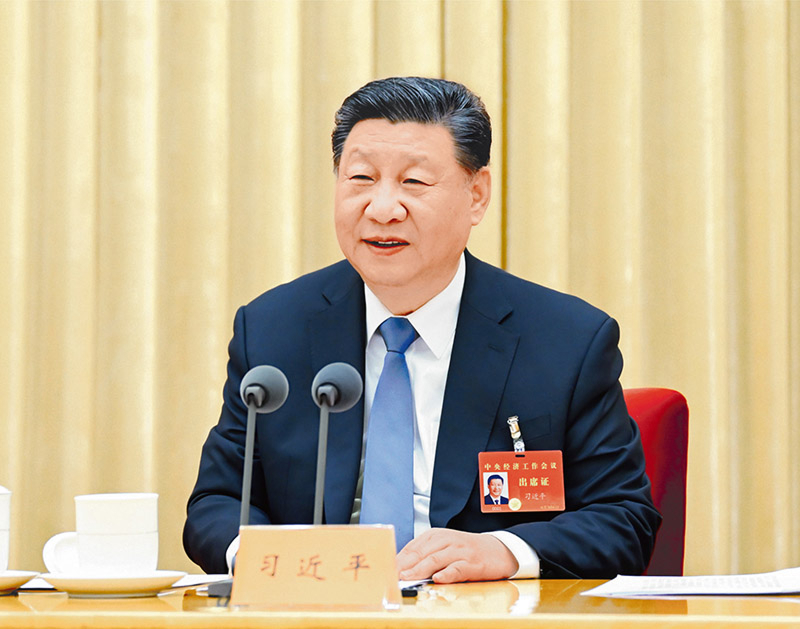
2024年12月11日至12日,中央经济工作会议在北京举行。中共中央总书记、国家主席、中央军委主席习近平出席会议并发表重要讲话。 新华社记者 谢环驰/摄
建设全国统一大市场,不仅是构建新发展格局、推动高质量发展的需要,而且是赢得国际竞争主动权的需要。我国作为全球第二大消费市场,必须把全国统一大市场建设好,增强我们从容应对风险挑战的底气。
纵深推进全国统一大市场建设,基本要求是“五统一、一开放”。“五统一”,就是统一市场基础制度,特别是实现产权保护、公平竞争、质量标准等制度的统一;统一市场基础设施,打通物流、资金流、信息流,健全现代商贸流通体系;统一政府行为尺度,地方在推动经济发展特别是招商引资时,哪些能干哪些不能干有明确规矩,不能各行其是;统一市场监管执法,明确市场监管行政处罚裁量基准,一把尺子量到底;统一要素资源市场,促进自由流动、高效配置,减少资源错配和闲置浪费。“一开放”,就是持续扩大开放,实行对内对外开放联通,不搞封闭运行。
落实这些基本要求,当前最急迫的是聚焦重点难点,下决心清除顽瘴痼疾。
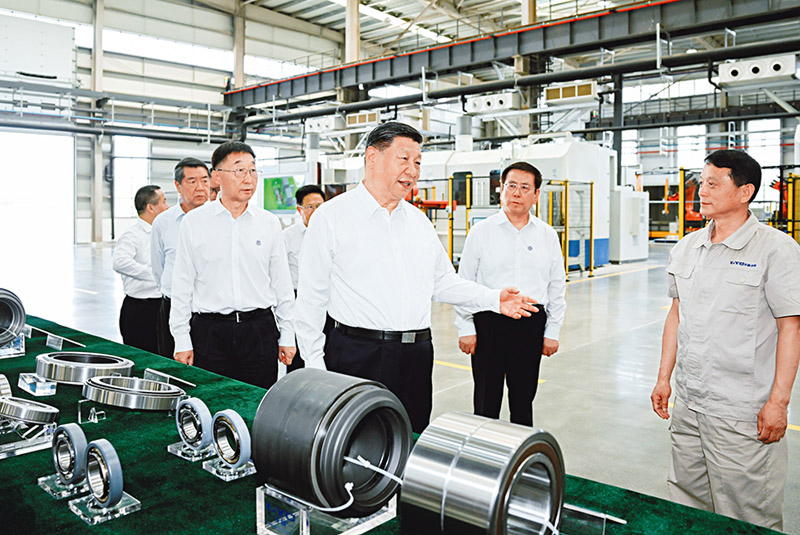
2025年5月19日至20日,中共中央总书记、国家主席、中央军委主席习近平在河南考察。这是19日下午,习近平在洛阳轴承集团股份有限公司智能工厂考察。 新华社记者 谢环驰/摄
第一,着力整治企业低价无序竞争乱象。“内卷”重灾区,要依法依规有效治理。更好发挥行业协会自律作用,引导企业提升产品品质,实行优质优价,反对低价劣质。推动落后产能有序退出,实现市场动态出清。线上线下一体治理。
第二,着力整治政府采购招标乱象。重点整治最低价中标、以次充好、利益勾连等突出问题。规范政府采购和招标投标,加强对中标结果的公平性审查,健全企业正常申诉渠道,完善投诉处理机制。
第三,着力整治地方招商引资乱象。要制定全国统一的地方招商引资行为清单,明确鼓励和禁止的具体行为。建立健全规范的财政补贴政策体系。加强招商引资信息披露。对违规行为查实后要严肃处理。
第四,着力推动内外贸一体化发展。畅通出口转内销路径,提高国内国际标准一致性,建设内外贸一体化综合服务平台,培育一批内外贸优质企业,开展“外贸优品中华行”活动。
第五,着力补齐法规制度短板。修改完善招标投标法、价格法等法律法规,强化制度标准的刚性约束。持续开展规范涉企执法专项行动。健全有利于市场统一的财税体制、统计核算制度和信用体系。
第六,着力纠治政绩观偏差。完善高质量发展考核体系和干部政绩考核评价体系。对违规招商引资、搞地方保护、新官不理旧账等行为,及时批评纠正,对性质恶劣的严肃追究责任。
建设全国统一大市场,既是攻坚战,也是持久战,各地区各部门要从政治和全局高度抓好落实。中央和地方、地方和地方、政府和企业、企业和企业都要加强协调配合,形成推进合力。
※这是习近平总书记2025年7月1日在二十届中央财经委员会第六次会议上讲话的一部分。
Deepening the Construction of a National Unified Market
Xi Jinping
Building a national unified market is a major decision made by the Party Central Committee. In recent years, we have successively issued the "Opinions on Accelerating the Construction of a National Unified Market" and a series of supporting measures, which have promoted the construction of a national unified market and achieved positive results. However, overall, this task remains arduous, and the construction of a national unified market faces many difficulties and obstacles.
From December 11 to 12, 2024, the Central Economic Work Conference was held in Beijing. Xi Jinping, General Secretary of the CPC Central Committee, President of the People's Republic of China, and Chairman of the Central Military Commission, attended the conference and delivered an important speech. Xinhua News Agency Photo by Xie Huanchi
Building a national unified market is not only necessary for building a new development pattern and promoting high-quality development, but also for gaining the initiative in international competition. As the world's second-largest consumer market, my country must build a national unified market well to strengthen our confidence in calmly responding to risks and challenges.
Deepening the construction of a national unified market relies on the fundamental requirements of "five unifications and one opening." The "five unifications" refer to unifying fundamental market institutions, particularly those related to property rights protection, fair competition, and quality standards; unifying market infrastructure, streamlining logistics, capital flows, and information flows, and strengthening the modern commercial circulation system; unifying the standards for government behavior, ensuring that local governments have clear rules for what they can and cannot do when promoting economic development, especially attracting investment, and that they cannot act independently; unifying market supervision and law enforcement, clarifying the criteria for administrative penalties for market supervision, and ensuring a consistent standard for all measures; and unifying the market for factor resources, promoting free flow and efficient allocation, and reducing resource mismatches and idle waste. The "one opening" refers to continuously expanding opening up, integrating domestic and international opening up, and avoiding closed-door operations.
To implement these basic requirements, the most urgent task is to focus on key challenges and resolutely eliminate stubborn problems.
From May 19 to 20, 2025, Xi Jinping, General Secretary of the CPC Central Committee, President of the People's Republic of China, and Chairman of the Central Military Commission, visited Henan. This is Xi Jinping inspecting the smart factory of Luoyang Bearing Group Co., Ltd. on the afternoon of the 19th. Photo by Xinhua News Agency reporter Xie Huanchi
First, we will focus on rectifying the chaotic phenomenon of low-price, disorderly competition among enterprises. Areas severely affected by "involution" must be effectively governed in accordance with laws and regulations. We will better leverage the self-regulatory role of industry associations to guide enterprises in improving product quality, implementing a policy of high quality and high prices, and opposing low prices and inferior quality. We will promote the orderly withdrawal of obsolete production capacity to achieve dynamic market clearance. We will implement integrated online and offline governance.
Second, we will focus on rectifying irregularities in government procurement and bidding. We will focus on addressing prominent issues such as the lowest bid, passing off inferior products as superior ones, and collusion. We will standardize government procurement and bidding, strengthen the fairness review of bid results, improve normal channels for enterprises to file complaints, and enhance the complaint handling mechanism.
Third, we will focus on rectifying irregularities in local investment promotion. We will formulate a nationwide unified list of local investment promotion activities, clearly defining which activities are encouraged and which are prohibited. We will establish and improve a standardized fiscal subsidy policy system. We will strengthen the disclosure of investment promotion information. We will severely punish verified violations.
Fourth, we will focus on promoting the integrated development of domestic and foreign trade. Smooth the conversion of exports to domestic sales, improve the consistency of domestic and international standards, build an integrated service platform for domestic and foreign trade, cultivate a group of high-quality domestic and foreign trade enterprises, and launch the "Foreign Trade Premium Products Tour of China" campaign.
Fifth, focus on filling gaps in laws and regulations. Revise and improve laws and regulations such as the Bidding Law and the Price Law, and strengthen the rigid constraints of institutional standards. Continue to carry out special operations to standardize law enforcement involving enterprises. Improve the fiscal and taxation system, statistical accounting system, and credit system that are conducive to market unification.
Sixth, focus on correcting distorted views of performance. Improve the high-quality development assessment system and the cadre performance assessment and evaluation system. Promptly criticize and correct violations of regulations in attracting investment, engaging in local protectionism, and new officials ignoring old accounts, and severely hold those responsible accountable.
Building a unified national market is both a crucial and protracted battle. All regions and departments must implement it from a political and overall perspective. The central and local governments, local governments, governments and enterprises, and enterprises must strengthen coordination and cooperation to form a joint force for advancement.
※This is part of General Secretary Xi Jinping’s speech at the Sixth Meeting of the 20th Central Financial and Economic Affairs Commission on July 1, 2025.
新华社北京4月10日电
中共中央 国务院关于加快建设全国统一大市场的意见
(2022年3月25日)
建设全国统一大市场是构建新发展格局的基础支撑和内在要求。为从全局和战略高度加快建设全国统一大市场,现提出如下意见。
一、总体要求
(一)指导思想。以习近平新时代中国特色社会主义思想为指导,全面贯彻党的十九大和十九届历次全会精神,弘扬伟大建党精神,坚持稳中求进工作总基调,完整、准确、全面贯彻新发展理念,加快构建新发展格局,全面深化改革开放,坚持创新驱动发展,推动高质量发展,坚持以供给侧结构性改革为主线,以满足人民日益增长的美好生活需要为根本目的,统筹发展和安全,充分发挥法治的引领、规范、保障作用,加快建立全国统一的市场制度规则,打破地方保护和市场分割,打通制约经济循环的关键堵点,促进商品要素资源在更大范围内畅通流动,加快建设高效规范、公平竞争、充分开放的全国统一大市场,全面推动我国市场由大到强转变,为建设高标准市场体系、构建高水平社会主义市场经济体制提供坚强支撑。
(二)工作原则
——立足内需,畅通循环。以高质量供给创造和引领需求,使生产、分配、流通、消费各环节更加畅通,提高市场运行效率,进一步巩固和扩展市场资源优势,使建设超大规模的国内市场成为一个可持续的历史过程。
——立破并举,完善制度。从制度建设着眼,明确阶段性目标要求,压茬推进统一市场建设,同时坚持问题导向,着力解决突出矛盾和问题,加快清理废除妨碍统一市场和公平竞争的各种规定和做法,破除各种封闭小市场、自我小循环。
——有效市场,有为政府。坚持市场化、法治化原则,充分发挥市场在资源配置中的决定性作用,更好发挥政府作用,强化竞争政策基础地位,加快转变政府职能,用足用好超大规模市场优势,让需求更好地引领优化供给,让供给更好地服务扩大需求,以统一大市场集聚资源、推动增长、激励创新、优化分工、促进竞争。
——系统协同,稳妥推进。不断提高政策的统一性、规则的一致性、执行的协同性,科学把握市场规模、结构、组织、空间、环境和机制建设的步骤与进度,坚持放管结合、放管并重,提升政府监管效能,增强在开放环境中动态维护市场稳定、经济安全的能力,有序扩大统一大市场的影响力和辐射力。
(三)主要目标
——持续推动国内市场高效畅通和规模拓展。发挥市场促进竞争、深化分工等优势,进一步打通市场效率提升、劳动生产率提高、居民收入增加、市场主体壮大、供给质量提升、需求优化升级之间的通道,努力形成供需互促、产销并进、畅通高效的国内大循环,扩大市场规模容量,不断培育发展强大国内市场,保持和增强对全球企业、资源的强大吸引力。
——加快营造稳定公平透明可预期的营商环境。以市场主体需求为导向,力行简政之道,坚持依法行政,公平公正监管,持续优化服务,加快打造市场化法治化国际化营商环境。充分发挥各地区比较优势,因地制宜为各类市场主体投资兴业营造良好生态。
——进一步降低市场交易成本。发挥市场的规模效应和集聚效应,加强和改进反垄断反不正当竞争执法司法,破除妨碍各种生产要素市场化配置和商品服务流通的体制机制障碍,降低制度性交易成本。促进现代流通体系建设,降低全社会流通成本。
——促进科技创新和产业升级。发挥超大规模市场具有丰富应用场景和放大创新收益的优势,通过市场需求引导创新资源有效配置,促进创新要素有序流动和合理配置,完善促进自主创新成果市场化应用的体制机制,支撑科技创新和新兴产业发展。
——培育参与国际竞争合作新优势。以国内大循环和统一大市场为支撑,有效利用全球要素和市场资源,使国内市场与国际市场更好联通。推动制度型开放,增强在全球产业链供应链创新链中的影响力,提升在国际经济治理中的话语权。
二、强化市场基础制度规则统一
(四)完善统一的产权保护制度。完善依法平等保护各种所有制经济产权的制度体系。健全统一规范的涉产权纠纷案件执法司法体系,强化执法司法部门协同,进一步规范执法领域涉产权强制措施规则和程序,进一步明确和统一行政执法、司法裁判标准,健全行政执法与刑事司法双向衔接机制,依法保护企业产权及企业家人身财产安全。推动知识产权诉讼制度创新,完善知识产权法院跨区域管辖制度,畅通知识产权诉讼与仲裁、调解的对接机制。
(五)实行统一的市场准入制度。严格落实“全国一张清单”管理模式,严禁各地区各部门自行发布具有市场准入性质的负面清单,维护市场准入负面清单制度的统一性、严肃性、权威性。研究完善市场准入效能评估指标,稳步开展市场准入效能评估。依法开展市场主体登记注册工作,建立全国统一的登记注册数据标准和企业名称自主申报行业字词库,逐步实现经营范围登记的统一表述。制定全国通用性资格清单,统一规范评价程序及管理办法,提升全国互通互认互用效力。
(六)维护统一的公平竞争制度。坚持对各类市场主体一视同仁、平等对待。健全公平竞争制度框架和政策实施机制,建立公平竞争政策与产业政策协调保障机制,优化完善产业政策实施方式。健全反垄断法律规则体系,加快推动修改反垄断法、反不正当竞争法,完善公平竞争审查制度,研究重点领域和行业性审查规则,健全审查机制,统一审查标准,规范审查程序,提高审查效能。
(七)健全统一的社会信用制度。编制出台全国公共信用信息基础目录,完善信用信息标准,建立公共信用信息同金融信息共享整合机制,形成覆盖全部信用主体、所有信用信息类别、全国所有区域的信用信息网络。建立健全以信用为基础的新型监管机制,全面推广信用承诺制度,建立企业信用状况综合评价体系,以信用风险为导向优化配置监管资源,依法依规编制出台全国失信惩戒措施基础清单。健全守信激励和失信惩戒机制,将失信惩戒和惩治腐败相结合。完善信用修复机制。加快推进社会信用立法。
三、推进市场设施高标准联通
(八)建设现代流通网络。优化商贸流通基础设施布局,加快数字化建设,推动线上线下融合发展,形成更多商贸流通新平台新业态新模式。推动国家物流枢纽网络建设,大力发展多式联运,推广标准化托盘带板运输模式。大力发展第三方物流,支持数字化第三方物流交付平台建设,推动第三方物流产业科技和商业模式创新,培育一批有全球影响力的数字化平台企业和供应链企业,促进全社会物流降本增效。加强应急物流体系建设,提升灾害高风险区域交通运输设施、物流站点等设防水平和承灾能力,积极防范粮食、能源等重要产品供应短缺风险。完善国家综合立体交通网,推进多层次一体化综合交通枢纽建设,推动交通运输设施跨区域一体化发展。建立健全城乡融合、区域联通、安全高效的电信、能源等基础设施网络。
(九)完善市场信息交互渠道。统一产权交易信息发布机制,实现全国产权交易市场联通。优化行业公告公示等重要信息发布渠道,推动各领域市场公共信息互通共享。优化市场主体信息公示,便利市场主体信息互联互通。推进同类型及同目的信息认证平台统一接口建设,完善接口标准,促进市场信息流动和高效使用。依法公开市场主体、投资项目、产量、产能等信息,引导供需动态平衡。
(十)推动交易平台优化升级。深化公共资源交易平台整合共享,研究明确各类公共资源交易纳入统一平台体系的标准和方式。坚持应进必进的原则要求,落实和完善“管办分离”制度,将公共资源交易平台覆盖范围扩大到适合以市场化方式配置的各类公共资源,加快推进公共资源交易全流程电子化,积极破除公共资源交易领域的区域壁垒。加快推动商品市场数字化改造和智能化升级,鼓励打造综合性商品交易平台。加快推进大宗商品期现货市场建设,不断完善交易规则。鼓励交易平台与金融机构、中介机构合作,依法发展涵盖产权界定、价格评估、担保、保险等业务的综合服务体系。
四、打造统一的要素和资源市场
(十一)健全城乡统一的土地和劳动力市场。统筹增量建设用地与存量建设用地,实行统一规划,强化统一管理。完善城乡建设用地增减挂钩节余指标、补充耕地指标跨区域交易机制。完善全国统一的建设用地使用权转让、出租、抵押二级市场。健全统一规范的人力资源市场体系,促进劳动力、人才跨地区顺畅流动。完善财政转移支付和城镇新增建设用地规模与农业转移人口市民化挂钩政策。
(十二)加快发展统一的资本市场。统一动产和权利担保登记,依法发展动产融资。强化重要金融基础设施建设与统筹监管,统一监管标准,健全准入管理。选择运行安全规范、风险管理能力较强的区域性股权市场,开展制度和业务创新试点,加强区域性股权市场和全国性证券市场板块间的合作衔接。推动债券市场基础设施互联互通,实现债券市场要素自由流动。发展供应链金融,提供直达各流通环节经营主体的金融产品。加大对资本市场的监督力度,健全权责清晰、分工明确、运行顺畅的监管体系,筑牢防范系统性金融风险安全底线。坚持金融服务实体经济,防止脱实向虚。为资本设置“红绿灯”,防止资本无序扩张。
(十三)加快培育统一的技术和数据市场。建立健全全国性技术交易市场,完善知识产权评估与交易机制,推动各地技术交易市场互联互通。完善科技资源共享服务体系,鼓励不同区域之间科技信息交流互动,推动重大科研基础设施和仪器设备开放共享,加大科技领域国际合作力度。加快培育数据要素市场,建立健全数据安全、权利保护、跨境传输管理、交易流通、开放共享、安全认证等基础制度和标准规范,深入开展数据资源调查,推动数据资源开发利用。
(十四)建设全国统一的能源市场。在有效保障能源安全供应的前提下,结合实现碳达峰碳中和目标任务,有序推进全国能源市场建设。在统筹规划、优化布局基础上,健全油气期货产品体系,规范油气交易中心建设,优化交易场所、交割库等重点基础设施布局。推动油气管网设施互联互通并向各类市场主体公平开放。稳妥推进天然气市场化改革,加快建立统一的天然气能量计量计价体系。健全多层次统一电力市场体系,研究推动适时组建全国电力交易中心。进一步发挥全国煤炭交易中心作用,推动完善全国统一的煤炭交易市场。
(十五)培育发展全国统一的生态环境市场。依托公共资源交易平台,建设全国统一的碳排放权、用水权交易市场,实行统一规范的行业标准、交易监管机制。推进排污权、用能权市场化交易,探索建立初始分配、有偿使用、市场交易、纠纷解决、配套服务等制度。推动绿色产品认证与标识体系建设,促进绿色生产和绿色消费。
五、推进商品和服务市场高水平统一
(十六)健全商品质量体系。建立健全质量分级制度,广泛开展质量管理体系升级行动,加强全供应链、全产业链、产品全生命周期管理。深化质量认证制度改革,支持社会力量开展检验检测业务,探索推进计量区域中心、国家产品质量检验检测中心建设,推动认证结果跨行业跨区域互通互认。推动重点领域主要消费品质量标准与国际接轨,深化质量认证国际合作互认,实施产品伤害监测和预防干预,完善质量统计监测体系。推进内外贸产品同线同标同质。进一步巩固拓展中国品牌日活动等品牌发展交流平台,提高中国品牌影响力和认知度。
(十七)完善标准和计量体系。优化政府颁布标准与市场自主制定标准结构,对国家标准和行业标准进行整合精简。强化标准验证、实施、监督,健全现代流通、大数据、人工智能、区块链、第五代移动通信(5G)、物联网、储能等领域标准体系。深入开展人工智能社会实验,推动制定智能社会治理相关标准。推动统一智能家居、安防等领域标准,探索建立智能设备标识制度。加快制定面部识别、指静脉、虹膜等智能化识别系统的全国统一标准和安全规范。紧贴战略性新兴产业、高新技术产业、先进制造业等重点领域需求,突破一批关键测量技术,研制一批新型标准物质,不断完善国家计量体系。促进内外资企业公平参与我国标准化工作,提高标准制定修订的透明度和开放度。开展标准、计量等国际交流合作。加强标准必要专利国际化建设,积极参与并推动国际知识产权规则形成。
(十八)全面提升消费服务质量。改善消费环境,强化消费者权益保护。加快完善并严格执行缺陷产品召回制度,推动跨国跨地区经营的市场主体为消费者提供统一便捷的售后服务,进一步畅通商品异地、异店退换货通道,提升消费者售后体验。畅通消费者投诉举报渠道,优化消费纠纷解决流程与反馈机制,探索推进消费者权益保护工作部门间衔接联动机制。建立完善消费投诉信息公示制度,促进消费纠纷源头治理。完善服务市场预付式消费管理办法。围绕住房、教育培训、医疗卫生、养老托育等重点民生领域,推动形成公开的消费者权益保护事项清单,完善纠纷协商处理办法。
六、推进市场监管公平统一
(十九)健全统一市场监管规则。加强市场监管行政立法工作,完善市场监管程序,加强市场监管标准化规范化建设,依法公开监管标准和规则,增强市场监管制度和政策的稳定性、可预期性。对食品药品安全等直接关系群众健康和生命安全的重点领域,落实最严谨标准、最严格监管、最严厉处罚、最严肃问责。对互联网医疗、线上教育培训、在线娱乐等新业态,推进线上线下一体化监管。加强对工程建设领域统一公正监管,依纪依法严厉查处违纪违法行为。强化重要工业产品风险监测和监督抽查,督促企业落实质量安全主体责任。充分发挥行业协会商会作用,建立有效的政企沟通机制,形成政府监管、平台自律、行业自治、社会监督的多元治理新模式。
(二十)强化统一市场监管执法。推进维护统一市场综合执法能力建设,加强知识产权保护、反垄断、反不正当竞争执法力量。强化部门联动,建立综合监管部门和行业监管部门联动的工作机制,统筹执法资源,减少执法层级,统一执法标准和程序,规范执法行为,减少自由裁量权,促进公平公正执法,提高综合执法效能,探索在有关行业领域依法建立授权委托监管执法方式。鼓励跨行政区域按规定联合发布统一监管政策法规及标准规范,积极开展联动执法,创新联合监管模式,加强调查取证和案件处置合作。
(二十一)全面提升市场监管能力。深化简政放权、放管结合、优化服务改革,完善“双随机、一公开”监管、信用监管、“互联网+监管”、跨部门协同监管等方式,加强各类监管的衔接配合。充分利用大数据等技术手段,加快推进智慧监管,提升市场监管政务服务、网络交易监管、消费者权益保护、重点产品追溯等方面跨省通办、共享协作的信息化水平。建立健全跨行政区域网络监管协作机制,鼓励行业协会商会、新闻媒体、消费者和公众共同开展监督评议。对新业态新模式坚持监管规范和促进发展并重,及时补齐法规和标准空缺。
七、进一步规范不当市场竞争和市场干预行为
(二十二)着力强化反垄断。完善垄断行为认定法律规则,健全经营者集中分类分级反垄断审查制度。破除平台企业数据垄断等问题,防止利用数据、算法、技术手段等方式排除、限制竞争。加强对金融、传媒、科技、民生等领域和涉及初创企业、新业态、劳动密集型行业的经营者集中审查,提高审查质量和效率,强化垄断风险识别、预警、防范。稳步推进自然垄断行业改革,加强对电网、油气管网等网络型自然垄断环节的监管。加强对创新型中小企业原始创新和知识产权的保护。
(二十三)依法查处不正当竞争行为。对市场主体、消费者反映强烈的重点行业和领域,加强全链条竞争监管执法,以公正监管保障公平竞争。加强对平台经济、共享经济等新业态领域不正当竞争行为的规制,整治网络黑灰产业链条,治理新型网络不正当竞争行为。健全跨部门跨行政区域的反不正当竞争执法信息共享、协作联动机制,提高执法的统一性、权威性、协调性。构建跨行政区域的反不正当竞争案件移送、执法协助、联合执法机制,针对新型、疑难、典型案件畅通会商渠道、互通裁量标准。
(二十四)破除地方保护和区域壁垒。指导各地区综合比较优势、资源环境承载能力、产业基础、防灾避险能力等因素,找准自身功能定位,力戒贪大求洋、低层次重复建设和过度同质竞争,不搞“小而全”的自我小循环,更不能以“内循环”的名义搞地区封锁。建立涉企优惠政策目录清单并及时向社会公开,及时清理废除各地区含有地方保护、市场分割、指定交易等妨碍统一市场和公平竞争的政策,全面清理歧视外资企业和外地企业、实行地方保护的各类优惠政策,对新出台政策严格开展公平竞争审查。加强地区间产业转移项目协调合作,建立重大问题协调解决机制,推动产业合理布局、分工进一步优化。鼓励各地区持续优化营商环境,依法开展招商引资活动,防止招商引资恶性竞争行为,以优质的制度供给和制度创新吸引更多优质企业投资。
(二十五)清理废除妨碍依法平等准入和退出的规定做法。除法律法规明确规定外,不得要求企业必须在某地登记注册,不得为企业跨区域经营或迁移设置障碍。不得设置不合理和歧视性的准入、退出条件以限制商品服务、要素资源自由流动。不得以备案、注册、年检、认定、认证、指定、要求设立分公司等形式设定或者变相设定准入障碍。不得在资质认定、业务许可等方面,对外地企业设定明显高于本地经营者的资质要求、技术要求、检验标准或评审标准。清理规范行政审批、许可、备案等政务服务事项的前置条件和审批标准,不得将政务服务事项转为中介服务事项,没有法律法规依据不得在政务服务前要求企业自行检测、检验、认证、鉴定、公证以及提供证明等,不得搞变相审批、有偿服务。未经公平竞争不得授予经营者特许经营权,不得限定经营、购买、使用特定经营者提供的商品和服务。
(二十六)持续清理招标采购领域违反统一市场建设的规定和做法。制定招标投标和政府采购制度规则要严格按照国家有关规定进行公平竞争审查、合法性审核。招标投标和政府采购中严禁违法限定或者指定特定的专利、商标、品牌、零部件、原产地、供应商,不得违法设定与招标采购项目具体特点和实际需要不相适应的资格、技术、商务条件等。不得违法限定投标人所在地、所有制形式、组织形式,或者设定其他不合理的条件以排斥、限制经营者参与投标采购活动。深入推进招标投标全流程电子化,加快完善电子招标投标制度规则、技术标准,推动优质评标专家等资源跨地区跨行业共享。
八、组织实施保障
(二十七)加强党的领导。各地区各部门要充分认识建设全国统一大市场对于构建新发展格局的重要意义,切实把思想和行动统一到党中央决策部署上来,做到全国一盘棋,统一大市场,畅通大循环,确保各项重点任务落到实处。
(二十八)完善激励约束机制。探索研究全国统一大市场建设标准指南,对积极推动落实全国统一大市场建设、取得突出成效的地区可按国家有关规定予以奖励。动态发布不当干预全国统一大市场建设问题清单,建立典型案例通报约谈和问题整改制度,着力解决妨碍全国统一大市场建设的不当市场干预和不当竞争行为问题。
(二十九)优先推进区域协作。结合区域重大战略、区域协调发展战略实施,鼓励京津冀、长三角、粤港澳大湾区以及成渝地区双城经济圈、长江中游城市群等区域,在维护全国统一大市场前提下,优先开展区域市场一体化建设工作,建立健全区域合作机制,积极总结并复制推广典型经验和做法。
(三十)形成工作合力。各地区各部门要根据职责分工,不折不扣落实本意见要求,对本地区本部门是否存在妨碍全国统一大市场建设的规定和实际情况开展自查清理。国家发展改革委、市场监管总局会同有关部门建立健全促进全国统一大市场建设的部门协调机制,加大统筹协调力度,强化跟踪评估,及时督促检查,推动各方抓好贯彻落实。加强宣传引导和舆论监督,为全国统一大市场建设营造良好社会氛围。重大事项及时向党中央、国务院请示报告。
April 10, 2022, 7:20 PM Source: Xinhua News Agency
Xinhua News Agency, Beijing, April 10
Opinions of the CPC Central Committee and the State Council on Accelerating the Construction of a National Unified Market
(March 25, 2022)
Building a national unified market is the fundamental support and inherent requirement for building a new development landscape. To accelerate the construction of a national unified market from a holistic and strategic perspective, the following opinions are put forward.
I. Overall Requirements
(I) Guiding Ideology Guided by Xi Jinping Thought on Socialism with Chinese Characteristics for a New Era, we will fully implement the spirit of the 19th National Congress of the Communist Party of China and all previous plenary sessions of the 19th CPC Central Committee, carry forward the great spirit of Party building, adhere to the general working principle of seeking progress while maintaining stability, fully, accurately, and comprehensively implement the new development concept, accelerate the establishment of a new development pattern, comprehensively deepen reform and opening up, adhere to innovation-driven development, promote high-quality development, adhere to supply-side structural reform as the main line, and take meeting the people's ever-growing needs for a better life as the fundamental goal. We will coordinate development and security, give full play to the guiding, normative, and safeguarding role of the rule of law, accelerate the establishment of unified national market systems and rules, break down local protectionism and market segmentation, remove key bottlenecks that restrict economic circulation, promote the smooth flow of commodities, factors, and resources on a larger scale, accelerate the construction of an efficient, standardized, fair, competitive, and fully open unified national market, comprehensively promote the transformation of my country's market from large to strong, and provide strong support for building a high-standard market system and a high-level socialist market economic system.
(II) Working Principles
—Based on domestic demand and unblocking circulation. High-quality supply will create and guide demand, making production, distribution, circulation, and consumption more streamlined, improving market efficiency, further consolidating and expanding market resource advantages, and making the construction of a super-large domestic market a sustainable historical process.
— Improving institutions through both building and demolition. Focusing on institutional development, clarifying phased goals and requirements, and steadily advancing the construction of a unified market, we will also adhere to a problem-oriented approach, focusing on resolving prominent contradictions and issues, accelerating the elimination of regulations and practices that hinder the unified market and fair competition, and breaking down closed, small markets and self-circulating cycles.
— Effective markets, effective governments. Adhere to market-oriented and rule-of-law principles, give full play to the decisive role of the market in resource allocation, better leverage the role of the government, strengthen the fundamental role of competition policy, accelerate the transformation of government functions, and fully leverage the advantages of a super-large market. Let demand better guide the optimization of supply, and let supply better serve the expansion of demand. This unified, large market will pool resources, drive growth, stimulate innovation, optimize the division of labor, and promote competition.
— Systematic coordination and steady progress. Continuously improve policy uniformity, rule consistency, and implementation coordination. Scientifically grasp the steps and progress of market scale, structure, organization, space, environment, and mechanism development. Adhere to the combination of deregulation and regulation, giving equal emphasis to deregulation and regulation. Improve government regulatory effectiveness, enhance the ability to dynamically maintain market stability and economic security in an open environment, and orderly expand the influence and impact of the unified large market.
(III) Main Objectives
- Continue to promote the efficient and smooth operation of the domestic market and its expansion. Leveraging the market's advantages in promoting competition and deepening the division of labor, further open up channels for improving market efficiency, increasing labor productivity, increasing residents' income, strengthening market entities, improving supply quality, and optimizing and upgrading demand. Strive to establish a smooth and efficient domestic circulation in which supply and demand mutually promote each other, production and sales advance in tandem, and sales progress simultaneously. Expand the market scale and capacity, continuously cultivate and develop a strong domestic market, and maintain and enhance its strong appeal to global businesses and resources.
- Accelerate the creation of a stable, fair, transparent, and predictable business environment. Guided by the needs of market entities, we will strive to streamline administration, adhere to law-based administration, fair and impartial supervision, continuously optimize services, and accelerate the creation of a market-oriented, law-based, and internationalized business environment. Leverage the comparative advantages of various regions and create a favorable environment for investment and business development for all types of market entities, tailored to local conditions.
- Further reduce market transaction costs. Leverage the market's scale and agglomeration effects, strengthen and improve antitrust and anti-unfair competition law enforcement and judicial processes, remove institutional and mechanism barriers that hinder the market-based allocation of various production factors and the circulation of goods and services, and reduce institutional transaction costs. Promote the development of a modern circulation system and reduce circulation costs across society.
- Promote scientific and technological innovation and industrial upgrading. Leverage the advantages of ultra-large-scale markets in enriching application scenarios and amplifying the benefits of innovation. Guide the effective allocation of innovation resources through market demand, promote the orderly flow and rational allocation of innovation factors, improve the systems and mechanisms that promote the market-based application of independent innovation achievements, and support scientific and technological innovation and the development of emerging industries.
- Cultivate new advantages for participating in international competition and cooperation. Leveraging the domestic circulation and a unified large market, effectively utilize global factors and market resources to better connect the domestic and international markets. Promote institutional opening-up, enhance influence in the global industrial chain, supply chain, and innovation chain, and enhance China's voice in international economic governance.
II. Strengthen the unification of market-based systems and rules
(IV) Improve a unified property rights protection system. Improve the system for equal protection of economic property rights of all types of ownership in accordance with the law. Improve a unified and standardized law enforcement and judicial system for property rights disputes, strengthen coordination between law enforcement and judicial departments, further standardize the rules and procedures for compulsory measures involving property rights in law enforcement, further clarify and unify administrative law enforcement and judicial adjudication standards, improve the two-way connection mechanism between administrative law enforcement and criminal justice, and protect corporate property rights and the personal and property safety of business owners in accordance with the law. Promote innovation in the intellectual property litigation system, improve the cross-regional jurisdiction system of intellectual property courts, and streamline the connection mechanism between intellectual property litigation, arbitration, and mediation.
(5) Implement a unified market access system. Strictly implement the "one national list" management model, strictly prohibiting regions and departments from independently issuing negative lists with market access characteristics, and maintain the unity, seriousness, and authority of the market access negative list system. Research and improve market access effectiveness evaluation indicators and steadily carry out market access effectiveness evaluations. Carry out market entity registration work in accordance with the law, establish a nationwide unified registration data standard and an industry vocabulary database for self-declaration of enterprise names, and gradually achieve a unified description for business scope registration. Formulate a national universal qualification list, standardize the evaluation procedures and management methods, and enhance the effectiveness of national interoperability, mutual recognition, and mutual use.
(6) Maintain a unified fair competition system. Adhere to equal treatment for all types of market entities. Improve the fair competition system framework and policy implementation mechanisms, establish a coordination and guarantee mechanism between fair competition and industrial policies, and optimize and improve the implementation methods of industrial policies. Improve the anti-monopoly legal and regulatory system, accelerate the revision of the Anti-Monopoly Law and the Anti-Unfair Competition Law, improve the fair competition review system, study review rules for key areas and industries, improve the review mechanism, unify review standards, standardize review procedures, and enhance review efficiency.
(7) Improve a unified social credit system. Compile and publish a national basic directory of public credit information, improve credit information standards, establish a mechanism for sharing and integrating public credit information with financial information, and form a credit information network covering all credit entities, all credit information categories, and all regions nationwide. Establish and improve a new credit-based regulatory mechanism, comprehensively promote the credit commitment system, establish a comprehensive assessment system for corporate credit status, optimize the allocation of regulatory resources based on credit risk, and compile and publish a national basic list of disciplinary measures for breaches of trust in accordance with laws and regulations. Improve mechanisms for rewarding compliance and punishing breaches of trust, integrating disciplinary measures for breaches of trust with combating corruption. Improve credit repair mechanisms. Accelerate the advancement of social credit legislation.
III. Promote High-Standard Connectivity of Market Facilities
(8) Build a Modern Distribution Network. Optimize the layout of commercial distribution infrastructure, accelerate digital development, promote the integration of online and offline, and form more new platforms, new business formats, and new models for commercial distribution. Promote the development of a national logistics hub network, vigorously develop multimodal transport, and promote standardized pallet and palletized transport models. Vigorously develop third-party logistics, support the construction of digital third-party logistics delivery platforms, promote technological and business model innovation in the third-party logistics industry, cultivate a group of globally influential digital platform and supply chain companies, and promote cost reduction and efficiency improvement in logistics across society. Strengthen the development of emergency logistics systems, improve the defense and disaster-resistance capabilities of transportation facilities and logistics stations in high-risk disaster areas, and actively prevent the risk of supply shortages of important products such as food and energy. Improve the national comprehensive three-dimensional transportation network, promote the construction of multi-level integrated transportation hubs, and promote the integrated development of transportation facilities across regions. Establish and improve a safe and efficient telecommunications, energy, and other infrastructure network that integrates urban and rural areas, connects regions, and is safe and efficient.
(9) Improve channels for market information exchange. Unify the mechanism for publishing property rights transaction information and achieve connectivity across the national property rights transaction market. Optimize channels for disseminating important information, such as industry announcements and public notices, to promote the interconnection and sharing of public information across various market sectors. Optimize the public disclosure of market entity information to facilitate the interconnection and interoperability of market entity information. Promote the development of unified interfaces for similar information authentication platforms and improve interface standards to promote the flow and efficient use of market information. Disclose information on market entities, investment projects, output, and production capacity in accordance with the law to guide the dynamic balance of supply and demand.
(10) Promote the optimization and upgrading of trading platforms. Deepen the integration and sharing of public resource trading platforms, and study and clarify the standards and methods for incorporating various types of public resource transactions into a unified platform system. Adhere to the principle of inclusion where necessary, implement and improve the "separation of management and operation" system, expand the coverage of public resource trading platforms to include various types of public resources suitable for market-based allocation, accelerate the full electronicization of public resource trading processes, and actively break down regional barriers in the public resource trading sector. Accelerate the digital transformation and intelligent upgrading of commodity markets, and encourage the development of comprehensive commodity trading platforms. Accelerate the development of commodity futures and spot markets, and continuously improve trading rules. Trading platforms are encouraged to collaborate with financial institutions and intermediaries to develop a comprehensive service system covering property rights definition, price assessment, guarantees, insurance, and other services in accordance with the law.
IV. Build a Unified Factor and Resource Market
(11) Improve unified urban and rural land and labor markets. Coordinate incremental construction land with existing construction land, implement unified planning, and strengthen unified management. Improve cross-regional trading mechanisms for surplus indicators linked to the increase and decrease of urban and rural construction land and supplementary cultivated land indicators. Improve a unified national secondary market for the transfer, leasing, and mortgage of construction land use rights. Improve a unified and standardized human resources market system to promote the smooth flow of labor and talent across regions. Improve policies linking fiscal transfer payments and the scale of new urban construction land with the urbanization of migrant workers.
(12) Accelerate the development of a unified capital market. Unify the registration of movable property and rights guarantees, and develop movable property financing in accordance with the law. Strengthen the development and coordinated supervision of key financial infrastructure, unify regulatory standards, and improve market access management. Select regional equity markets with safe and standardized operations and strong risk management capabilities, conduct pilot programs for institutional and business innovation, and strengthen cooperation and coordination between regional equity markets and the national securities market. Promote the interconnection and interoperability of bond market infrastructure to achieve the free flow of bond market elements. Develop supply chain finance, providing financial products that directly reach operating entities in all circulation links. Strengthen oversight of the capital market, establish a sound regulatory system with clear responsibilities, a clear division of labor, and smooth operation, and build a solid safety bottom line to prevent systemic financial risks. Adhere to financial services for the real economy and prevent them from deviating from the real economy to the virtual economy. Set "traffic lights" for capital to prevent the disorderly expansion of capital.
(13) Accelerate the development of a unified technology and data market. Establish and improve a national technology trading market, improve intellectual property evaluation and trading mechanisms, and promote the interconnection and interoperability of technology trading markets across regions. Improve the scientific and technological resource sharing service system, encourage the exchange and interaction of scientific and technological information between different regions, promote the open sharing of major scientific research infrastructure and equipment, and strengthen international cooperation in science and technology. Accelerate the development of the data element market, establish and improve basic systems and standards for data security, rights protection, cross-border transmission management, transaction circulation, open sharing, and security certification, conduct in-depth data resource surveys, and promote the development and utilization of data resources.
(14) Build a unified national energy market. On the premise of effectively ensuring energy supply security and in conjunction with achieving the goals of carbon peak and carbon neutrality, orderly advance the development of a national energy market. Based on coordinated planning and optimized layout, improve the oil and gas futures product system, standardize the construction of oil and gas trading centers, and optimize the layout of key infrastructure such as trading venues and delivery warehouses. Promote the interconnection and interoperability of oil and gas pipeline facilities and ensure fair access to all market players. Steadily advance the market-oriented reform of natural gas and accelerate the establishment of a unified natural gas energy metering and pricing system. Improve the multi-tiered unified electricity market system and study and promote the timely establishment of a national electricity trading center. Further leverage the role of the national coal trading center and promote the improvement of a unified national coal trading market.
(15) Cultivate and develop a unified national ecological and environmental market. Relying on public resource trading platforms, establish a unified national carbon emission rights and water use rights trading market, and implement unified and standardized industry standards and trading supervision mechanisms. Promote market-based trading of pollution emission rights and energy use rights, and explore the establishment of systems for initial allocation, paid use, market trading, dispute resolution, and supporting services. Promote the development of a green product certification and labeling system to promote green production and green consumption. V. Promote High-Level Unification of the Commodity and Service Markets
(16) Improve the Commodity Quality System. Establish and improve a quality grading system, widely carry out quality management system upgrades, and strengthen management across the entire supply chain, industrial chain, and product lifecycle. Deepen the reform of the quality certification system, support private sectors in conducting inspection and testing services, explore and promote the establishment of regional metrology centers and national product quality inspection and testing centers, and promote cross-industry and cross-regional interoperability and mutual recognition of certification results. Promote the alignment of quality standards for major consumer products in key areas with international standards, deepen international cooperation and mutual recognition in quality certification, implement product injury monitoring and preventive interventions, and improve the quality statistical monitoring system. Promote the same production line, same standards, and same quality for domestic and foreign trade products. Further consolidate and expand brand development and exchange platforms such as China Brand Day to enhance the influence and recognition of Chinese brands.
(17) Improve the Standards and Metrology System. Optimize the structure between government-issued standards and market-driven standards, and integrate and streamline national and industry standards. Strengthen standard verification, implementation, and supervision, and improve the standard system in areas such as modern circulation, big data, artificial intelligence, blockchain, fifth-generation mobile communications (5G), the Internet of Things, and energy storage. Conduct in-depth social experiments in artificial intelligence and promote the formulation of standards related to intelligent social governance. Promote unified standards in areas such as smart homes and security, and explore the establishment of a smart device identification system. Accelerate the formulation of unified national standards and safety specifications for intelligent recognition systems such as facial recognition, finger vein recognition, and iris recognition. Closely aligned with the needs of key sectors such as strategic emerging industries, high-tech industries, and advanced manufacturing, achieve breakthroughs in a number of key measurement technologies, develop a number of new standard materials, and continuously improve the national metrology system. Promote equal participation of domestic and foreign-funded enterprises in my country's standardization work, and increase the transparency and openness of standard formulation and revision. Carry out international exchanges and cooperation in standards, metrology, and other areas. Strengthen the internationalization of standard-essential patents, and actively participate in and promote the formation of international intellectual property rules.
(18) Comprehensively improve the quality of consumer services. Improve the consumer environment and strengthen consumer rights protection. Accelerate the improvement and strict implementation of the defective product recall system, encourage market entities operating across borders and regions to provide consumers with unified and convenient after-sales service, further streamline product return and exchange channels across locations and stores, and enhance the consumer after-sales experience. Streamline channels for consumer complaints and reporting, optimize consumer dispute resolution processes and feedback mechanisms, and explore and promote inter-departmental coordination and linkage mechanisms for consumer rights protection. Establish and improve a system for publicizing consumer complaint information to promote the resolution of consumer disputes at their source. Improve the management of prepaid consumption in the service market. Focusing on key livelihood areas such as housing, education and training, healthcare, and elderly care and childcare, promote the formation of a public list of consumer rights protection issues and improve dispute resolution methods.
VI. Promote Fair and Unified Market Supervision
(19) Improve unified market supervision rules. Strengthen administrative legislation for market supervision, improve market supervision procedures, strengthen the standardization and regularization of market supervision, disclose regulatory standards and rules in accordance with the law, and enhance the stability and predictability of market supervision systems and policies. Implement the most rigorous standards, strictest supervision, most severe penalties, and the most serious accountability in key areas directly related to public health and life safety, such as food and drug safety. Promote integrated online and offline supervision of new business formats such as internet healthcare, online education and training, and online entertainment. Strengthen unified and fair supervision in the engineering construction sector, and severely investigate and punish violations of discipline and law in accordance with discipline and law. Strengthen risk monitoring and supervisory spot checks on important industrial products, and urge enterprises to fulfill their primary responsibility for quality and safety. Give full play to the role of industry associations and chambers of commerce, establish an effective government-enterprise communication mechanism, and form a new model of multi-faceted governance combining government supervision, platform self-discipline, industry autonomy, and social oversight.
(20) Strengthen unified market supervision and law enforcement. Promote the development of comprehensive law enforcement capabilities to maintain a unified market, and strengthen intellectual property protection, anti-monopoly, and anti-unfair competition law enforcement. Strengthen interdepartmental coordination, establish a working mechanism for coordination between comprehensive regulatory departments and industry regulatory departments, coordinate law enforcement resources, reduce law enforcement levels, unify law enforcement standards and procedures, standardize law enforcement behavior, reduce discretionary power, promote fair and just law enforcement, improve the effectiveness of comprehensive law enforcement, and explore the establishment of authorized and delegated regulatory enforcement methods in relevant industry sectors in accordance with the law. Encourage the joint issuance of unified regulatory policies, regulations, and standards across administrative regions in accordance with regulations, actively carry out coordinated law enforcement, innovate joint regulatory models, and strengthen cooperation in investigation, evidence collection, and case handling.
(21) Comprehensively enhance market supervision capabilities. Deepen reforms to streamline administration, delegate power, combine regulation and supervision, and optimize services. Improve "double random, one public" supervision, credit supervision, "Internet + supervision," and cross-departmental collaborative supervision methods, and strengthen coordination and cooperation among various types of supervision. Fully utilize big data and other technical means to accelerate the promotion of smart supervision, and enhance the level of information technology in cross-provincial unified administration and shared collaboration in market supervision government services, online transaction supervision, consumer rights protection, and key product traceability. Establish and improve cross-administrative region online regulatory collaboration mechanisms, and encourage industry associations, chambers of commerce, news media, consumers, and the public to jointly conduct supervision and evaluation. For new business forms and models, we will prioritize both regulation and development, and promptly address gaps in regulations and standards.
VII. Further Regulate Unfair Market Competition and Market Interference
(22) Focus on Strengthening Anti-monopoly. Improve legal rules for identifying monopolistic behavior and improve the anti-monopoly review system for classified and graded concentrations of operators. Eliminate data monopolies by platform companies and prevent the use of data, algorithms, and technical means to exclude or restrict competition. Strengthen the review of concentrations of operators in the financial, media, technology, and livelihood sectors, as well as in start-ups, new business forms, and labor-intensive industries, improve the quality and efficiency of reviews, and strengthen the identification, early warning, and prevention of monopoly risks. Steadily advance the reform of natural monopoly industries and strengthen supervision of network-based natural monopolies such as power grids and oil and gas pipelines. Strengthen the protection of original innovation and intellectual property rights of innovative small and medium-sized enterprises.
(23) Investigate and punish unfair competition in accordance with the law. Strengthen full-chain competition supervision and law enforcement in key industries and sectors where market entities and consumers have strong complaints, ensuring fair competition through impartial supervision. Strengthen the regulation of unfair competition in emerging business sectors such as the platform economy and the sharing economy, rectify the online black and gray industry chains, and address new types of online unfair competition. Improve cross-departmental and cross-administrative region anti-unfair competition law enforcement information sharing and collaborative linkage mechanisms to enhance the uniformity, authority, and coordination of law enforcement. Establish cross-administrative region mechanisms for the transfer, law enforcement assistance, and joint law enforcement of anti-unfair competition cases, and facilitate consultation channels and shared discretionary standards for new, difficult, and typical cases.
(24) Break down local protectionism and regional barriers. Guide regions to accurately identify their own functional positioning based on comprehensive comparative advantages, resource and environmental carrying capacity, industrial foundation, and disaster prevention and mitigation capabilities. Strive to avoid excessive pursuit of large-scale and foreign products, low-level duplicate construction, and excessive homogeneous competition. Avoid self-circulation through "small but comprehensive" strategies, and certainly do not impose regional blockades in the name of "internal circulation." Establish a catalog of preferential policies for enterprises and make it publicly available in a timely manner. Promptly eliminate and abolish policies in various regions that contain local protectionism, market segmentation, designated transactions, and other practices that hinder the unified market and fair competition. Comprehensively eliminate all preferential policies that discriminate against foreign-invested and non-local enterprises and implement local protectionism. Strictly conduct fair competition reviews of newly issued policies. Strengthen coordination and cooperation among regions on industrial transfer projects, establish a mechanism for coordinating and resolving major issues, and promote the rational layout of industries and further optimize the division of labor. Encourage all regions to continuously optimize the business environment, conduct investment promotion activities in accordance with the law, prevent vicious competition in investment promotion, and attract more high-quality enterprises to invest through high-quality institutional provision and institutional innovation.
(25) Eliminate and abolish regulations and practices that hinder equal access and exit according to law. Except as expressly provided by laws and regulations, enterprises shall not be required to register in a specific place, and obstacles shall not be imposed on enterprises operating or relocating across regions. Unreasonable and discriminatory entry and exit conditions shall not be imposed to restrict the free flow of goods, services, and factor resources. Entry barriers shall not be imposed or disguised in the form of filing, registration, annual inspection, accreditation, certification, designation, or requirements for establishing branches. In terms of qualification certification and business licensing, non-local enterprises shall not be subject to qualification requirements, technical requirements, inspection standards, or evaluation criteria that are significantly higher than those of local operators. The preconditions and approval standards for administrative approvals, licensing, and filings for government services shall be standardized. Government services shall not be converted into intermediary services. Enterprises shall not be required to conduct self-testing, inspection, certification, appraisal, notarization, or provide certifications before providing government services without legal or regulatory basis. Disguised approvals and paid services shall not be provided. Franchises shall not be granted to operators without fair competition, and restrictions on the operation, purchase, or use of goods and services provided by specific operators shall not be imposed.
(26) Continuously rectify regulations and practices in the bidding and procurement sector that violate the construction of a unified market. The formulation of bidding and government procurement system rules shall strictly follow relevant national regulations for fair competition review and legality audit. It is strictly prohibited to illegally limit or designate specific patents, trademarks, brands, components, places of origin, or suppliers in bidding and government procurement. It is also prohibited to illegally set qualifications, technical, or commercial conditions that are incompatible with the specific characteristics and actual needs of the bidding and procurement projects. It is prohibited to illegally restrict the location, ownership, or organizational form of bidders, or to set other unreasonable conditions to exclude or restrict operators from participating in bidding and procurement activities. Deepen the electronicization of the entire bidding process, accelerate the improvement of the rules and technical standards for electronic bidding, and promote the cross-regional and cross-industry sharing of resources such as high-quality bid evaluation experts.
VIII. Organizational Implementation Guarantee
(27) Strengthen Party Leadership. All regions and departments should fully recognize the importance of building a unified national market in constructing a new development pattern, and truly align their thinking and actions with the decisions and deployments of the Party Central Committee, ensuring a unified national strategy, a unified market, and a smooth circulation, and ensuring that all key tasks are implemented effectively.
(28) Improve the incentive and constraint mechanism. Explore and study the standard guidelines for the construction of a unified national market. Regions that actively promote the implementation of the construction of a unified national market and achieve outstanding results may be rewarded in accordance with relevant national regulations. Dynamically publish a list of issues related to improper interference in the construction of a unified national market, establish a system for reporting, interviewing, and rectifying typical cases, and focus on resolving issues of improper market interference and unfair competition that hinder the construction of a unified national market.
(29) Prioritize regional cooperation. In conjunction with the implementation of major regional strategies and regional coordinated development strategies, regions such as the Beijing-Tianjin-Hebei region, the Yangtze River Delta, the Guangdong-Hong Kong-Macao Greater Bay Area, the Chengdu-Chongqing Twin Cities Economic Circle, and the Yangtze River Middle Reaches Urban Agglomeration are encouraged to prioritize the development of regional market integration, establish and improve regional cooperation mechanisms, and actively summarize and replicate exemplary experiences and practices, while maintaining a unified national market.
(30) Form a collaborative working force. All regions and departments must, in accordance with their respective responsibilities, implement the requirements of this Opinion to the letter and conduct self-inspections and review any regulations and practices within their regions and departments that hinder the development of a unified national market. The National Development and Reform Commission and the State Administration for Market Regulation, together with relevant departments, will establish and improve a departmental coordination mechanism to promote the development of a unified national market, strengthen overall coordination, enhance follow-up evaluation, conduct timely supervision and inspection, and urge all parties to ensure effective implementation. Strengthen publicity and guidance, as well as public opinion oversight, to create a favorable social atmosphere for the development of a unified national market. Important matters must be promptly reported to the Party Central Committee and the State Council.


No comments:
Post a Comment