
There appears to be some sort of global convergence--at least within the smallish club of apex or near apex states (within the geo-political peeking order as commonly constituted among those interested or affected by such things)--around the idea that the political institutions of state might or ought to have a hand, not just in the overall management of official history, but also in its micro expressions in and through state and private organs. The United States has never been shy about the constitution of official history, especially in its aspirational elements and as manifested in official monument building and in the construction of those objects that manifest or convey a preferred way of approaching that accumulation of selected facts marshaled together in stories the arc of which pushes the nation on its temporal journey toward the union of facts and the national ideal.
It is in that sense that political disorder is sometimes manifested in the popular relationship with national monuments. In the United States the actions around monuments or other remembrances of the Confederate States of America in a peculiar way have provided a recent focal point. But the same is true in virtually any state that has invested time and effort (and which state has not) in the cultivation of its self-actualization particularly through the use of historical objects in crafting narratives with appropriate morals or which reinforce current national assumptions about itself, its character, and its trajectories forward.
The Trump Administration has forcefully indicated a substantial discomfort with the project of U.S, official history for a long time. Its members advocate a distinct way of amalgamating facts and objects with a connection to the past, which to its mind might be usefully pointed in a certain way toward the future (discussed The Trump Administration and the (Re)booting of the Republic's History: Lindsey Halligan, Vince Haley, and Russell Vought, "Letter to the Smithsonian: Internal Review of Smithsonian Exhibitions and Materials"). The actions and activities are not unique to this Administration, though its point of view and the cluster of foundational premises may differ in substantial respect from that of the Biden and predecessor Administrations that shared a quite different approach. It is to the "cleansing" of the accretions of the older approach and the substitution of the cognitive landscapes of the present administration that officials have devoted some time.
The focus, for the moment has been on museums and related institutions--that is on those institutions that collect, arrange, and present history and the imaginaries of the Republic to the masses. The Trump Administration, for the moment, has left intellectuals and influencers (however formed and recognized in contemporary times) to their own devices--except to the extent that their approaches encroach on the public project of national self-actualization. And it is in those spaces where the Administration (not unlike its predecessors) has put in a substantial amount of effort. A crown jewel of that apparatus for official history and mass education has been the museum complexes in the Capital--and principally the Smithsonian.
On 21 August the Trump Administration appeared both to intensify and deepen its efforts at curating the narratives of history from out of and through the ordering of the bricolage that are the collection of "facts" and "objects" from that past that can be used to constitute the present and better define the idealized future toward which the Republic ought to aspire. The New York Times reported (Zachary Small, "White House Lists Smithsonian Exhibits It Finds Objectionable: The Trump administration highlighted material dealing with topics like sexuality, slavery and immigration", New York Times 21 August 2025):
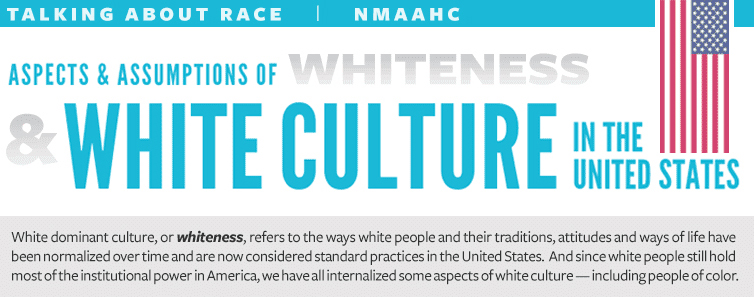
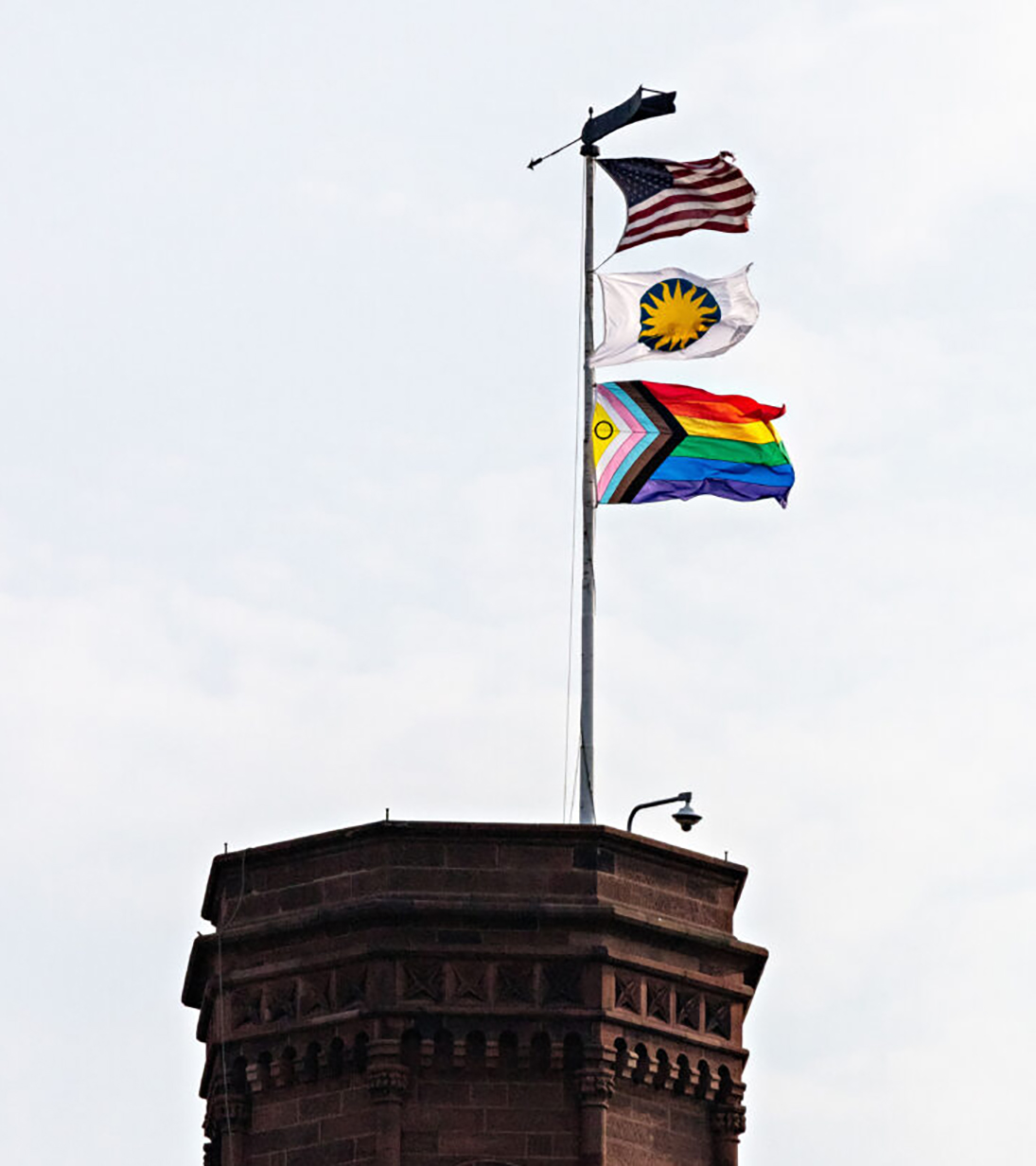
The White House published a list of Smithsonian exhibits, programming and artwork it considered objectionable on Thursday, one week after announcing that eight of the institution’s museums must submit their current wall text and future exhibition plans for a comprehensive review. The list borrows heavily from a recent article in The Federalist that objected to portrayals at several museums. It argued that the Museum of American History promoted homosexuality by hanging a pride flag; overemphasized Benjamin Franklin’s relationship to slavery in its programming; and promoted open borders by depicting migrants watching fireworks “through an opening in the U.S.-Mexico border wall.” Other grievances were previously enumerated in an executive order that President Trump authorized in March, which criticized the National Museum of African American History and Culture for a 2020 worksheet that describes aspects of “whiteness” as “hard work,” “individualism" and “the nuclear family.” The worksheet was part of an online educational portal called Talking About Race; once it drew criticism, Lonnie G. Bunch III, the secretary of the Smithsonian, had it removed.
Pix credit here

The listing of objectionable works, at least the preliminary listing, was set out in President Trump Is Right About the Smithsonian , posted to the White House website. The text of that descriptive document follows in full below, along with the article that the New York Times suggested was the source of a bit of borrowing: Smithsonian’s American History Museum Is Wall-To-Wall Anti-American Propaganda.
One might despise or laud the effort of the Trump Administration; certainly there was quite a bit of both around the efforts of the Biden Administration to insinuate its own reading of historically unavoidable "truth" or "principle" from the objects it assembled in furtherance of its own narrative history. One can hardly object to either on grounds of the project of historical weaving itself--though historians would be correct to get huffy about "crossing the line"--the fact objects themselves. With respect to the rest--elites have been picking and choosing (valuing, foregrounding or marginalizing) the objects and actions that serve as the basis for whatever interpretive project suits for quite some time--even in the U.S. To fight over history, in this sense, or interpretation and deepening of grounding premises for its interpretation and ordering, is not to engage in battle over the "facticity" of the past, but rather as to the politics, morals, and premises that serve as the basis for analysis, interpretation and objective in bringing this past forward to the present, and the use of that present as an instrument to guide action toward a desired future.
In that sense, the Trump Administration's efforts are as open to debate as was the project of the Biden Administration, and so on. In liberal democracy that is perhaps healthy though it is disruptive--but at least for the moment its disruptions are stabilizing in comparison to the explosions in other systems when the official history is overturned. In that effort, one may derive form comfort (or intensify one's horror) from the way in which the current "debate" reinforces an inclination to understand history as another political front, and not just a political front, but the trenches of the continuous war over the control of the cognitive framework within which social collectivity (and its solidarity) may be forged. And it ought to remind one that in turbulent times everything may prove useful. Whether there will be resolution or victory in the great revolutionary battle between, what for convenience one might refer to the Biden and the Trump Administration camps (though they are merely a convenient way of manifesting far more profound differences and ambitions for transformation), remains to be seen. But the ambitions of those seeking to lead the masses toward some sort of "new or renewed consciousness" are clear enough; whether the Republic will continue to cultivate a taste for this theater of cognitive oppositions, and whether the masses have been well enough prepared to be led into one or another of these transformative cages, remains to be seen.
- The National Museum of African American History and Culture debuted a series to educate people on “a society that privileges white people and whiteness” — defining so-called “white dominant culture“ as “ways white people and their traditions, attitudes, and ways of life have been normalized over time” and portraying “the nuclear family,” “work ethic,” and “intellect” as white qualities rooted in racism.
- The campaign featured content from hardcore woke activist Ibram X. Kendi.
- As part of its campaign to stop being “wealthy, pale, and male,” the National Portrait Gallery featured a choreographed “modern dance performance“ detailing the “ramifications“ of the southern border wall and commissioned an entire series to examine “American portraiture and institutional history… through the lens of historical exclusion.”
- The American History Museum prominently displays the “Intersex-Inclusive Progress Pride flag” at its entrance, which was also flown alongside the American flag at multiple Smithsonian campuses.
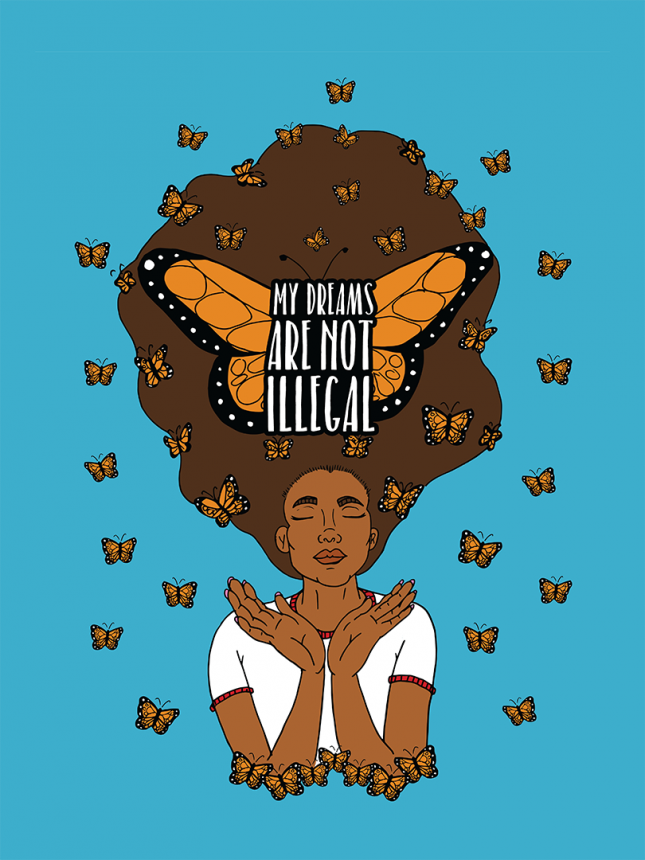
- The National Portrait Gallery features art commemorating the act of illegally crossing the “inclusive and exclusionary” southern border — even making it a finalist for one of its awards.

- The National Museum of African Art displayed an exhibit on “works of speculative fiction that bring to life an immersive, feminist and sacred aquatopia inspired by the legend of Drexciya,” an “underwater kingdom populated by the children of pregnant women who had been thrown overboard or jumped into the ocean during the Middle Passage.”
- The American History Museum’s “LGBTQ+ History” exhibit seeks to “understand evolving and overlapping identities such as lesbian, gay, bi-sexual, transgender, queer, transsexual, transvestite, mahu, homosexual, fluid, invert, urning, third sex, two sex, gender-bender, sapphist, hijra, friend of Dorothy, drag queen/king, and many other experiences,” and includes articles on “LGBTQ+ inclusion and skateboarding“ and “the rise of drag ball culture in the 1920s.”
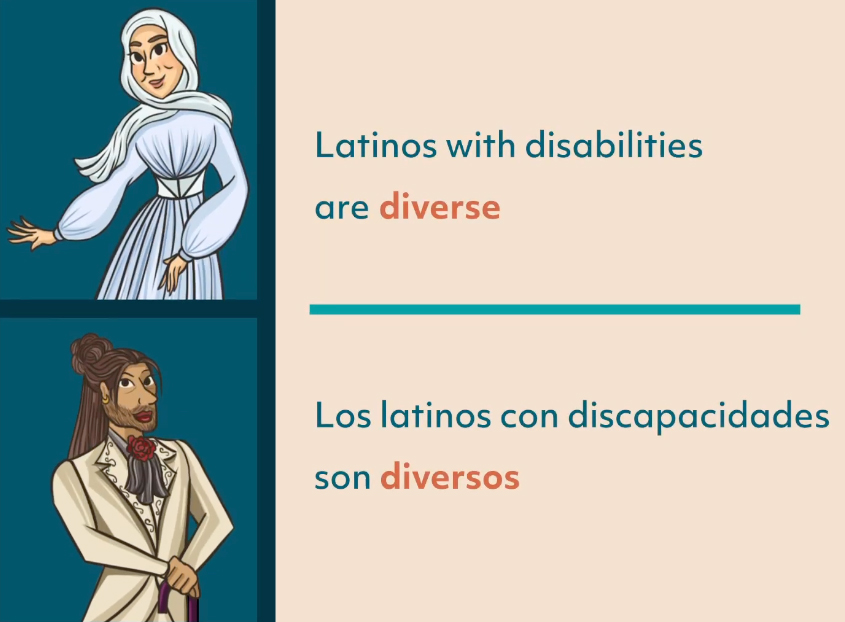
- The National Museum of the American Latino features programming highlighting “animated Latinos and Latinas with disabilities” — with content from “a disabled, plus-sized actress” and an “ambulatory wheelchair user” who “educates on their identity being Latinx, LGBTQ+, and disabled.”
- The National Museum of the American Latino characterizes the Texas Revolution as a “massive defense of slavery waged by ‘white Anglo Saxon’ settlers against anti-slavery Mexicans fighting for freedom, not a Texan war of independence from Mexico,” and frames the Mexican-American War as “the North American invasion” that was “unprovoked and motivated by pro-slavery politicians.”
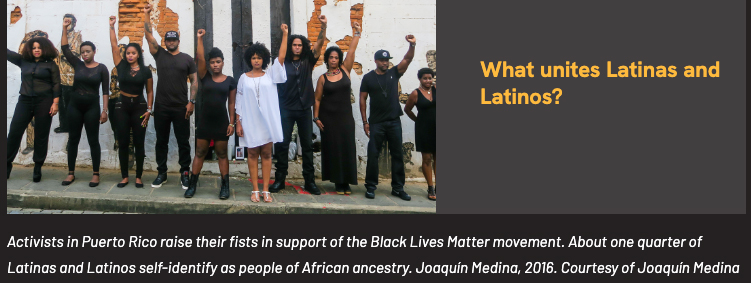
- According to the National Museum of the American Latino, “what unites Latinas and Latinos“ is “the Black Lives Matter movement.”
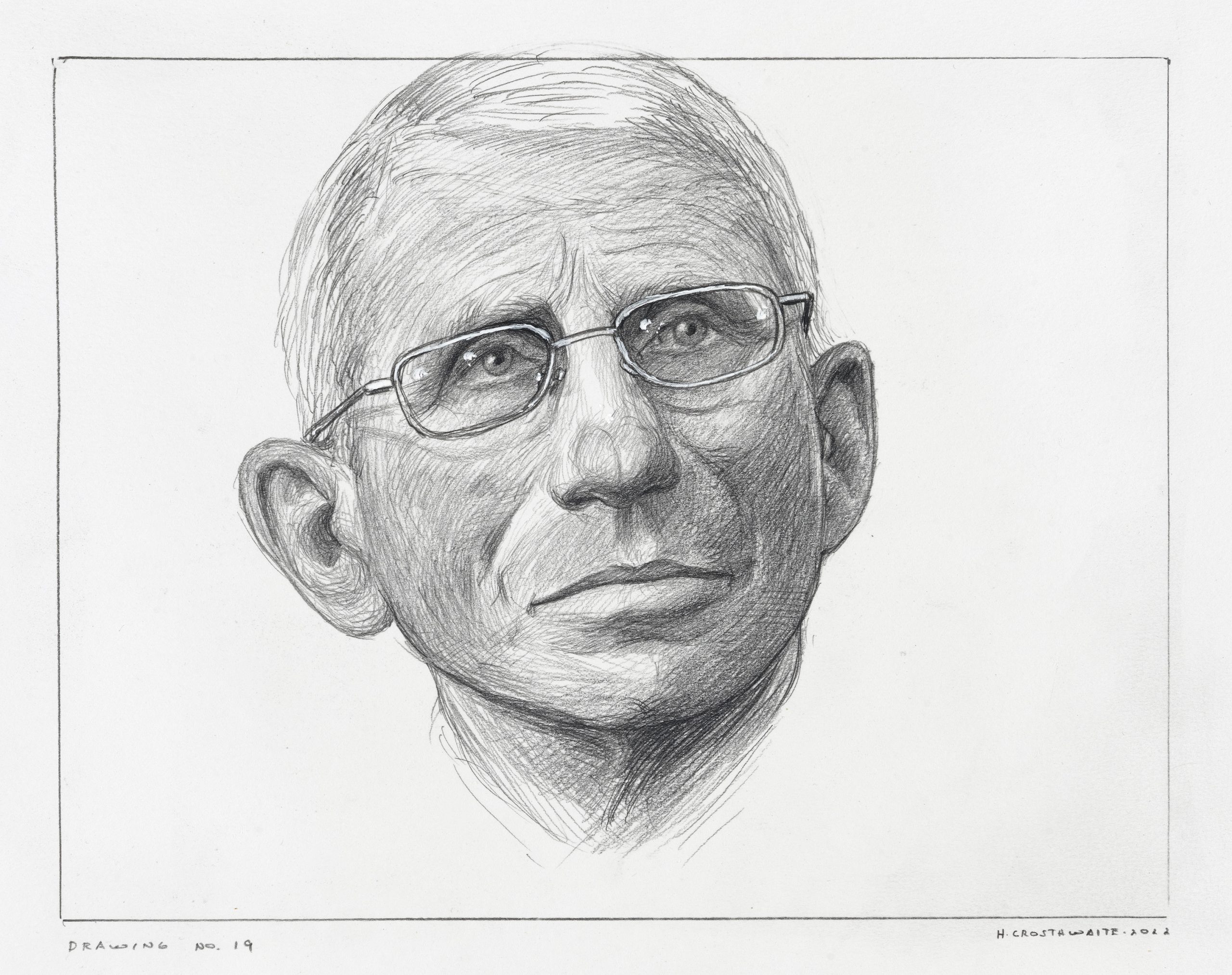
- The National Portrait Gallery commissioned a “stop-motion drawing animation” that “examines the career“ of Anthony Fauci.
- The American History Museum’s exhibit marking the 50th anniversary of Title IX includes biological men competing in women’s sports and argues in favor of “transgender” athletes competing in sports against the opposite biological sex.
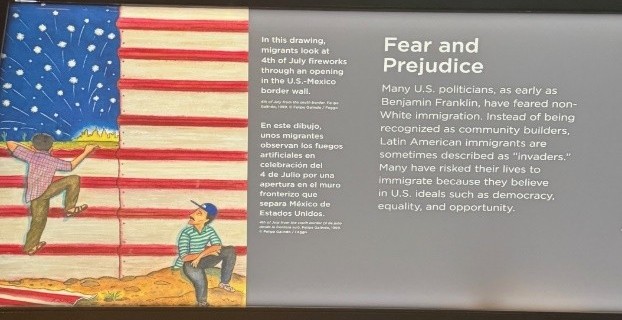
- A exhibit at the American History Museum depicts migrants watching Independence Day fireworks “through an opening in the U.S.-Mexico border wall” and says America’s founders “feared non-White immigration.”
- The American History Museum features a display that refers to the founding of America as “a profound unsettling of the continent.”
- The American History Museum’s “American Democracy” exhibit claims voter integrity measures are “attempts to minimize the political power” of “new and diverse groups of Americans,” while its section on “demonstrations” includes only leftist causes.
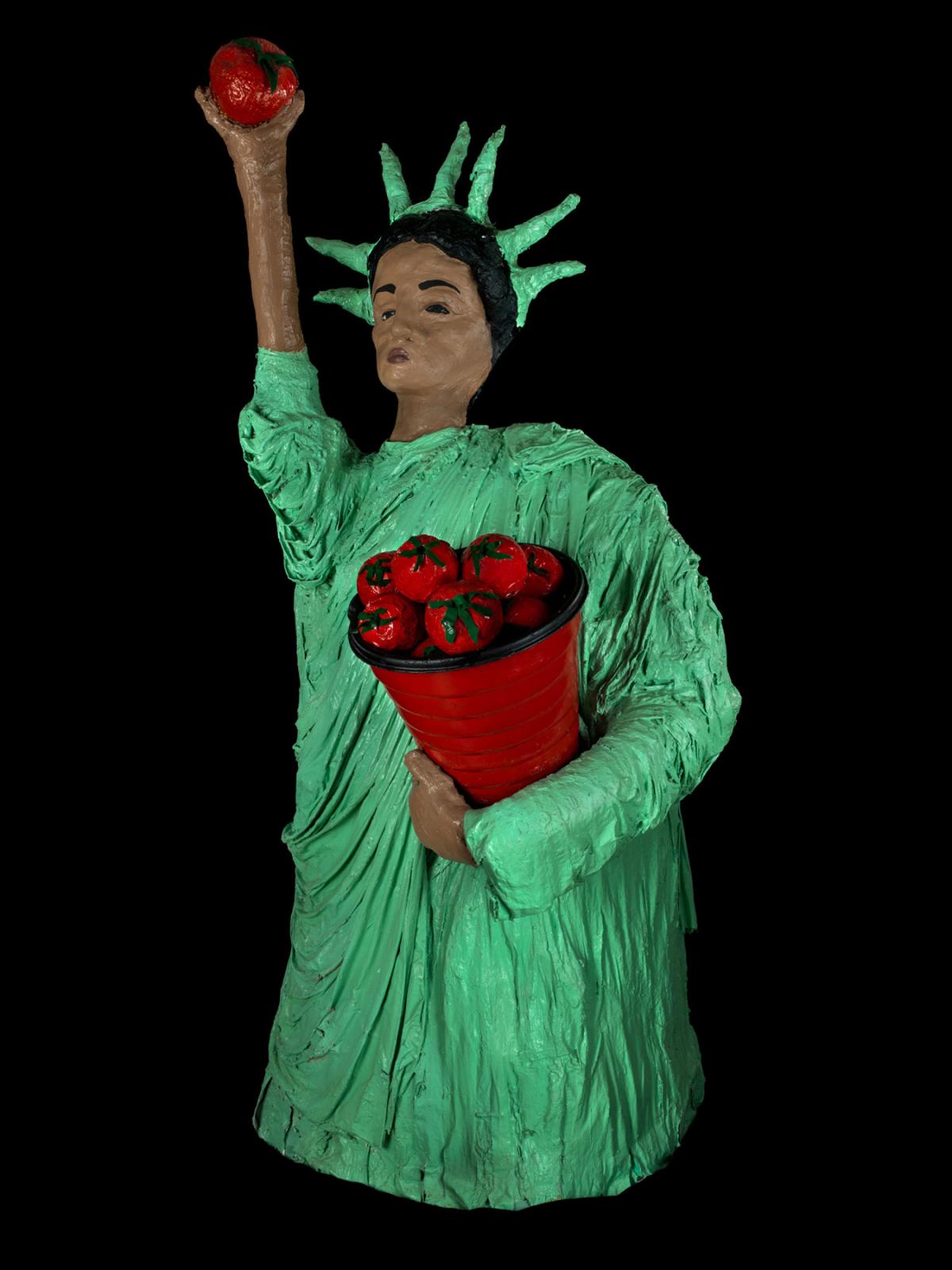
- An American History Museum exhibit features a depiction of the Statue of Liberty “holding a tomato in her right hand instead of a torch, and a basket of tomatoes in her left hand instead of a tablet.”
- The National Museum of the American Latino features an anti-American exhibit that defines Latino history as centuries of victimhood and exploitation, suggests the U.S. is stolen land, and characterizes U.S. history as rooted in “colonization.”
- The exhibit features writing from illegal immigrants “fighting to belong.”
- The exhibit displays a quote from Claudia de la Cruz, the socialist nominee for president and a director an anti-American hate group, as well as another quote that reads, “We didn’t cross the border; the border crossed us.”
- The exhibit remains prominently featured on its website alongside a quote from the Communist Party USA’s Angela Davis, who was once among the FBI’s Top 10 Most Wanted Fugitives.
- The National Museum of the American Latino describes the post-Mexican-American War California describes a “Californio” family losing their land to American “squatters.”
- The Museum of American Art uses American sculpture “to invite dialogue and reflection on notions of power and identity.”
- The American History Museum’s “Upending 1620” exhibit claims Pilgrims are a “myth,” instead framing them as colonizers.
- The American History Museum’s exhibit about Benjamin Franklin focuses almost solely on slavery, directing visitors to learn more about his “electrical experiments and the enslaved people of his household,” noting his “scientific accomplishments were enabled by the social and economic system he worked within.”
- The National Portrait Gallery was set to feature a “painting depicting a transgender Statue of Liberty” before the artist withdrew it.

- The former interim director of the future Smithsonian American Women’s History Museum declared the museum will be “inclusive” of biological men posing as women.
* * *

Americans would be better served if the Trump administration’s review forced the institution to have a fair and truthful depiction of their country, science, culture, history, and art.

The Smithsonian Institution is one of America’s greatest assets.
When Americans visit the nation’s capital in Washington, D.C., they are able to witness their country’s vast array of art, culture, history, and research acumen all in one place, and for free, because of the museums and zoo the institution operates there.
Like the national parks, the Smithsonian is part of America’s cultural inheritance.
But because of its academic and historical nature, the institution, established by an act of Congress that was signed by President James K. Polk in 1846, has always been in a precarious situation where dishonest and destructive actors who have deep disdain for the United States might take over its stewardship.
That appears to be what has happened, particularly under the Biden administration, as museum halls are adorned with gay “pride” flags and exhibits are filled with pseudo-history or history that is framed dishonestly — seemingly in an attempt to degrade the American experience.
That is a far cry from the Smithsonian Institution’s mission: to be “an establishment for the increase and diffusion of knowledge among men,” as initial patron James Smithson (after whom the institution is named) said in 1826 when willing his estate ultimately to the United States. Smithson’s donation would over time become the world’s “largest museum, research, and education complex,” boasting 21 museums, a zoo and conservation biology institute, and nine research facilities.
To that end, Trump administration officials — including Lindsey Halligan, Special Assistant to the President and Senior Associate Staff Secretary, Domestic Policy Council Director Vince Haley, and Office of Management and Budget director Russell Vought — wrote a Tuesday letter to Smithsonian Secretary Lonnie G. Bunch III initiating an internal review of the Smithsonian’s exhibitions and materials.
“It is an honor to work alongside the Smithsonian in reviewing its museums and exhibits, with the shared goal of ensuring this treasured institution reflects the very best America has to offer — accuracy, excellence, and the richness of our shared history. While certain ideological influences have permeated the Smithsonian over time, our goal is for the Smithsonian to be fact-based, scholarly, and historically sound,” Halligan told The Federalist. “The current Smithsonian exhibits are publicly available so everyone can see firsthand what we have observed. We invite the public to form their own judgments and better understand why we believe certain changes are necessary to preserve the integrity of our shared heritage.”
Admission is free to everyone, Smithsonian buildings line the National Mall from the Capitol Building to the Washington Monument, and since 1970 they have been visited by between 20 and 30 million people per year, save for some off years.
While two of the notable off years included 2020 and 2021 — when there were protocols related to the coronavirus and the museums only saw three million to five million visitors — visitation has not returned to pre-coronavirus levels, with last year seeing fewer than 17 million visitors.
The phenomenon raises concerns about the broader left-wing project to force Americans to hate their history and their country. Corrosive outgrowths of that project have been seen, perhaps most acutely, at the Smithsonian museums in recent years, and the woke-scolding nature of their exhibits may be an explanation for their dwindling numbers over the course of the Biden administration’s tenure.
The Trump administration’s review will be all-encompassing and phased, starting with eight museums first: American History, Natural History, African American History and Culture, American Indian, Air and Space, National Portrait Gallery, and the Hirshhorn Museum and Sculpture Garden.
All aspects of each museum’s process will be reviewed, including public-facing content, the curation process, planning of exhibitions, how collections are used, and standards for narrative building.
Such a broad review appears to be necessary, as tourists and visitors to the museums in D.C. have offered images and insight to The Federalist detailing the countless examples of the far-left ideological capture of one of our nation’s greatest resources.
Information obtained by The Federalist shows that the Trump administration’s concerns are not unfounded.
Promoting Homosexuality and Maligning the American Flag
As the Trump administration works to restore a semblance of reality and prestige to the Smithsonian museums, it makes sense to start a review with the museum dedicated to American history.
At the American History Museum, which is located in the shadow of the Washington Monument, Americans who want to learn about their history must first be bombarded at the front entrance with a “pride-progress” flag.

True to form, one of the exhibits argues in favor of “transgender” athletes competing in sports against members of the opposite sex. It questions why anyone would think it necessary to test the sex of athletes before a competition, denying the advantage men have over women because of testosterone and other biological realities like bone density and muscle mass.
“Proponents believe that gender testing prevents transgender athletes and athletes with high testosterone levels from gaining an unfair competitive advantage,” it states. “However, critics argue that gender tests are humiliating and discriminate against athletes who challenge traditional gender norms.”
While visitors are greeted with the LGBT flag at the door, the exhibit about the U.S. flag — the Star-Spangled Banner exhibit — advances left-wing causes as well. On separate slides it shows the flag being used at an “immigrant rights rally” or with LGBT material. Other slides show the flag burning, being used at a Ku Klux Klan rally, or alongside anti-American propaganda.
‘America Is Evil’ and Also Needs Mass Illegal Immigration
Visitors can also get a preview of the future addition to the Smithsonian network, the National Museum of the American Latino, which is still in its planning stages but will ultimately be situated alongside the others on the National Mall.
“¡Presente! A Latino History of the United States” will be the first exhibit of that museum, yet those interested can look at it now in the American History Museum — but only if they want to be hit with anti-America propaganda.
At the outset, visitors are told to “reflect on the effects of colonization and slavery in the Americas and throughout the world,” which frames the entire exhibit as one where the United States is an evil force for destabilization and imperialism, and Latinos have been bearing the brunt of that burden for all time.

As writers at The Heritage Foundation put it three years ago, the exhibit is a “hothouse to curate grievances against the United States.”
“The Latino exhibit simply erases the existence of the Hispanic who loves, contributes to, benefits from and exemplifies the promise of American liberty,” they stated. “That is to say, it erases the Hispanic majority.”
The exhibit suggests that the United States stole one-third of Mexico’s landmass in 1848 with the Treaty of Guadalupe Hidalgo, which recognized the Rio Grande River as the southern border of the U.S. and finalized Texas’ becoming part of the United States.

A 2021 quote from artist-activist Judy Baca on a pillar in the exhibit states, “We didn’t cross the border; the border crossed us.”
The Texas Revolution, according to the exhibit, was actually a massive defense of slavery waged by “white Anglo Saxon” settlers against anti-slavery Mexicans fighting for freedom, not a Texan war of independence from Mexico.
It also pushes the idea that Cuban immigration had nothing to do with escaping Cuban dictator Fidel Castro, but was rather a movement motivated by economic considerations.
The exhibit strains to connect other left-wing ideologies to the narrative, including leftist propaganda on labor, education, housing, immigration, justice reform, and “LGBT rights,” while discounting American sovereignty.
America has utilized Western capitalism to oppress minorities, the planet, and the Global South, according to the exhibit, which therefore concludes that all the “oppressed” intersectional groups that allegedly exist in Latin America have been fighting for “global justice” against a domineering United States.
To that end, the museum uniformly presents indigenous populations positively or as victims, without qualifications about violence, child sacrifice, or other behavior.
The exhibit remarkably leaves out mentions of the abuses of left-wing dictators like Fidel Castro of Cuba and Hugo Chavez of Venezuela, while making sure to show how the United States backed right-wing dictators like Fulgencio Batista of Cuba and Rafael Trujillo of the Dominican Republic.
Immigration is yet another area where each story told is aimed at advancing the open borders narrative, completely discounting national sovereignty and suggesting that controlled immigration is a human rights abuse.
To further that narrative, the exhibit depicts migrants looking at Independence Day fireworks “through an opening in the U.S.-Mexico border wall,” and a description to the side of it called “Fear and Prejudice” quickly maligns Benjamin Franklin and essentially all founding-era leaders as having “feared non-White immigration.”

“Instead of being recognized as community builders, Latin American immigrants are sometimes described as ‘invaders,’” it states. “Many have risked their lives to immigrate because they believe in U.S. ideals such as democracy, equality, and opportunity.”
It makes no mention of the violent gangs and individuals committing crimes against Americans, their drugs that kill countless American people, or their economic effect in taking jobs and upending the lives of American citizens.
‘Profound Unsettling of the Continent’
The founding of America, from the colonial era through the revolution, was not a historic triumph of liberty, the American History Museum insists, but rather a “profound unsettling of the continent.”
“The continent’s population actually declined in this period as Old World diseases swept through Native populations that lacked immunity. Beyond that profound tragedy there would be new conflicts, new forms of freedom, new forms of slavery, and new ways of living together,” the exhibit states. “Our world today grows out of that unsettling history.”
Explicit Attacks on Benjamin Franklin
A visitor to the American History Museum cannot get two sentences into an exhibit about the scientific works of Benjamin Franklin without being bombarded, at every single turn, with mentions of slavery.
In fact, there is a QR code near the exhibit on the Star-Spangled Banner telling visitors they can find out more about his “electrical experiments and the enslaved people of his household.”
In an apparent attempt to undermine Franklin’s contributions to the American founding and to science, the Smithsonian says that “Franklin’s remarkable scientific accomplishments were enabled by the social and economic system he worked within.”
“Franklin enslaved people, perhaps as many as seven. Their labor helped to build his fortune,” the exhibit states, while speculating and admitting there is no evidence that the slaves “may have directly assisted his research.”
If one were looking to find out more about Franklin’s research, it would be tough to do in this exhibit which appears to entrap people by promising his scientific history, but then quickly turns into a diatribe about slavery.
“Franklin’s involvement with slavery is complicated. He published anti-slavery articles in his newspaper while also profiting from the sale of enslaved people and printed notices seeking the capture of escapees,” the exhibit states. “Later in life he took an overt stand against slavery, becoming president of the Pennsylvania Society for the Abolition of Slavery in 1787, supporting gradual emancipation. But Franklin never emancipated any of the people he enslaved.”
Almost as if the writers suddenly remembered that this was supposed to be about scientific research, not slavery, the exhibit states, “Franklin’s place in the nation’s history of slavery is part of his legacy, as is his electrical research that led to the smartphone.”
The constant mentions of slavery continue, with a small amount of scientific discovery or inventions woven in.
This 1763 engraving is one of dozens that bolstered Franklin’s fame as a scientist. It shows two of Franklin’s inventions: alarm bells that alerted him when the atmosphere became charged with electricity, and a lightning rod.
Missing from the image are the people whose labor freed Franklin to conduct his research: the women, indentured servants, and enslaved people who maintained his household, assisted him, or made or operated equipment.
The narrative goes on, and on, and on — continuing to make accusations and then admitting there is no evidence for them.
Benjamin Franklin was not just a founding Father, but a scientist. From 1746 to 1752, he conducted experiments that changed peoples’ understanding of electricity. The sparks of his inventive mind drove research and led to new inventions.
Those sparks crackle with the complications of his time. Enslaved people helped build his fortune, and may have participated in his research. We still have much to learn about that part of his scientific work.
The Coronavirus ‘Racism’ Psy-Op
An exhibit in the lobby of the second floor, immediately next to one of the museum’s main entrances, shows a “stop Asian hate” protest during the coronavirus — the “Asian hate” being a psy-op invented by the corporate media to hide the fact that the coronavirus did, in fact, come from China.
“As COVID-19 spread across the United States in early 2020, San Francisco’s Chinatown community was already shunned, even targeted by those who considered the disease ‘the China virus,’” it states. “Because Asian Americans had been subject to racist scapegoating and violence so often in the past, they organized a rally to call on their fellow citizens and residents “to fight the virus not the people.”
It’s Not Just the American History Museum
There is a huge amount of propaganda that needs to be cleaned up at numerous Smithsonian museums.
Americans would be better served if the Trump administration’s review forced the institution to have a fair and truthful depiction of their country, science, culture, history, and art.


No comments:
Post a Comment