Who runs Cuba today? That is a question that continues to haunt those who follow the history of post 1959 revolutionary Cuba to this day. That is a question posed by the Cuba Study Group, one made more immediate in the wake of the revelations of the extent of the wealth and economic power of the Cuban military. And it is question worth considering. The answer is tied, in a sense, to the underlying structures of Cuba's Praetorian Marxism, and it is from that perspective that these reflections on that question are based.
The Cuban State of Misery has its own economy and its own praxis (to use a favored term of Marxist-Leninism in the West; essentially theory guiding practice and practice guiding theory, but not to be confused with the Chinese Mass Line principle). See, Announcing Publication of Article : "Cuba and the Constitution of a Stable State of Misery: Ideology, Economic Policy, and Popular Discipline" [Cuba y la Constitución de un Estado Estable de Miseria: Ideología, Política Económica y Disciplina Popular] (2025) 13(2) Penn State J L Int'l Aff 1-84.
Less often remembered is that Cuba's Marxist-Leninist praxis is itself a product of its own "origin story" (here and here) within the constellation of successful Marxist-Leninist revolutionary movements of the middle third of the 20th century. In the case of Cuba, military victory of revolutionaries against the dictatorship then in control of the Cuban State apparatus came before the formal embrace of a political ideology to order that victory and to institutionalize it going forward ("The Military, Ideological Frameworks, and Familial Marxism: A Comment on Jung-Chul Lee, “A Lesson From Cuba’s Party-Military Relations and a Tale of “Two Front Lines” in North Korea" ). Cuba was administered through a revolutionary government within the framework of the Cuban military (the Fuerzas Armadas Revolucionarias FAR), until the middle of the 1970s when Marxist-Leninism was formally installed as the guiding ideology of the State and a Soviet style apparatus was established under the aegis of a Communist Party, but one that provided a substantial space for autonomy for the FAR. Effective coordination, through the first two decades of the 21st century was maintained by the division of authority between the state and military apparatus between Fidel and Raúl Castro--family connections appeared to be an effective central element of functional differentiation and autonomy (eg here in the popular press). That may be changing.
That space for autonomy has been manifested in a number of ways, among the most interesting of which has been the economic activities of FAR both within and beyond Cuba. The FAR describes its economic activities this way on its website:
It is a business organization composed of a set of FAR bodies and entities, grouped into business associations and administrative, production, and service units, designed to ensure the necessary production and services to guarantee the vitality of the FAR's armament, military technology, combat readiness, the conditioning of the theater of military operations, and the improvement of the troops' living, nutritional, and working conditions. It arises from the development of the FAR itself and the need to guarantee the necessary production and services in the most economical way possible, based on the business improvement established in the country based on the FAR's demands. This business system contributes to the FAR, utilizing its free productive and service capacities in the interest of the economy, as well as in the development of production for the economy it is authorized to undertake.
What becomes clear from this description is the way in which it might be possible to understand FAR as a self supporting economic unit--the purpose of which is to generate the capital necessary to support its organization and mission. That mission, at least within the ideological complex of Cuba's Caribbean Marxism is to ensure the survival of the Cuban economic-political model. That mission is to be undertaken however much privation the diversion of military economic activity from the general economy managed by the civilian Cuban Nomenklatura (and supported to a large extent by whatever is generated in the smallish spaces left to the informal economy. The basis for this hierarchy of need has been built into the Cuban ideological model since the 1960s, back before the institution of a Leninist architecture over the revolutionary military government apparatus--the cultivation of the premise that govern a chance, the United State would secure regime change in Cuba. History and context, then, might at least provide some sort of coherent rationalization of the development of a praetorian Marxism in Cuba and its constitution as a self sustaining autonomous force--the predicate entity that makes the elaboration of whatever form of Marxist Leninist system is then to be constructed for the herding of society toward a communist ideal.

At the same time, FAR, in its public facing descriptions also suggests that autonomy is linked to and serves the national mission to produce economic value; that is that autonomy not just serves the State sector but is also aligned with it.
But like all things human, nothing tends to go quite to plan, and the chasms between ideal and reality can sometimes produce quite interesting issues that might well tear apart the system that it was designed to protect. And in this case, the question touches not just on the allocation of economic power to the military sector, but also of the nature and effectiveness of the transition from revolutionary military to a Marxist-Leninist civilian organization as the Cuban political-economic model after 1976. The basic story line is simple enough.
One starts with the set up: First, while the civilian sector has been consumed by its own contradictions, producing an economic model suspicious of markets, even more suspicious of individual activity, and incapable of either producing income or goods and services to provide for the people whop are meant to be the engines of state directed production. Second, the economic activities under the control of FAR turned out to be the more valuable of the economic assets of the State. And third, FAR appeared more capable of running a business under the conditions of Cuba than the Nomenklatura, even under challenging circumstances. The situation in the non-Far State sector is bad enough to induce poor people in Vietnam to donate a few dollars to raise funds to feed the hungry in Cuba ("A new crowdfunding campaign for Cuba led by the Central Committee of the Vietnam Red Cross Society has raised more than $13 million in the first week — far more than organizers had expected for the entire two-month effort." Damien Cave, "Vietnamese are Helping Cuba with 38 Cent Donations; a Lot of Them," New York Times (19 August 2025) ). But the FAR remains aloof for the moment--art least with respect to its own economic resources.
To grasp the significance of these consequences one might first consider the way in which management and control of economic production was parsed out in Cuba. First, the ruling ideology embeds a deep suspicion of the market. To the extent it is used at all, it is understood as complementary to the overwhelming architecture of the planned economy (still exhibiting mommy and daddy issues relating to its upbringing within the Soviet "household") that is meant to drive economic activity as a sort of rationalized and conscious market substitute construct that serves the ends of the State. Complementarity has several elements. The first is that markets are understood to be most useful at the local and retail sector. The second, retail and end use sector operations are understood to be especially useful if they remain small enough in operation to avoid posing a threat (actual, or conceptual under the ruling principle that all collective organizations are emanations of the singular political collective--the Communist Party of Cuba (PCC). And the third is that markets can be useful in engagements by the State sector with outsiders where Cuban enterprises engage with markets beyond their borders and then carefully management their insertions into the national territory and its economic activity under close supervision of State organs. All of this is of course subject both to the whims of administrative discretion and the serendipity of corruption (something that frustrates even Cuba's Chinese and Russian friends, though par for the course with their Venezuelan and Nicaraguan friends to the extent they are still useful).
It is within that environment that the economic activity of Cuba can be mapped (to the extent it pleases the State organs to map it--giving necessary space to the informal economy which serves to ensure that the state of misery is not sufficiently great to foment internal rebellion), and thus mapped, parsed out among the State sector organs (under the supervision of the PCC in the form of managers who are both officials and PCC members at a level that aligns State and Party hierarchies) and the FAR. "A recent leak of internal documents from the military conglomerate GAESA (Business Management Group of the Armed Forces [El Grupo de Administración Empresarial S.A. (GAESA) (here)]) has disclosed in detail the business network controlled by the Cuban military, covering strategic sectors such as tourism, commerce, construction, transportation, banking, and real estate services, among others." (here). For a detailed analysis see Emilio Morales, Cuba: GAESA and the collapse of the regime (01/17/23).

The size of FAR's portion of the State economy appears to have grown significantly as the economic sector as a whole has shrunk.

That trajectory may be a function of many factors, a few of which may merit savoring. The first may be that FAR was allocated those portions of the economy least likely to be threatened by global and internal instability. The second might be that, as is commonly assumed, the civilian Nomenklatura is notorious inept at substituting itself for markets and markets based decisions. The fourth is that, indeed, these sorts of trajectories may be viewed as necessary sacrifices for the State sector and the population as Cuba lumbers toward its communist society goals. The fifth may be the FAR is better able to manage enterprises and economic activity both internally and in dealing with foreigners whose technologies and know how can be exploited without polluting the national territory with their non-Marxist Leninist principles. And the last may be that, when all is said and done, that little has changed in the running of the revolutionary government from the 1959-76 era, other than its baseline structures are now easier to see- That is, that under conditions of Praetorian Marxism, the emphasis is on the Praetorian guardians.
It is in this overall context that one might consider the organization and organizational cultures within FAR's economic sector. First that organizational construction is a function not just of business rationalization, but also as a response to U.S. sanctions in the sense that complex relationships among FAR economic activities grounded in control or contract relations are created to avoid application of sanctions where these describe specific companies. One can do that all day--and indeed, one undertakes this disaggregation of business operations elsewhere (for example in the U.S. and E.U.) for similar reasons--both to avoid risk and to minimize exposure to adverse impacts by trading partners or competitors--and especially to reduce the impacts of state regulation both within and across borders. Scond, aggregation requires a centralized coordination, since all operating units ultimately serve the interests of FAR, and in a larger sense the Cuban State under the leadership, formally, of the PCC. To that end, FAR has tended to operate significant portions of its "above the line" enterprises through (GAESA) (
here). And third, FAR's portion of the Cuban economy, both internal and external is not subject to audit or control by the civilian Nomenklatura in Cuba ("A diferencia de otras entidades estatales, GAESA no es auditada por la
Contraloría General de la República. Su control está bajo el Ministerio
de las Fuerzas Armadas Revolucionarias (MINFAR), lo que significa que
opera sin rendir cuentas ante ningún organismo independiente." ["in cointrast to other state enterprises, GAESA is not audited by the Comptroller General of the Republic. That function is assigned to the Ministry of FAR (MINFAR), which suggests that its operations are not subject to review by any independent body"])(
here).
And that brings one to the problem, one that touches on the manifestations of the ideology of Leninist States of Misery within Cuban Caribbean Marxism: the balance between the sacrifice of the people and the accumulation of wealth in those institutions that both constituted the Cuban Marxist-Leninist State and that now serve as its protector against internal and external forces. The issue became something of a scandal--given the deprivations that have become the baseline for normality of economic existence for the ordinary Cuban people--when documents produced by and for GAESA were leaked abroad (and that usually means somewhere in the SE U.S.) producing stories in relevant legacy media. See especially Nora Gomez Torres, "Where is Cuba’s money? Secret records show the military has massive cash hoard," Miami Herald (6 August 2025); see also here, and here.
And yet, in the midst of the misery, the Cuban military is riding high: Its bank accounts are stuffed with cash, as much as $18 billion — an amount larger than the international reserves of nations like Costa Rica, Uruguay and Panama, an exclusive Miami Herald investigation shows. * * * The Herald reported in December on a rare leak of secret military documents revealing that Gaviota, a GAESA tourism subsidiary that handles 55% of all hotel rooms in the country, was sitting on a $4.3 billion stash. It was the first time financial data from GAESA’s secret account books were made public. Now, a larger trove of secret accounting documents obtained by the Herald, including several financial statements from 2023 and 2024, shows that the figure was just a fraction of the money in GAESA’s coffers. * * * The conglomerate generated $2.1 billion in net profits during the first quarter of 2024, according to the documents. Cimex, the group’s largest holding, which handles retail, banking, international trade and several other businesses, was responsible for over half of it, reporting $3.4 billion in revenue and $1.2 billion in earnings as of March last year. The records show that GAESA made significantly more in 2023. GAESA’s riches are so vast that, even excluding the assets held by Cimex, which accounts for an estimated 40% of the military conglomerate’s revenue, the remaining companies had a total of $18 billion in assets in March 2024 that could be quickly converted into cash. Of those, $14.5 billion was deposited in bank accounts or GAESA’s own financial institutions. (Nora Gomez Torres, "Where is Cuba’s money? Secret records show the military has massive cash hoard," Miami Herald (6 August 2025).)
The summary documents follow below. from the Miami Herald Story online.
The Cuba Study Group nicely summarized the problem: "Recent leaks about GAESA's finances have exposed a stark contradiction at the heart of Cuba's crisis: while the island endures its worst social and economic collapse in decades, the Cuban military's business conglomerate sits on billions of dollars in liquid reserves." From one perspective, the disclosures can suggest not just the state of corruption in Cuba, but also the alignment of that state of corruption with those common to Latin American governments of a certain sort and endemic in that region for a century or more. The power of that narrative, of course, is to strip Cuban Marxist-Leninism of any claim to superiority or to a project for the betterment of its people. The sacrifices of the Cuban population, in this sense, are no different that that of other people in other countries in the region--and perhaps made worse by the betrayal of those ideals of the Revolution in the reality that notion had changed over the course of the last several decades but the discourse under which corruption is undertaken.
Nonetheless, elements within Cuba might be tempted to advance arguments that could be made within Cuban Marxist-Leninism--arguments incompatible with some of the core premises of markets driven, individual rights based, liberal democracy . The first is that what appears to be scandalous is not, Rather, FAR might wish to argue, that retention of sources of economic power, that power to drive the economy through that control, and that control of the revenues derived from those operairtons for itself rather than for the general welfare of the population is a necessary element of its core charge--and the key operational principle--of the political economic system--to defend Cuban "socialism"! against outside and inside enemies. To those ends wealth is needed. And it is for FAR to determine the amount necessary. This argument, of course, might not sit well with the Cuban masses, and does not play well abroad. It is also possible to argue that the weakness of this position is precisely that it is for the PCC, not FAR, to make decisions about both the allocation of control of the economic sector, and the use of those revenues--that is the allocation of wealth between advancing the welfare of the population and preserving a robust capacity for military defense and the projection of power.
The second effort at argument might well be that the PCC itself has made those choices, and that those funds represent the calculus of privation of the population whose sacrifice is measured by the ability of the Cuban economic-political system to preserve itself against internal and external forces. That is, that the revolution remains victorious and on the Cuban "Socialist Path" as long as it can preserve itself. Tp that end no privation is too much, and no necessity great enough to touch the funds that are now in the hands of the FAR. Yet that argument itself contradicts FAR's own description of its economic mission and its alignment with the needs of Cuban modernization. It is an argument that rings hollow for other Marxist Leninist states except perhaps North Korea--but theirs in a monarchical Marxism.
The last is that, this state of privation, of misery, merely exposes the reality beneath the veneer of a civilian led Marxist-Leninist regime. That is, to the extent that Marxist-Leninist principles drive the construction and operation of the State and its vanguard leadership of the nation, it is one that remains revolutionary rather than institutional. Institutions may complement the fundamental military revolutionary organizational baseline, but cannot supersede it. In good times that suggests a greater appearance of civilian control (and military autonomy)--especially where the civilian operations are heavily subsidized by the fraternal kindness of other Marxist Leninist states and related friends. Nevertheless, it appears that, under conditions of stress, the reality that the vanguard of social forces in Cuban remains, as it has since 1959, both revolutionary and military, is not unavoidably visible. For that at least one may be grateful for the exposure that the GAESA papers provide.
So. . . .who runs Cuba today?; the answer has not changed since 1959--the military revolutionaries whose sensibilities, structures, organization serve as the foundational architecture of Cuban Marxist-Leninism. One here encounters a quite interesting vision not of Stalin, but of Trotsky, the Trotsky of the Civil War and the centrality of the military to the political enterprise of Leninist vanguardism. The rest is merely detail.
* * *
CUBA REVIEW: Who Runs Cuba Today?
|
|
|
In this edition | August 19, 2025
Recent
leaks about GAESA's finances have exposed a stark contradiction at the
heart of Cuba's crisis: while the island endures its worst social and
economic collapse in decades, the Cuban military's business conglomerate
sits on billions of dollars in liquid reserves. The unprecedented
leaked documents reveal that this powerful entity continues posting
profits and funding strategic investments—including hotel
construction—even as households and private businesses struggle with
widespread shortages. Perhaps most troubling, they suggest that in Cuba
today, a parallel state entity unaccountable to the public, government
or political leadership wields outsized control over the national
economy.
This
week's edition examines the full scope of these revelations and their
implications for Cuba's relationships with creditors, allies, and
adversaries. We also explore the collapse of sugar production on the
island, how the national currency's decline is affecting tobacco
producers, the anniversary of the U.S. Embassy in Havana, and China's
efforts to channel its surplus solar panels to Cuba.
|
|
|
|
Money in the Shadows: Leaks Reveal the Hidden Power of the Cuban Military’s Conglomerate
Behind
Cuba's narrative of collective hardship induced by the U.S. embargo
lies a more complex and troubling reality. A Miami Herald investigation
has exposed the hidden wealth of GAESA—the military's sprawling
conglomerate—which has accumulated billions in secretive assets even as
ordinary Cubans struggle without power, food, or medicine.
The
leaked documents — 22 internal financial statements from March and
August 2024 — show that GAESA (or “Business Administration Group S.A.”)
at that time held up to $18 billion worth in assets (depending on real
exchange rates) that could be quickly converted into cash. Of that
amount, $14.5 billion were deposited in its own financial institutions
or in unidentified bank accounts. The Herald's investigation
spotlights the conglomerate’s crown jewels: Gaviota, the tourism
subsidiary managing 55% of the country’s hotel rooms, ($8.5 billion);
TRD Caribe, the nationwide chain of hard currency stores( $3.4 billion);
and Almacenes Universales, the logistics and port operator running
Mariel($1.6 billion). Cimex, the group’s largest holding — with retail,
banking, international trade, and transport businesses — reportedly
generated $3.4 billion in revenue and $1.2 billion in net profit in the
first quarter of 2024.
Cuban economist Pavel Vidal, who reviewed the documents at the Herald’s
request, noted: “This is the first time detailed financial data from
GAESA is available to assess its monopolistic and financial power with
figures… They have international dollar reserves, and yet the rest of
the economy is falling apart.”
The figures contrast sharply with official rhetoric that blames Cuba’s deepening polycrisis solely on the U.S. embargo. According
to Vidal, the military effectively acts as a parallel central bank,
holding on to foreign currency while the state lacks funds for critical
needs, such as the $43 million annually required to ensure access to 63
essential medicines, or the $250 million needed to operate and maintain
the national power grid.
GAESA’s operations are shielded from government audits, and some of its companies — including Cimex — are registered abroad. The
documents show that the conglomerate’s companies pay no taxes on their
dollar sales or profits. In August 2024, GAESA’s debt to the state
budget (920 million pesos) represented less than 1% of its net pesos
sales, while that same month it received 9.2 billion pesos in
“state/public sector investment.”
Despite
a collapse in tourism — with revenues 62% lower last year than in 2019 —
GAESA enterprises continued allocating resources to luxury hotel
construction. Between March and August 2024, Gaviota lost $5.8 billion,
and half of its deposits in RAFIN SA (rumored to stand for “Raul and
Fidel Investments S.A.”–wish we were kidding), GAESA’s financial
institution, disappeared from the records.
GAESA’s
origins date back to the 1990s, when networks of companies were created
to capture foreign currency and circumvent U.S. sanctions. Under
Raúl Castro, the conglomerate absorbed strategic sectors such as
Habaguanex in Old Havana and the Banco Financiero Internacional. Since
2022, it has been headed by Brigadier General Ania Guillermina Lastres
Morera, who has no known direct ties to the Castro family.
In
Washington, the leaks have predictably sparked calls for more sanctions
against “the financial base of the Cuban regime” — even though decades
of comprehensive sanctions are precisely what drove the military to
build GAESA in the first place — a feat the leaks now suggest was highly
effective in evading sanctions. Congressman Carlos Giménez
said he would seek to “freeze the regime’s assets and shame foreign
governments complicit in its actions.” Rep. Mario Díaz-Balart tweeted,
“my Appropriations bill makes sure not a dime from the U.S. taxpayer
supports them and blocks aid to anyone bankrolling or doing business
with the regime’s oppressive security forces — full stop.”
Beyond
the political fallout, the leaks lay bare a brutal irony long suspected
by Cubans on the ground: while the public is told to “resist” and blame
the embargo for every blackout and empty shelf, an unaccountable shadow
state hoards billions and controls national spending.
For Washington, it raises a more fundamental question about any future engagement: who actually runs Cuba today?
Sources: Miami Herald | El Nuevo Herald
|
|
|
|
|
|
|
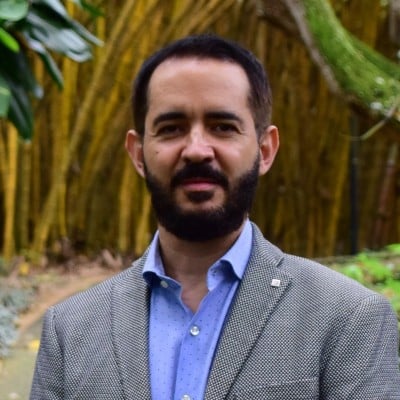
Pavel Vidal (Cuban economist and Professor at the Pontifical Javeriana University of Cali)
|
|
|
|
Since
the 1990s, the data show that the impact [of U.S. sanctions against
Cuba] has fallen mainly on household consumption and the private sector,
while government spending and its strategic projects have shown greater
resilience. The recently leaked GAESA financial data only confirm this:
while the country is going through a deep social and economic crisis,
the military conglomerate retains billions in liquid reserves, keeps its
profits in the black, and continues funding investments such as hotel
construction without apparent restriction.
|
|
|
|
|
|
|
Pedro Monreal (Cuban economist)
|
|
|
|
The
Cuban government has responded — through omission — to the question of
whether there would be any official statement on the matter. There is
no, nor do I believe there will be, public access to GAESA’s “hard”
data. Like a carnival magician: “nothing here, nothing there…”
|
|
|
|
Allies and Partners Lose Patience as Debate continues Over Havana’s Willingness to Pay Debts
The
recent leak of the GAESA Papers has set off alarms among creditors,
business partners, and governments, raising fundamental questions about
Cuba’s ability — and willingness — to meet its obligations. The
U.S.–Cuba Economic and Trade Council asked in its Economic Eye on Cuba
blog: “Has Cuba lied about its ability to pay what it owes? Are [the
leaked financial statements] illustrative of a pathological
determination to deceive, disguise value, and avoid paying what the
government of the Republic of Cuba and government-operated companies owe
to governments and companies?” For executives and shareholders who
routinely extend payment terms of 180–360 days or longer to Cuba’s
state-run enterprises, the leaks have only deepened uncertainty.
Concerns
extend to companies such as Canada’s Sherritt International, which has
$100 million outstanding from mining and energy operations, and Spain’s
Meliá Hotels, which today manages 2,338 rooms on the island — 927 fewer
than in January — with maintenance delayed in GAESA-owned facilities.
Governments like Spain’s, which converted $400 million of Cuban debt
into an investment program despite repeated defaults, are also watching
closely. According to the Council, “The government of the Republic of
Cuba has not adhered to agreed-upon payments amounting to billions of
dollars despite repeated debt rescheduling, including to Canada, China,
Japan, Mexico, Russia, and Vietnam.” The key question: can Cuba not pay,
or simply will not pay?
Frustration
is not limited to Western creditors. Beijing, Hanoi, Minsk, and Moscow
share an increasingly uncomfortable assessment: disappointment and
fatigue with a partner that “does nothing to help itself, only complains
and asks for help,” according to Council reports from recent diplomatic
visits. Cuban delegations are described as perpetual seekers of soft
loans and extended payment terms, offering few guarantees of compliance.
Diplomats and businesspeople privately admit that Cuba’s habit of
systematically blaming the United States “gets old quickly — like a
baby’s diaper.”
At
forums such as the St. Petersburg International Economic Forum, Russian
officials highlighted issues including the lack of property rights and
the gap between Cuba’s official and real exchange rates. Calls for “less
talk and more action” to attract investment underscored the urgency:
without internal reforms and a legal framework that provides security to
investors, capital from Cuba’s ideological allies will continue to
dwindle — and with it, Havana’s standing among its closest partners.
Sources: Economic Eye on Cuba (1, 2) | Diario de Cuba
|
|
|
Sugar Harvest: Worst Crop in Over a Century
Cuba’s
2024/2025 sugar harvest ended with less than 150,000 tons of sugar, the
worst result in more than a hundred years and far below the already
modest state target of 280,000 tons, according to EFE estimates based on
partial official data. With only 15 mills in operation — less than 10%
of those running in their heyday — production does not meet domestic
demand and jeopardizes both the rum industry and the preferential supply
agreement with China. The collapse, in stark contrast to the eight
million tons reached in 1989, is attributed to obsolete mills, lack of
investment, power outages, shortages of supplies and personnel, and
structural inefficiencies worsened by the economic crisis that has
reduced GDP by 11% since 2020.
Source: Infobae
|
|
|
Fall of the MLC Hits Tobacco Producers in Pinar del Río
Private
tobacco growers in San Juan y Martínez, Cuba’s main tobacco-growing
region, report that the sharp depreciation of the Freely Convertible
Currency (MLC) — from 310 pesos in May 2024 to 210 in August 2025 — has
wiped out the profitability of the 2024/2025 harvest. Added to this are
rising input costs, such as fertilizer (from 200 to 1,600 pesos per sack
since 2022), and the increased expense of rebuilding curing barns after
Hurricane Ian, all while the purchase prices for tobacco remain frozen.
Farmers warn that without an urgent update to the cost structure and
measures to stabilize the MLC, many will be unable to pay their debts or
start the next growing season.
Source: 14yMedio
|
|
|
China’s Oversupply Powers Cuba’s Renewable Energy Push
The
overproduction bubble in China’s photovoltaic industry — which in 2024
led to the layoff of 87,000 workers and estimated losses of $60 billion —
has prompted Beijing to offload its surplus to allied countries such as
Cuba, where two contracts are underway to install 92 solar parks with a
total capacity of over 2,000 MW. So far, 25 are in operation, reaching
peaks of 457 MW, although the lack of storage batteries means much of
the energy is lost when the sun isn’t shining. Nevertheless, the Cuban
government insists that, amid a power deficit exceeding 1,400 MW during
peak hours, these parks are preventing an even worse scenario.
Source: 14yMedio | |





No comments:
Post a Comment