 |
| Pix credit here |
The Hamas-Israel war centered in Gaza has become, and especially so during the 2nd Administration of President Trump, a focal point for both the transformations that the Trump Administration is trying to drive and the rallying point for all of the global apparatus, public, private, intellectual, still deeply committed to what had been the status quo since 1948. And in a sense, perhaps, that is the point--if one seeks to reject the post 1945 world order, at least as it had acquired its contemporary form after the dissolution of the Soviet Empire, then one of its most significant performative theaters, one participation in and around which has been irresistible and one that provokes virtually everyone into an opinion of some sort or another respecting some aspect of it or another, has been the ethno-religious-clan wars between the Jews and the people resident in a part of the w0orld in which many many groups have some sort of claim.
The new order, for the territory of Gaza and more generally for the world, is meat to embed and naturalize the transactional ordering premises of ceasefire, understood as peace, through which conflict can be managed not as an institutional issue but as a basis for transactional activity that substitutes itself for the ordering of managers (America First as a Template for the Global: Text of the U.S. Cease-Fire Plan for Gaza). But even transactions require an institutional apparatus--and Gaza does not disappoint.
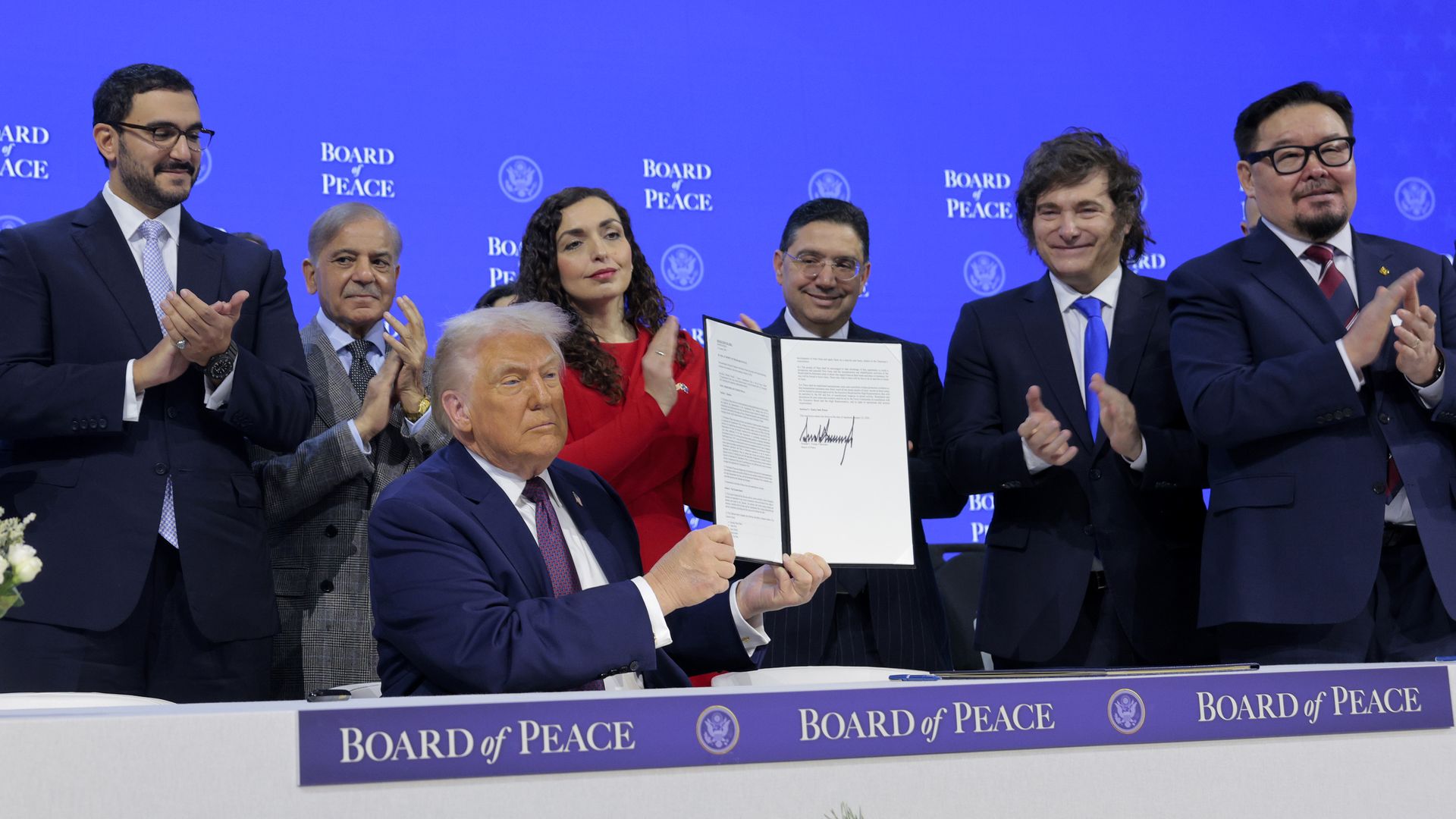
Trump at the Board of Peace unveiling in Davos. Photo: Chip Somodevilla/Getty Image
President Trump unveiled the Board of Peace--an institution with a growing mandate, but the origens of which might be traced to the Gaza peace plan the President put forward and that received notice from the UN apparatus. (Statement on President Trump’s Comprehensive Plan to End the Gaza Conflict, 16 January 2026). It was constituted officially at Davos in January 2026. Initial members included Its initial members include the United Arab Emirates, Saudi Arabia, Egypt, Qatar, Bahrain, Pakistan, Turkey, Hungary, Morocco, Kosovo, Albania, Bulgaria, Argentina, Paraguay, Kazakhstan, Mongolia, Uzbekistan, Indonesia and Vietnam (here).
 |
| Pix credit here |
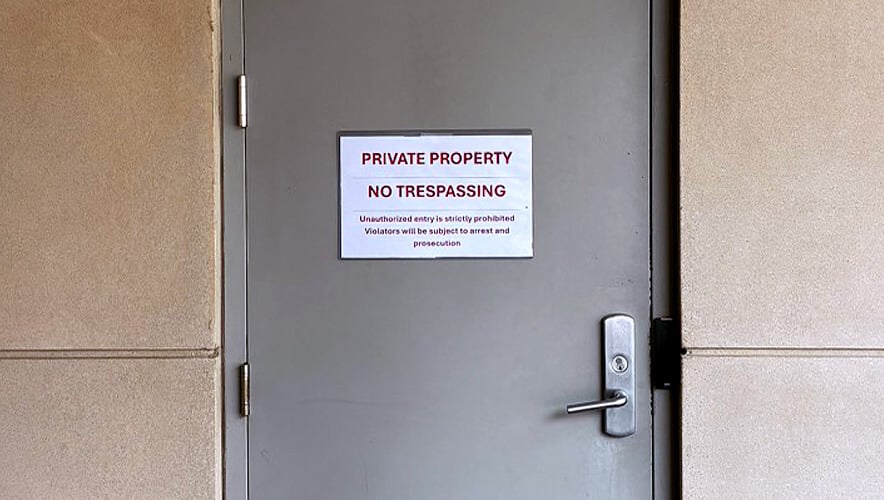
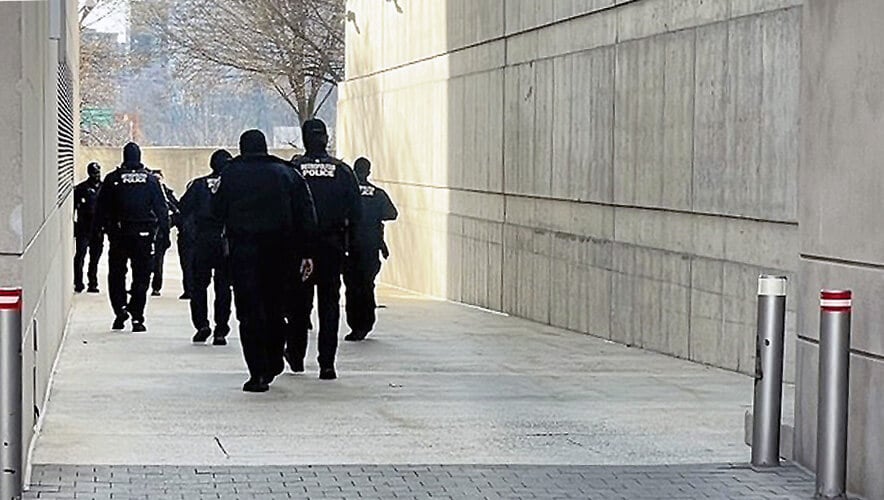
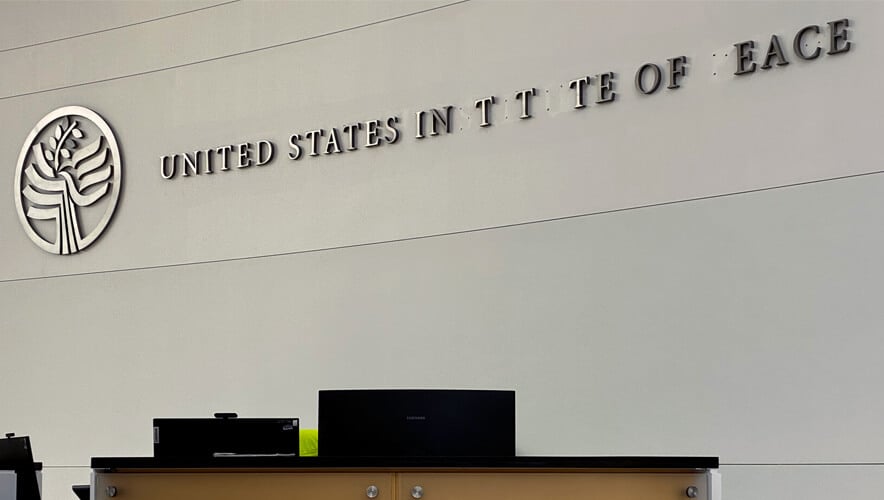
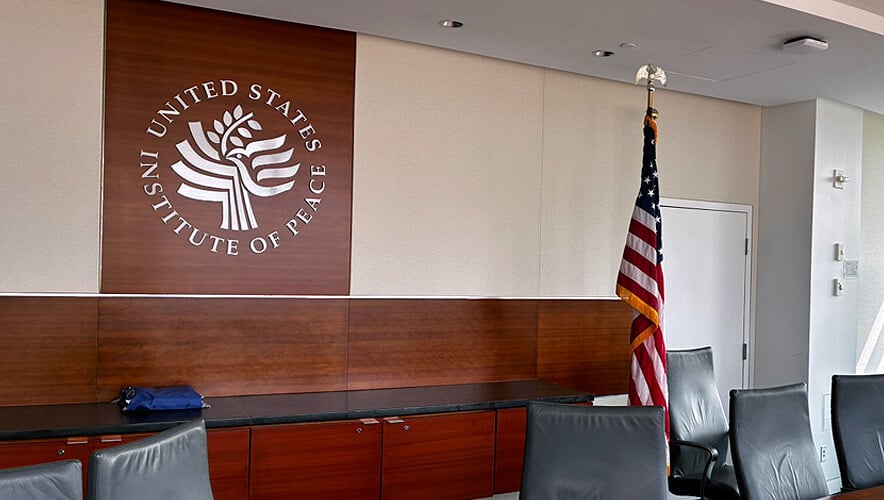
It is now set to meet. Reporting by Axios detailed the agenda. Scoop: White House plans Board of Peace meeting in D.C. on Gaza reconstruction. And even the meeting is loaded with signification. The meeting will be held at the old offices of the old U.S. Institute of Peace (USIP), a Reagan era form of peace advancing that served as the target for Trump Administration downsizing--and litigation--from the start of his 2nd Administration. The story is summarized here and is ongoing. One form of American peace advancement--institutional, convergence internationalism-- has now been displaced by another--transactional and market oriented-- and not just theoretically but in terms of the occupation of the space in institutional Washington set aside for those endeavors.
The text of Secretary of State Marco Rubio at the Board of Peace Charter Signing Ceremony follows below along with the reporting from Axios (Scoop: White House plans Board of Peace meeting in D.C. on Gaza reconstruction. ) on the upcoming meeting, and President Trump's Statement on President Trump’s Comprehensive Plan to End the Gaza Conflict all follow below.
SECRETARY RUBIO: Thank you very much. It’s an honor to be here today. It’s an honor to serve as the Secretary of State during a historic presidency. And it’s a historic presidency because the President of the United States, Donald J. Trump, is someone who is not limited by what others say is possible or what others say is impossible. He’s not limited by some of the things that have happened in the past, and he’s willing to talk to or engage with anyone in the interest of peace, always putting the American people and our national security first but understanding that, in the world that we share with so many others, peace is paramount to all of us.
We are here today because of President Trump’s vision. If we go back just a few months ago, people thought what was happening in Gaza was impossible to solve – 28 hostages that were dead, others that were still living, all these hostages that were being held – no one thought that that would ever come to a resolution without more fighting and more bloodshed along the way. In fact, frankly, many thought it was intractable. And sadly, many of the institutions that have served us well in many cases for the last 70 years were unable to do anything about it. But President Trump had the vision and the courage to dream the impossible, to believe that it was doable, and to pursue it with all of his heart.
And he was in that capacity assisted by an extraordinary team, and I think both Jared and Steve deserve a tremendous amount of credit – Jared Kushner and Steve Witkoff – for all the work they’ve put in. (Applause.) And all of our partners here today. And now we have this Board of Peace, who I believe possibilities are endless, obviously with a focus first and foremost on making sure that this peace deal in Gaza becomes enduring. And I know this President has this as his highest priority and will give it everything he has to make sure this is successful.
I also want to acknowledge the extraordinary leaders that are here today. This is not just a Board of Peace. This is a board of action, just like President Trump is a president of action. A lot of times people like to give speeches. I’ve been to many of these forums, and they’re not useless and they’re not – not – they have utility in many cases. But oftentimes in international affairs, we often find ourselves at events where people are reading these scripted statements, these strongly worded letters that they put out, but no action, nothing happens. This is a group of leaders that are about action, and the President of the United States is a president of action, of getting things done.
And today is the beginning of that, of a new era and a new stage that we think is so important as a model to the rest of the world of what is possible. And clearly the focus is right now on Gaza, on making sure that the plan that’s about to be presented to you here today – this vision for the future of Gaza, this vision for the future of the region – is not just possible and promising, it is our destiny if we put the time and the effort that it requires, as I know this board will do. But I also think it will serve as an example of what’s possible in other parts of the world. Without losing focus on what’s before us now, this is what’s possible for other places and other conflicts that seem impossible to solve right now.
So I want to – on behalf of the United States, on behalf of the team that worked so hard on this – thank every single one of the leaders that are here today and all of the countries that have committed to joining, and many others who are going to join. Others either are not in town today or they have to go through some procedure internally in their own – in their country because of constitutional limitations, but others will join. Many want to be a part of this effort because it is going to be a successful effort, and you see it reflected here today among countries of different backgrounds, from different parts of the world – majority-Christian some, majority-Muslim others – who’ve come together – in fact, former adversaries who have joined here as part of this Board of Peace.
And all was possible – and I want to acknowledge this again – because of the vision and the drive of the President of the United States. So thank you all for joining us here today. We appreciate it very much. (Applause.)
Yesterday, President Donald J. Trump congratulated the formation of the National Committee for the Administration of Gaza (NCAG), a vital step forward in implementing Phase Two of his Comprehensive Plan to End the Gaza Conflict—a 20-point roadmap for lasting peace, stability, reconstruction, and prosperity in the region.
The NCAG will be led by Dr. Ali Sha’ath, a widely respected technocratic leader who will oversee the restoration of core public services, the rebuilding of civil institutions, and the stabilization of daily life in Gaza, while laying the foundation for long-term, self-sustaining governance. Dr. Sha’ath brings deep experience in public administration, economic development, and international engagement, and is widely respected for his pragmatic, technocratic leadership and understanding of Gaza’s institutional realities.
This milestone perfectly aligns with United Nations Security Council Resolution 2803 (2025), which endorsed President Trump’s Comprehensive Plan and welcomed the establishment of the Board of Peace. The Board of Peace will play an essential role in fulfilling all 20 points of the President’s plan, providing strategic oversight, mobilizing international resources, and ensuring accountability as Gaza transitions from conflict to peace and development.
To operationalize the Board of Peace’s vision—under the chairmanship of President Donald J. Trump—a founding Executive Board has been formed, composed of leaders with experience across diplomacy, development, infrastructure, and economic strategy. The appointed members are:
- Secretary Marco Rubio
- Steve Witkoff
- Jared Kushner
- Sir Tony Blair
- Marc Rowan
- Ajay Banga
- Robert Gabriel
Each Executive Board member will oversee a defined portfolio critical to Gaza’s stabilization and long-term success, including, but not limited to, governance capacity-building, regional relations, reconstruction, investment attraction, large-scale funding, and capital mobilization.
In support of this operating model, the Chairman has appointed Aryeh Lightstone and Josh Gruenbaum as senior advisors to the Board of Peace, charged with leading day-to-day strategy and operations, and translating the Board’s mandate and diplomatic priorities into disciplined execution.
H.E. Nickolay Mladenov, an Executive Board member, will serve as the High Representative for Gaza. In this capacity, he will act as the on-the-ground link between the Board of Peace and the NCAG. He will support the Board’s oversight of all aspects of Gaza’s governance, reconstruction, and development, while ensuring coordination across civilian and security pillars.
To establish security, preserve peace, and establish a durable terror-free environment, Major General Jasper Jeffers has been appointed Commander of the International Stabilization Force (ISF), where he will lead security operations, support comprehensive demilitarization, and enable the safe delivery of humanitarian aid and reconstruction materials.
In support of the Office of the High Representative and the NCAG, a Gaza Executive Board is being established. The Board will help support effective governance and the delivery of best-in-class services that advance peace, stability, and prosperity for the people of Gaza. The appointed members are:
- Steve Witkoff
- Jared Kushner
- Minister Hakan Fidan
- Ali Al-Thawadi
- General Hassan Rashad
- Sir Tony Blair
- Marc Rowan
- Minister Reem Al-Hashimy
- Nickolay Mladenov
- Yakir Gabay
- Sigrid Kaag
The United States remains fully committed to supporting this transitional framework, working in close partnership with Israel, key Arab nations, and the international community to achieve the objectives of the Comprehensive Plan. The President calls on all parties to cooperate fully with the NCAG, the Board of Peace, and the International Stabilization Force to ensure the swift and successful implementation of the Comprehensive Plan.
Additional Executive Board and Gaza Executive Board members will be announced over the coming weeks.








No comments:
Post a Comment