 |
| Pix credit here |
On 13 July 2026 U.S. Secretary of State Marco Rubio "announced a sweeping campaign to dismantle the threat posed by the International Criminal Court to U.S. sovereignty. The campaign will feature a whole-of-government response to systematically disable the ICC’s ability to operate, target American servicemen or officials, or otherwise threaten American sovereignty." (Media Note: State Department Launches Campaign to Dismantle International Criminal Court’s Threat to American Sovereignty).
On 14 July 2026 Secretary Rubo published an essay on this proposal that appeared on the principal opinion page of the Wall Street Journal (here). The Wall Street Journal Editorial Board also published an opinion that strongly aligned with the Secretary's campaign (Rubio Takes On the International Criminal Court: He’ll need to move fast to bring down the rogue, anti-American court).
ICC-style multilateralism is akin to a religion in Europe, where the strategy will be to stall. If the ICC is still standing in current form when a President Gavin Newsom takes office, it’s likely to swing at Messrs. Rubio and Trump, with the U.S. military and Border Patrol in tow. The State Department says it is considering “urging” allies to quit the ICC, increasing “scrutiny” of those that won’t, and escalating U.S. sanctions against the ICC. There isn’t time to take these steps in sequence. Until Mr. Rubio sanctions the ICC as a whole and punishes states that back it, U.S. partners will cling to the status quo. Japan, a U.S. ally, is also the ICC’s largest funder. Will it stand by the court as it exceeds its bounds and threatens U.S. sovereignty? How about the pro-U.S. leaders in Latin America? The ICC’s strength is tied to its claim to represent entire regional blocs. (Rubio Takes On the International Criminal Court: He’ll need to move fast to bring down the rogue, anti-American court).
In defense of the ICC and its normative/structural internationalism, U.S. House of Representatives Member Ilhan Omar (D-MN) released a statement which restated the forms and premises of the traditional defense of the ICC system and offered the arguments that have, for the past quarter century, been made by U.S: friends of the ICC to persuade the American political class to bind itself and its political-economic model to that system.
“Secretary Rubio’s announcement that he will dismantle the International Criminal Court is reckless and dangerous. It undermines the rule of law, weakens global accountability, and turns America's back on the values we claim to champion. “The ICC is an independent international court created to ensure that perpetrators of the world's gravest crimes—genocide, war crimes, and crimes against humanity—cannot escape justice. “Secretary Rubio claims that the ICC poses ‘an intolerable threat to U.S. sovereignty’ and that American servicemembers could be prosecuted simply for serving our country. That is simply not true. The ICC is an international court of last resort, intended to prosecute only the most horrific crimes – war crimes, genocide, and crimes against humanity – when countries are unable or unwilling to do so themselves. The best way to avoid ICC scrutiny is simple: don't commit atrocity crimes, and if credible allegations arise, investigate them transparently and hold those responsible accountable. * * * “America is strongest when we lead with our values, not when we demand immunity from them. If we respect human rights, uphold the rule of law, and hold ourselves to the same standards we ask of others, we have nothing to fear from the ICC.”
A spokesperson for the United Nations echoed those arguments but with a more institutional perspective:
During his regular media briefing, UN Spokesperson Stéphane Dujarric was asked if the Secretary-General had anything to say regarding reports that US Secretary of State Marco Rubio wants to “dismantle” the Court, which prosecutes individuals for genocide, war crimes, crimes against humanity and the crime of aggression. “While the ICC is an organisation that is separate from the Secretariat and the UN, it remains for us a critical cog in the international justice system,” said Mr. Dujarric. “It is supported by a vast number of Member States, and it helps bring accountability for serious crimes,” he added.* * * In the opinion piece, Mr. Rubio stressed that “independence is our birthright” and the US does not “intend to trade it for rule by a self-appointed priesthood of ‘international law.’” Mr. Dujarric was asked if the Secretary-General accepts this characterization of the system the UN Charter is built on. “International law, the Charter of the United Nations, the Universal Declaration of Human Rights, were created by sovereign Member States,” he said. “They have brought protection, they have brought relief to millions of people, and they are, as the Secretary-General has often said, under threat and under attack.” (International Criminal Court ‘a critical cog’ in global justice efforts)
Yet it is precisely those arguments and premises that Secretary Rubio rejects or finds irrelevant. Indeed, the Secretary of State, amplifying the political line of the Trump Administration, has elaborated a distinctive normative basis for the relationship between national legal orders and the institutional political order reified in and through structures of international law that appears to revive and develop an approach these international law (as norm and as a mechanics of constituting political orders among states and for objects of law) in its classic sense as the law/contract among states. That revival is both incompatible with and treats the rise of what is called the "new international law" as threat and to some extent abomination (adding morals to norms and politics). That is one of the normative pillars of the America First doctrine as a normative stance rather than as an "action plan" or initiative (see The Conceptual Architecture of America First—Ideological Transactionalism and the Case of Cuba). On the other hand, Secretary of State would also agree with the UN spokesperson that the international system as they have been developed, is under attack, and the United States is one of the principal targets of that campaign. That is the Secretary of State would reverse the discursive polarities of the international project of this century while agreeing that it is, indeed, a normative project with an ends that threaten the traditional order as it might otherwise evolve.
The ICC was born at the turn of the century. At first, it was marketed as a narrow backstop to prosecute the gravest crimes. Now the ICC and its allies seek a standing world tribunal with near-unlimited reach, empowered to override the courts and constitutions of the U.S. and other sovereign states—and to prosecute and arrest our citizens.
Americans never agreed to any of this. Both of our major political parties opposed the prospect of handing a distant global court the power to prosecute and jail our own citizens. President Clinton refused to submit the Rome Statute (the ICC’s founding charter) to the Senate for ratification due to his “concerns about significant flaws in the Treaty.” Two years later, a bipartisan Senate supermajority passed the American Servicemembers’ Protection Act, authorizing the president “to use all means necessary”—including military force—to prevent the ICC from detaining or arresting Americans.
Americans found themselves in the crosshairs anyway: In 2020 the ICC launched an investigation into what chief prosecutor Fatou Bensouda of Gambia described as “war crimes by members of the United States armed forces” in Afghanistan, declaring that the U.S. government hadn’t prosecuted enough American soldiers to satisfy the court. In effect, Ms. Bensouda was anointing herself the final judge of U.S. military policy and the entire U.S. justice system.
The Afghanistan investigation was only the opening move in the assault against American self-government. The ICC is backed and run by a powerful network of leftist nongovernment organizations, smug globalists, and hostile Third World governments united by their enmity toward the U.S. (Marco Rubio: Why We’re Dismantling the International Criminal Court)
At the heart of this rift are many things, some of which are visible in the text of the Wall Street Journal opinion articles, Secretary Rubio, Representative Omar and the U.N. officials. But perhaps at the center of its has been the growth of the discretionary powers of the ICC prosecutor and their sense of their own kompetenze kompetenz for determination what might be subject to investigation. That is not unusual in itself within the normative cultures of national or global administrative organs. More provocative has been the combination of that transformation of administrative discretion with an equally interesting transformation of the normative and operational apparatus and conceptual structures of complementarity--one that might, some might argue, give the lie to Representative Omar's now quite dated assertion allusion to that position when describing the ICC as "an international court of last resort, intended to prosecute only the most horrific crimes – war crimes, genocide, and crimes against humanity – when countries are unable or unwilling to do so themselves."
As I suggested in an earlier essay, the triggering element in this action owes as much to fundamental changes in the self-conception of the ICC on its own part, and changes in the political leadership of the United States that views those normative transformations with horror.
The core issue remains:
a fundamental shift in jurisdictional narratives fueling interpretive exercises: from one in which the ICC and its apparatus understand themselves as "a detached apex of the international criminal justice system" to one in which the ICC and its apparatus are embedded as "a hub of global accountability efforts." Two very different narratives fueling two very different interpretive and operational projects. Two very different structures for the development of an internationalized criminal law. (here)The differences are evident in ICC Prosecutor Khan's premises about the ICC, the role of the Prosecutor and the extent and nature of that apparatus' jurisdiction and jurisdictional triggers. With respect to the first, it appears that serving as a "hub of global accountability" may require a more positive or proactive engagement by the ICC apparatus. The nature of that proactivity, and the character of the interventions it may suggest appear to be a function of a core prevent-mitigate-and remedy principle. Fir example:
Since last year, in Ramallah, in Cairo, in Israel and in Rafah, I have consistently emphasised that international humanitarian law demands that Israel take urgent action to immediately allow access to humanitarian aid in Gaza at scale. I specifically underlined that starvation as a method of war and the denial of humanitarian relief constitute Rome Statute offences. I could not have been clearer. As I also repeatedly underlined in my public statements, those who do not comply with the law should not complain later when my Office takes action. That day has come.In this sense, the ICC Prosecutor may assume a role that mimics those of UN mechanisms. With respect to the second, there appears to be an evolution in the way n which the ICC understands and applies the principle of complementarity. In the Statement, Prosecutor Khan explained: "Complementarity, however, requires a deferral to national authorities only when they engage in independent and impartial judicial processes that do not shield suspects and are not a sham. It requires thorough investigations at all levels addressing the policies and actions underlying these applications." No longer a last resort apex, but a partner protective of its own jurisdiction and autonomous in the construction and application of the substantive provisions it is meant to oversee. Prosecutorial discretion appears to be enhanced. That appears most well evidenced in the choice of focus supporting warrants against Hamas officials--focused on the acts of 7 October. With respect to what came after, the focus moved to Israeli officials. But there was nothing about the conditions that produced the conditions under which it was inevitable that countermeasures would inevitably produce triggering outcomes. Lastly, it is not clear how the hub of global accountability is itself to be accountable--and to whom. That remains an open question. One would imagine that the ICC Prosecutor might argue that accountability rests with the ICC itself, or failing that, the representative organs of the UN. States might take a different view--and they have, for examle, in the context of Mr. Bashir and others. And, for all the legalization at work here, the politics of this effort, and its consequences, remains unknown. The tip of that iceberg is subsumed within the no-equality or equivalence arguments. But that is just a doorway. ("Statement of ICC Prosecutor Karim A.A. Khan KC: Applications for arrest warrants in the situation in the State of Palestine" and "Statement from President Joe Biden on the Warrant Applications by the International Criminal Court")
And yet here is where the United States and China both converge and diverge. The convergence is built around the notion of state sovereignty, though that convergence arises from two distinct sources reflecting the differences in Global South and Anglo-European histories and context. Both China and the United States hold high the banner of sovereign distinction and non-interference. The divergence, however, distills the essence of the difference between a merchant/transactional conceptual baseline (the United States) and an institutional/bureaucratic baseline (China). The United States sees the threat and would remove it. The Chinese see an institution that is a threat but whose internal workings can be flushed out and the institution itself be made more useful as an instrument of state interest.
At its bottom, then, and returning to U.S. internal politics for a moment, Representative Omar and Secretary Rubio gaze upon the ICC--structure and behaviors--and they two very different things. Or perhaps, better put, their own value system,s induces them to despise what the other values and to value what the other despises. The question for the American people, of course, as it always has been in a democratic Republic is to choose between those values and the individuals who incarnates them.What is left then is belief, and belief in turn is grounded in values, and values, it seems is now strategic. It's semiotics, however, is not (considered here).
The Wall Street Journal Opinion, Secretary of State Rubio's Wall Street Journal Statement, the Statement of Representative Omar, and that of the UN Official and the State Department Announcement all follow below.
Today, Secretary of State Marco Rubio announced a sweeping campaign to dismantle the threat posed by the International Criminal Court to U.S. sovereignty. The campaign will feature a whole-of-government response to systematically disable the ICC’s ability to operate, target American servicemen or officials, or otherwise threaten American sovereignty.
The ICC poses an intolerable threat to U.S. sovereignty – it claims the authority to prosecute and even imprison American servicemen and officials operating on behalf of America’s national interest. Americans never signed up for this, and all American presidents since the ICC’s ratification have maintained that the ICC does not have jurisdiction over Americans. The ICC previously opened an investigation into U.S. servicemen and intelligence officers and has since refused to close these cases.
The ICC now seeks to become the unaccountable global arbiter – positioning itself above and beyond the nation state as a supranational enforcement arm of a globalist bureaucracy empowered to persecute American servicemen and officials at will. No diplomatic option will be off-limits in the campaign to dismantle the threat posed by the ICC to Americans.
The campaign will feature a wide range of actions intended to ensure that the International Criminal Court is incapable of threatening U.S. sovereignty or targeting Americans.
Actions under consideration include:
- Diplomatic calls from the Secretary of State, Deputy Secretary, ambassadors, and other members of senior leadership to foreign nations highlighting the abuses of the ICC and the risks posed to Americans and other nations urging them to withdraw from the ICC
- Nations that partner with American law enforcement and the U.S. military or that enjoy the benefits of the U.S. security umbrella are called upon to reject the ICC’s purported authority to prosecute American officials and servicemen
- Increased scrutiny of nations that refuse to reject the ICC’s false authority while relying on U.S. assistance
- Diplomatic calls urging other nations that, like America, that are not party to the Rome Statute to leverage their diplomatic networks to take similar actions alongside us
- Visa revocations and travel bans for ICC personnel
- Increased sanctions against the ICC and affiliated organizations
Watch Secretary Rubio’s video message on this action on the Department of State’s YouTube channel.
* * *
WASHINGTON – Rep. Ilhan Omar (D-MN) released the following statement in response to U.S. Secretary of State Marco Rubio's announcement on his intent to dismantle the International Criminal Court:
“Secretary Rubio’s announcement that he will dismantle the International Criminal Court is reckless and dangerous. It undermines the rule of law, weakens global accountability, and turns America's back on the values we claim to champion.
“The ICC is an independent international court created to ensure that perpetrators of the world's gravest crimes—genocide, war crimes, and crimes against humanity—cannot escape justice.
“Secretary Rubio claims that the ICC poses ‘an intolerable threat to U.S. sovereignty’ and that American servicemembers could be prosecuted simply for serving our country. That is simply not true. The ICC is an international court of last resort, intended to prosecute only the most horrific crimes – war crimes, genocide, and crimes against humanity – when countries are unable or unwilling to do so themselves. The best way to avoid ICC scrutiny is simple: don't commit atrocity crimes, and if credible allegations arise, investigate them transparently and hold those responsible accountable.
“The United States should lead by example, not exempt itself from the standards it expects everyone else to follow. In 2022, I introduced a resolution calling on the United States to join the ICC because I believe America should stand with victims of atrocities, defend human rights, and strengthen the international rule of law. I will reintroduce that resolution in the coming days, and I urge my colleagues who believe in justice and human rights to join me.
“America is strongest when we lead with our values, not when we demand immunity from them. If we respect human rights, uphold the rule of law, and hold ourselves to the same standards we ask of others, we have nothing to fear from the ICC.”
###
* * *
America never agreed to a world tribunal that can override our own courts and the Constitution.
ET
Most of us would struggle to imagine a world in which U.S. soldiers, police officers, Border Patrol agents and elected leaders could be dragged before an international court, tried by judges from random countries across the globe, found guilty under international laws we neither consent to nor control, and then imprisoned thousands of miles from America.
But that is what the International Criminal Court now claims the power to do.
The ICC was born at the turn of the century. At first, it was marketed as a narrow backstop to prosecute the gravest crimes. Now the ICC and its allies seek a standing world tribunal with near-unlimited reach, empowered to override the courts and constitutions of the U.S. and other sovereign states—and to prosecute and arrest our citizens.
Americans never agreed to any of this. Both of our major political parties opposed the prospect of handing a distant global court the power to prosecute and jail our own citizens. President Clinton refused to submit the Rome Statute (the ICC’s founding charter) to the Senate for ratification due to his “concerns about significant flaws in the Treaty.” Two years later, a bipartisan Senate supermajority passed the American Servicemembers’ Protection Act, authorizing the president “to use all means necessary”—including military force—to prevent the ICC from detaining or arresting Americans.
Americans found themselves in the crosshairs anyway: In 2020 the ICC launched an investigation into what chief prosecutor Fatou Bensouda of Gambia described as “war crimes by members of the United States armed forces” in Afghanistan, declaring that the U.S. government hadn’t prosecuted enough American soldiers to satisfy the court. In effect, Ms. Bensouda was anointing herself the final judge of U.S. military policy and the entire U.S. justice system.
The Afghanistan investigation was only the opening move in the assault against American self-government. The ICC is backed and run by a powerful network of leftist nongovernment organizations, smug globalists, and hostile Third World governments united by their enmity toward the U.S.
In the second Trump administration, these calls have continued to grow. Last year, major activist groups urged high-ranking international officials “to take immediate and meaningful action” against the Trump administration’s deportations of violent criminals to El Salvador. Months later, a former ICC chief prosecutor declared that President Trump’s strikes against narcoterrorists amounted to “a crime against humanity” and should be treated as such under international law—a line that was echoed by United Nations leaders, and major leftist nongovernmental organizations, Democratic Party officials and politicians. In March, the Washington-based Democracy for the Arab World Now urged the Iranian regime to request an ICC investigation of “apparent war crimes” committed by American personnel.
U.S. efforts to push back against the ICC’s illegitimate interventions have been framed as a further reason for the ICC to target Americans. When 12 U.S. senators wrote to the ICC prosecutor about their concerns, the prosecutor’s office accused them of crimes. When Mr. Trump imposed sanctions against ICC personnel, a former head of Human Rights Watch said that “all 125 ICC member states would have a legal duty to arrest him were he to show up.”
It is only a matter of time before the ICC begins making good on these threats. Border Patrol agents working to remove violent criminals from our country, U.S. Marines risking their lives to restore order in the Western Hemisphere, federal prosecutors working to dismantle terror networks plotting attacks on the American homeland—all would face the constant risk of persecution for the “crime” of defending our country.
The ICC’s interfering with American military and law enforcement operations isn’t only a grave overreach of its purported authorities. It would mean the death of the U.S. as a sovereign and independent nation. Our decision and our people would be at the mercy of the ICC and its collaborators in the “international community.” To accept the ICC is to surrender control of our national destiny.
Perhaps more polite and compliant nations could make their peace with that arrangement. But this is America. Our forefathers fought a revolution against a foreign power “transporting us beyond Seas to be tried for pretended offences.” Independence is our birthright. We don’t intend to trade it for rule by a self-appointed priesthood of “international law.”
The Trump administration will always protect American service members from this threat. The U.S. is launching a diplomatic campaign with a simple message—sovereign states over globalism. Those who benefit from American security must not stand idly by while those who provide that security are targeted. This is only the beginning. Using all the tools at our government’s disposal, working beside every ally with whom we can make common cause, we will dismantle the ICC—brick by brick, if necessary.
Mr. Rubio is U.S. secretary of state.
* * *
He’ll need to move fast to bring down the rogue, anti-American court.
ET
Marco Rubio is taking a risk, but a worthy one. In confronting the lawless International Criminal Court, which has threatened U.S. Senators who have challenged it, the Secretary of State becomes target No. 1. That is, if he can’t finish the job.
“The ICC and its allies seek a standing world tribunal with near-unlimited reach, empowered to override the courts and constitutions of the U.S. and other sovereign states—and to prosecute and arrest our citizens. Americans never agreed to any of this,” Mr. Rubio wrote in these pages on Tuesday.
“Using all the tools at our government’s disposal, working beside every ally with whom we can make common cause, we will dismantle the ICC—brick by brick, if necessary,” he added.
That’s as strong as it gets and a contrast with New York Mayor Zohran Mamdani’s pledge to put the court’s politicized arrest warrants above U.S. law. Perhaps the difference lies in the two types of internationalism, or “globalism,” as some like to say.
The good kind includes security alliances and trade deals to advance U.S. interests, plus efforts to solve tragedies of the commons like overfishing or Ebola. The bad kind cedes sovereignty to international bureaucrats who aren’t accountable and often work contrary to U.S. interests. The ICC is a classic case of the latter, which is why U.S. opposition used to be bipartisan.
The court has proved wasteful and ineffective while acquiring the politics standard in international legal circles. Hence the prosecutor from Gambia targeting U.S. soldiers in Afghanistan, usurping America’s Uniform Code of Military Justice. His investigation is still open.
Hence also the ICC’s maneuvering to admit a “State of Palestine,” then allow Mahmoud Abbas, the Palestinian Authority dictator in the West Bank, to sign for Hamas-run Gaza—all to secure ICC jurisdiction to tar Israel’s leaders with prosecution. That’s politics, not law.
It descended into scandal when the court sat for months on sexual-assault allegations against prosecutor Karim Khanuntil they leaked. As these columns reported, after learning of the allegations against him, Mr. Khan cut short his investigation and rushed to announce arrest warrants for Israel’s leaders on CNN.
Mr. Khan denies the allegations. The ICC will vote on his removal this month, after two years of delay, but don’t think the court is chastened. Its allies signal they intend to target President Trump once his term ends, as the reaction to Mr. Rubio confirms. The European Union won’t say as much aloud but called U.S. attacks and threats on the court “simply not acceptable.”
ICC-style multilateralism is akin to a religion in Europe, where the strategy will be to stall. If the ICC is still standing in current form when a President Gavin Newsom takes office, it’s likely to swing at Messrs. Rubio and Trump, with the U.S. military and Border Patrol in tow.
The State Department says it is considering “urging” allies to quit the ICC, increasing “scrutiny” of those that won’t, and escalating U.S. sanctions against the ICC. There isn’t time to take these steps in sequence. Until Mr. Rubio sanctions the ICC as a whole and punishes states that back it, U.S. partners will cling to the status quo.
Japan, a U.S. ally, is also the ICC’s largest funder. Will it stand by the court as it exceeds its bounds and threatens U.S. sovereignty? How about the pro-U.S. leaders in Latin America? The ICC’s strength is tied to its claim to represent entire regional blocs.
The worsening politicization, abuse of the law and ethical collapse underscore the ICC threat to America. Mr. Rubio is right to seek the court’s downfall.
* * *
International Criminal Court ‘a critical cog’ in global justice efforts
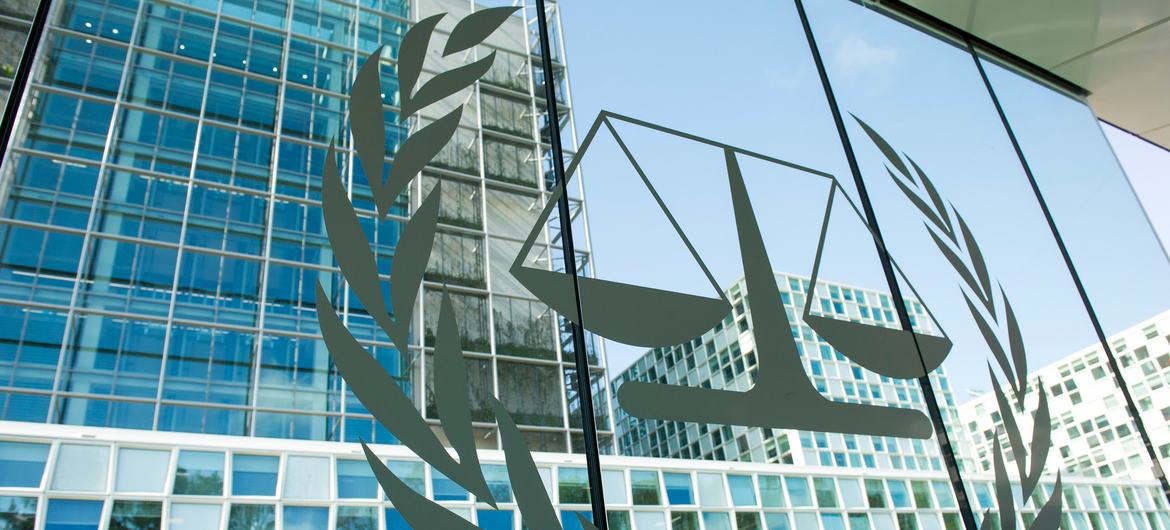
The United Nations upheld the critical role of the International Criminal Court (ICC) on Monday in the global fight to end impunity for grave crimes, amid calls for it to be abolished.
During his regular media briefing, UN Spokesperson Stéphane Dujarric was asked if the Secretary-General had anything to say regarding reports that US Secretary of State Marco Rubio wants to “dismantle” the Court, which prosecutes individuals for genocide, war crimes, crimes against humanity and the crime of aggression.
“While the ICC is an organisation that is separate from the Secretariat and the UN, it remains for us a critical cog in the international justice system,” said Mr. Dujarric.
“It is supported by a vast number of Member States, and it helps bring accountability for serious crimes,” he added.
The US is not a party to the Rome Statue, the 1998 treaty that established the ICC, which is located in The Hague in the Netherlands.
Learn more about the ICC in our explainer here.
Mr. Rubio laid out his plans in an opinion piece published in The Wall Street Journal, underlining sovereignty and independence.
“America never agreed to a world tribunal that can override our own courts and the Constitution,” he wrote.
The US was “launching a diplomatic campaign with a simple message – sovereign States over globalism,” Secretary Rubio continued.
It comes in the wake of developments last year, when Washington imposed sanctions on nine ICC personnel – including judges, the prosecutor and deputy prosecutors – in connection with efforts to investigate alleged war crimes committed by US forces in Afghanistan and Israel in Gaza.
International law ‘under attack’
In the opinion piece, Mr. Rubio stressed that “independence is our birthright” and the US does not “intend to trade it for rule by a self-appointed priesthood of ‘international law.’”
Mr. Dujarric was asked if the Secretary-General accepts this characterization of the system the UN Charter is built on.
“International law, the Charter of the United Nations, the Universal Declaration of Human Rights, were created by sovereign Member States,” he said.
“They have brought protection, they have brought relief to millions of people, and they are, as the Secretary-General has often said, under threat and under attack.”


No comments:
Post a Comment