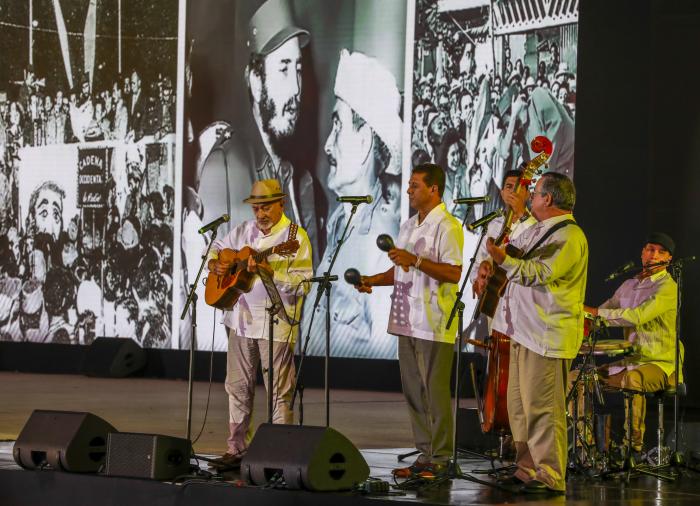
 |
 Pix credit Granma here |
«Queridos pinareños: reciban este 26 de Julio, el cariño y mi reconocimiento por haber ganado, con su esfuerzo, consagración a la causa revolucionaria y trabajo creador, el gran honor de ser la sede del acto central por el 73 aniversario del asalto a los cuarteles Moncada y Carlos Manuel de Céspedes, Día de la Rebeldía Nacional. Un fuerte abrazo a todos, Raúl Castro Ruz».[“Dear residents of Pinar del Río: on this July 26th, receive my affection and appreciation for having earned, through your effort, dedication to the revolutionary cause, and creative work, the great honor of hosting the central event for the 73rd anniversary of the assault on the Moncada and Carlos Manuel de Céspedes barracks, National Rebellion Day. A big hug to all, Raúl Castro Ruz.”]Con ese sentido mensaje del Líder al frente de la Revolución, General de Ejército Raúl Castro Ruz, inició su discurso en el Acto Central Nacional por el 26 de Julio, el Primer Secretario del Comité Central del Partido y Presidente de la República, Miguel Díaz-Canel Bermúdez. [With that heartfelt message from the Leader at the head of the Revolution, Army General Raúl Castro Ruz, the First Secretary of the Central Committee of the Party and President of the Republic, Miguel Díaz-Canel Bermúdez, began his speech at the National Central Act for July 26th.] (Address of Diaz Canel on 26 July Anniversary)
So begins the coverage of what had once been a much more robust and from the perspective of what became of the military revolution of 1959, glorious commemoration of the start of what would become the revolutionary period of contemporary Cuban history. It's high point, as usual is a longhish speech by a leader of the nomenklatura, taking up a space once occupied for decades first by Fidel and then Raúl Castro. This year the commemorations are less glorious and delivered under conditions not just of internal crisis but also of a much greater certainty that external pressure may well force significant change to the character and direction of the glorious revolution the start of which is traditionally observed on 26 July.
Many years ago in an essay I entitled Forbidden Cities (15 October 2008), I considered the semiotic spaces of recursive spaces and their corrupting influence on the course of the life of empire--even small ones like that of Cuba. While the object in that essay were the physical manifestations of physical spaces that first manifest glory, then become prisons and then form a barrier that separates the reality around them from the inhabitants of its gramd spaces. And yet ideological spaces can be as confining as the interior spaces of the Forbidden City, of Versailles and of the Topkapi Palace. I noted:
And there lies the perverse irony of grand spaces. What appears to maximize the expression of power outward form ruler to subjects, perversely enough, also works against that power. These palaces are indeed isolated, remote, inaccessible. Great heaps of land and buildings that are deliberately cut off from those subject to the power of the occupants. And the inhabitants from most to least powerful, is as isolated as the architecture within which their lives are played out. And that is the problem. This is a self-referencing space, and its inhabitants increasingly come to reflect that orientation of their environment. Cut off in their power, the inhabitants of these palaces inhabit a small world of their own making. They are dependent on others for information about the outside world they control. And they little idea of the conditions of the dependent populations—why should they cultivate any such idea when the idea of their position in relation to subject is as solid as the building that serves as its physical expression? Trundled about from one ceremony to another, they serve as cogs of a machine that produces the appearance of power while growing more and more remote from its sources. The most powerful eventually are reduced to a state of ultimate dependence—unable to function except in their roles in the production of power’s appearance. Indeed, in an advanced stage, even the most powerful are reduced to metaphor. They are as much captive as ruler.
It is then hardly surprising that the people wielding such vast official power from these places eventually became essentially irrelevant in the lives of those governed—almost mythic figures that could be discarded when inconvenient or when the subject population had moved on (without them). Or they become sources of arbitrary and non responsive power. Ruling within an architecture that magnifies the self-referencing experience of power makes its expression outside the palace walls disconnected. And the more disconnected the expression of rule, the greater the tendency to react badly in the population. That bad reaction, in turn, is viewed with alarm and suspicion and might reinforce the tendency of the palace to seek more intently for the protection of its walls and the views generated therein. The palace becomes a refuge as well as an outward expression of power. And thus is the dynamic of decay well mixed in the mortar of the palace buildings. What might have started out as the expression of power projected outward by a ruling structure that meant the palace to reflect the strength of that expression of political will becomes its opposite—a place to which power retreats for protection against the outside and is projected inward, until there is little left to rule but the precincts of the palace itself.
The First Secretary's speech for 26 July 2026 is, in a sense, a study in the semiotics of the pathos inevitably produced by closed systems that have nowhere to go but round and round, not because they can't proceed differently but because cognitively that has become "impossible" without losing themselves to the self constructed "other." The remarks, then, might be said to exhibit important characteristics of a discursive "Forbidden City", a discursive space that sees only itself, that is entirely recursive, and that is incapable of bridging its own interior spaces with what is going on around them. The larger the gap the harder those within these palaces grasp at the illusion of power, of glory, and of the sense that from within its walls they might still project power or authority, even as the scope of that authority shrinks down to the interior of those spaces.
That is the lesson of the First Secretary's Speech, one serve dup like a pep rally at a large State university in the United States before a football game the certainty of which is that the players will not emerge with anything resembling victory. First Secretary Díaz-Canel’s address at the 73rd Anniversary of the Moncada Barracks Assault (National Rebellion Day in Pinar del Río) centered on three core themes: historical continuity, severe domestic crises, and aggressive anti-imperialist rhetoric. These are themes that have become finely tuned discursive tropes that have recurred with regularity since the 19660s, but now updated for the current crisis.
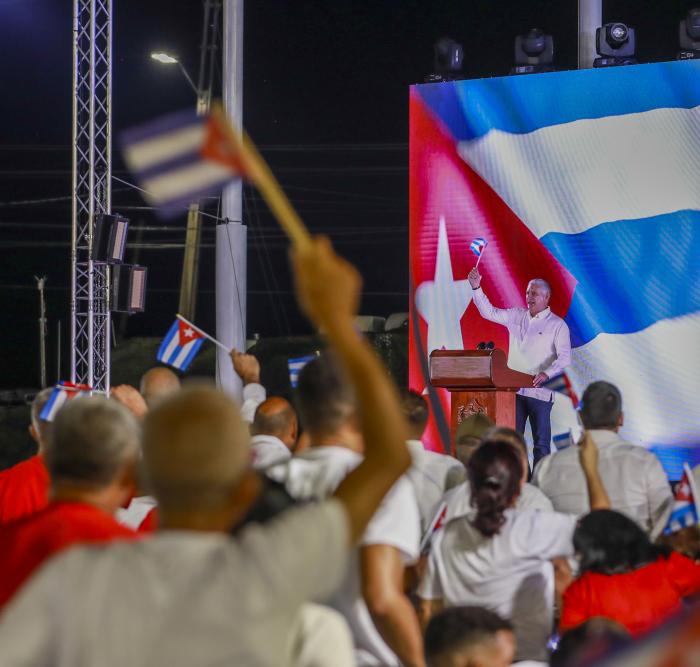
Ideological Framing & Historical Symbolic Milestones. He framed Cuba's present challenges as a "new Moncada"—a struggle requiring resistance to fuel eventual recovery. Hel linked the event to significant anniversaries: the upcoming centenary of Fidel Castro (born 1926) and the 95th birthday of Raúl Castro (who sent an opening greeting). And he honored historical figures, such as Commander Ramiro Valdés, while praising youth to lead local development.
Acknowledgment of Severe Domestic Crises. The First Secretary directly addressed the deteriorating socio-economic conditions: widespread blackouts, industrial stagnation, and the frequent failures of the National Electric System (SEN). He ighlighted critical shortages in the healthcare sector, pointing to over 100,000 delayed surgeries, lack of first-line cancer treatments, and a spike in the national infant mortality rate from 4.5 to 9.3 per 1,000 live births (while noting Pinar del Río managed to keep its rate lower at 4.8).
Blame on the U.S. Embargo & External Pressuresd. The critical semiotics of the Cuban Lebenswelt is that Cuba exists in and as the shadow of the UINited States; its victories are achievesd despite the United States, its challenges and defeats are the direct result of the machinations of the U.S. Thus, the First Secretary attributed the economic collapse, fuel shortages, and medical crises entirely to a "coldly calculated genocide" and a "policy of maximum economic strangulation" by the United States. He dDenounced international sanctions targeting Cuban health officials, fuel shipments, and foreign investments, calling on global actors not to be "accomplices."
Local Achievements & Call to Action. As is customary in these speeches, andcertainly since 2008, the First Secretary focused on operaiotnal issues wrapped around ideologocal objecytioves. He praised Pinar del Río’s recovery efforts following Hurricane Ian (2022), its tobacco and rice production, and its transition toward renewable energy (e.g., 87 MW in new solar parks). And he concluded with a call for self-reliance, import substitution, and active civil participation under the rally cry: "May every dawn find us on a war footing."
A straightforard political analysis is fairly simple to make: The First Secretary's address reflects a regime attempting to maintain political legitimacy amidst one of the most acute economic and social crises in Cuba since the 1990s "Special Period." The speech’s explicit mention of 24+ hour blackouts, SEN grid collapses, and severe medicine shortages underscores how unavoidable these issues have become in national discourse. And yet the unavoidable reality: Cuba’s aging thermoelectric plants and severe fuel import deficits have paralyzed everyday life and manufacturing. By openly citing rising infant mortality rates and cancelled surgeries, the leadership acknowledges the depth of public distress—likely to pre-empt public outrage—while shifting 100% of the blame onto foreign sanctions rather than systemic domestic mismanagement or agricultural central planning flaws.
The heavy emphasis on Fidel Castro’s Centenary (1926–2026) serves as a vital rhetorical tool for the ruling Cuban Communist Party (PCC). It also appears to be a sort of discursive contionuity strategy: As the generation of the 1959 Revolution (the "historic generation") ages out, the post-Castro leadership under Díaz-Canel faces a crisis of historical legitimacy. Invoking Fidel's legacy and Raúl Castro’s personal endorsement is an attempt to rally nationalist sentiment, enforce party discipline, and appeal to the youth to remain loyal during times of extreme hardship.
The geopolitical alignment & anti-imperialist rhetoric is both well worn and likely comfortong for the nomenklatura and other elements with lots ot lose in a major system rectification. The First Secretary's broader geopolitical commentary ("First it was Gaza, Lebanon, Iran; today it is Cuba") aims to position the island within a wider global anti-hegemonic bloc. It also evokes the traditional Cuban forms of diplomatic counter-offensive that works relatively well in the past: Facing isolation and tight financial restrictions from Washington, Havana continues to rely heavily on international solidarity networks, the UN General Assembly anti-blockade vote, and strategic ties with non-Western partners to keep its economy afloat. Framing the embargo as a global "human rights issue" remains Cuba's primary diplomatic lever.
The discursive spice is almost always local, and increasingly small: The local response delivered by provincial leader Yamilé Ramos Cordero highlighted pragmatic efforts like photovoltaic (solar) energy adoption and localized food supply chains. This highlights the government's dual approach: maintaining rigid anti-imperialist political discourse at the top, while urging local provinces to decentralized survival measures—such as off-grid renewable energy and local agricultural initiatives—to survive the immediate crisis.
None of this is particularly interesting other than as reporting and other than as evidencing the advanced state of "Forbidden City" syndrome. Far more interesting to me is an analysis through the lens of signs, myth-making, and narrative construction. We have come to understand that in legal semiotics, texts do not merely communicate information; they organize sign systems that construct and validate reality. In this speech, the Cuban state apparatus uses semiotic markers to manage public crisis and reinforce its institutional legitimacy.
The "Moncada" Signifier: Retelling Suffering as Revolutionary Duty. I have noted before that Marxist-Leninist state systems rely heavily on historical myths to transform material hardship into moral obligations. That has certainly been the case for Cuba in a partoicularly distinctive way (See, e.g., From Hatuey to Che: Indigenous Cuba Without Indians and the U.N. Declaration on the Rights of Indigenous Peoples, 33(1) American Indian Law Review 201-238 (2008)). The Metaphor: the First Secretary frames Cuba’s current collapse (blackouts, fuel deficits, medical shortages) not as administrative failures, but as a "new Moncada." The Semiotic Function: The historical Moncada assault of 1953 was a tactical defeat that laid the groundwork for eventual strategic victory. By semiotically mapping 2026's economic paralysis onto Moncada, the state re-signifies popular suffering into revolutionary sacrifice. Deprivation is converted from a reason to protest into proof of patriotic endurance.[Signifier / Ritual] [Signified / Meaning]
July 26th Address ──────────► Continuous Revolution (No transition)
"El Moncada" ──────────► Legitimate Suffering / Necessary Struggle
The "External Enemy" ──────────► Exoneration of Internal Policy Failures
Structural Textual Anchors: The Authority of the "Vanguard". The speech opens not with Díaz-Canel’s own words, but with a message from General Raúl Castro Ruz, who himself invokes Fidel Castro Ruz. That evidences a common thread in authority block chain. In Cuban Marxist Leninism that block chain must proceed from the core node of authority--legitimacy flows linearly and sequentially: Vanguard Leader--The Party --The State Apparatus (and in Cuba, the military establishment as well. The First Secretary appears to act or serve as an administrative operator whose legitimacy depends entirely on referencing the foundational "signs" (Raúl and Fidel). This reinforces that the Communist Party (PCC) remains the singular, uninterrupted moral center of the nation; but one that is personified.
Nonetheless, that sequencing includes a mass feedback loop (see here): targeted public rhetoric enforces alignment between the citizenry and party directives. Toward the end of the address, Díaz-Canel shifts responsibility back onto the population: "The call now is to action... to seek alternatives with audacia and creativity... to rely on our own strength." The state sets the ideological boundaries, but demands that local communities (like Pinar del Río) self-organize to solve practical problems (e.g., building solar parks, localized farming) within those rigid political lines. This is old wine in older bottles. But still it is interesting to watch its discursove power now watered down.
Cohesion, of course, as a critical external component in Caribbean Marxism. The United States embargo not just as an economic critique, but as an essential institutional mechanism for internal cohesion. By attributing the electro-energy system (SEN) failures, canceled surgeries, and rising infant mortality directly to Washington's "maximum strangulation," the state apparatus shields its own economic planning models from internal critique. Acknowledging internal structural flaws risks invalidating the socialist model itself. Therefore, all internal systemic breakdowns must semiotically and theoretically be framed as foreign acts of war.
Viewed through this theoretical lens, President Díaz-Canel’s address is less an economic blueprint and more an exercise in structural self-preservation. Through carefully managed semiotic signs—invoking the dead and aging revolutionary hierarchy, re-framing acute poverty as an active "battle," and laying all failure at the feet of an external antagonist—the Cuban state-party seeks to rationalize its continued monopoly on power amidst severe material collapse.
The question is now something far more important --is this the last 26 of July speech that Cuban leaders will deliver under the current set of realities in the ideological construction and operationalization fo the Cuban political-economic model as it is now constituted? That is the one question that ought to have been addressed.
And that last, mordant, comment in the form of a question suggests a tension that I was initially hestant to confront but now will. The essay's final rhetorical question — whether this might be "the last 26 of July speech" delivered under the current ideological and political-economic model — implicitly treats the depth of the acknowledged crisis (blackouts, infant mortality, cancelled surgeries) as evidence that the system is approaching some kind of breaking point. It is a breaking point that can actually lead to rupture with a new element, the sustained prodding of the United States. But this sits uneasily against my own thesis about the peculiarity of the Cuban situaiton and the resiliency of its Caribbean Marxist-Leninist praxis. In "Cuba and the Constitution of a Stable State of Misery: Ideology, Economic Policy, and Popular Discipline." There, I argued explicitly that what looks like instability in Cuba's political model is "actually becoming a stable state of misery," in which control is maintained "on the basis of a reality of misery just challenging enough to keep a population really well managed and the political system reasonably well ordered." I suggested that this reading further inverts the conventional reading of popular protest, treating periodic popular explosion not as a pre-revolutionary signal of regime collapse but as a disciplinary mechanism the state itself uses to gauge the outer limits of tolerable misery. If that thesis holds, my closing intimation here, that there may be a sunset to the current system, the essay's closing question, suggests an answer, and answer in the negative: the acknowledgment of crisis in Díaz-Canel's speech is not evidence of imminent rupture but is precisely the kind of managed, quantified admission of hardship (100,000 delayed surgeries, an infant mortality rate rising to 9.3 per 1,000) that a "stable state of misery" model would predict the regime to make openly, as part of sustaining rather than undermining the equilibrium. The tilting of that calculation then shifts from inside Cuba to its outside irritants--and partkcularly the United States.
The text of the Address in the original Spanish and in an English translation follows below.
Díaz-Canel: «Que cada amanecer nos encuentre en pie de lucha»
«Queridos pinareños: reciban este 26 de Julio, el cariño y mi reconocimiento por haber ganado, con su esfuerzo, consagración a la causa revolucionaria y trabajo creador, el gran honor de ser la sede del acto central por el 73 aniversario del asalto a los cuarteles Moncada y Carlos Manuel de Céspedes, Día de la Rebeldía Nacional. Un fuerte abrazo a todos, Raúl Castro Ruz».
Con ese sentido mensaje del Líder al frente de la Revolución, General de Ejército Raúl Castro Ruz, inició su discurso en el Acto Central Nacional por el 26 de Julio, el Primer Secretario del Comité Central del Partido y Presidente de la República, Miguel Díaz-Canel Bermúdez.
El mandatario cubano destacó que «Cuba libra hoy una batalla histórica, un nuevo Moncada», y recordó las palabras de Fidel, cuando calificó al Moncada como el motor pequeño que movió después el motor grande que es la Revolución.
Díaz-Canel insistió en que hoy los cubanos estamos peleando «ferozmente y tozudamente por nuestra soberanía y nuestro derecho de escoger libremente el modo de gobernarnos, con la misma pasión con la que José Martí se propuso conquistar toda la justicia».
En sus palabras, recordó el ejemplo del Comandante de la Revolución Ramiro Valdés Menéndez, quien fue consecuente con sus ideales hasta el último instante de su vida.
Una vez más el Presidente se refirió a las muestras de heroísmo cotidiano, entre las cuales resaltó los resultados del Programa Materno Infantil en Pinar del Río, con 4.8 por cada mil nacidos vivos, y cero muertes maternas, «en medio de apagones y carencias de todo tipo». Reconoció también otros elementos que fueron esenciales para los resultados que hoy exhibe la provincia, como la producción de alimentos, la producción tabacalera y los encadenamientos de la industria alimentaria.
Destacó también el trabajo de ciencia a innovación, el desarrollo cultural y la protección del patrimonio. La provincia tiene, además, un sistema de trabajo que ha permitido mayor vínculo con las comunidades. «Felicitaciones Pinar del Río, por el heroísmo y los resultados», dijo el Presidente. Saludó también a Matanzas y Villa Clara, provincias destacadas y reconoció los resultados de Guantánamo y Sancti Spíritus.
Díaz-Canel reflexionó en que los adversarios históricos de la nación cubana, «lanzan todos los días una amenaza contra la Revolución, y cada semana anuncian un nuevo castigo para empresas y funcionarios cubanos, incluso para quienes, sean cubanos o extranjeros, se atrevan a enviar un barco de petróleo o invertir en Cuba», especialmente llamó de infames los argumentos de las sanciones que apuntan a entidades y funcionarios de la Salud Pública Cubana.
«Han declarado una guerra mundial contra las izquierdas y a Cuba, como capital del Comunismo en el siglo XXI», dijo el Presidente y recordó que no solo están criminalizando la protesta, y de forma oportunista están buscando una nueva excusa para justificar su genocida política contra Cuba que el mundo condena. «Dejen a Cuba vivir en paz» afirmó, y añadió que «Cuba no es una amenaza ni para los Estados Unidos, ni para ningún otro país sobre la tierra».
Habló además de los méritos de nuestra Isla en materia de solidaridad internacional, y destacó que, a pesar de las dificultades, las universidades cubanas han graduado a más de 30 000 profesionales, más de 300 de los cuales provienen de otros países, y resaltó el dato de que, entre ellos, 23 fueron médicos palestinos y cinco estadounidenses. «¿A esto, llaman terrorismo? ¿A esto llaman amenaza?», cuestionó.
«La única amenaza contra la seguridad en la región, la verdadera y real amenaza contra la paz mundial, y contra la vida humana, es la política de agresión que provoca hambrunas, empobrecimiento, migraciones desordenadas, caos, inestabilidad, y decenas de miles de muertes en todo el mundo», afirmó.
Firmemente el Presidente expresó: «Desde esta tribuna denunció que Cuba es víctima de un genocidio, fríamente calculado. El Gobierno de Estados Unidos ha diseñado e implementado conscientemente, una política de máxima asfixia económica contra el pueblo cubano. Ha recrudecido su política de seis décadas de bloqueo, imponiendo un cerco energético y financiero, provocando una profunda crisis en el sistema electroenergético que se traduce en apagones de más de un día, paralización de industrias, y afectación a decenas de miles de trabajadores».
Denunció también estadísticas que muestran el dolor de las familias cubanas, como las muertes por falta de medicamentos que siempre fueron gratuitos en el país; más de 100 000 cirugías que no pueden ejecutarse porque los hospitales no pueden ser protegidos de apagones imprevistos en las ya frecuentes caídas del SEN y por la falta de combustible de las plantas de apoyo. Más de 118 000 pacientes de cáncer entre ellos 1200 niños no pueden recibir los tratamientos de primer nivel y están obligados a tratamientos alternativos de segunda y de tercera línea, «y lo que es tan o más doloroso, la tasa de mortalidad infantil subió a 9.3 por cada mil nacidos vivos, frente a los 4.5 que se registraban en años anteriores. En esos números van los rostros de niños que no vieron la vida como consecuencia del bloqueo», dijo y afirmó que es ilegal y criminal martirizar a un pueblo solo para que se revele contra su gobierno.
«El bloqueo es un arma de guerra y causa muertes», afirmó y dijo más adelante que el bloqueo solo funciona, por la complicidad de quienes temen al poder de Washington más que al juicio de la historia. «Esto es un nuevo llamado a la conciencia del mundo, no se conviertan en cómplices de otro genocidio».
«Antes fueron Gaza, Líbano, Irán, hoy es Cuba. Mañana puede ser cualquier otra nación» y recordó que la solidaridad internacional llegó demasiado tarde para miles de gazatíes, entre ellos más de 21 000 niños y recordó que por eso, la solidaridad con Cuba no es algo que pueda esperar, y agradeció, por ende, a quienes lo arriesgan todo para llegar con su solidaridad hasta la Isla y a los gobiernos que votaron, en la ONU, a favor de la resolución cubana contra el bloqueo a pesar de las presiones.
Díaz-Canel dijo que este 2026 tiene un significado especial no solo para cubanas y cubanos, «el año del Centenario del Comandante en Jefe Fidel Castro Ruz, tiene resonancias universales», afirmó y recordó que los cubanos honramos su memoria con palabras, pero también con hechos, con trabajo, con unidad, con dignidad y «con suficiente lucidez y determinación para aplicar, en el menor tiempo posible las transformaciones que el momento y la nación nos exigen».
A los jóvenes cubanos les dijo que son presente y futuro, «ustedes son los jóvenes del centenario de Fidel, están llamados a liderar este momento desde cada barrio y cada rincón de esta Isla», reflexionó.
Ya en los finales de sus palabras, el Presidente dijo que «el llamado ahora es a la acción, a no esperar, a no lamentarse, a no conformarse, a pensar como país, a buscar alternativas con audacia y creatividad, a cuidar cada recurso como si fuera el último, a producir, a sustituir importaciones, a desarrollar nuestro potencial, a confiar en nuestras propias fuerzas», llamó a cada cubano a ser protagonista del momento que vivimos y dijo que «el llamado de hoy es a la esperanza».
«Que cada amanecer nos encuentre en pie de lucha», concluyó.

-------------------------------------------------------------------------------------------------------------------------------------
«FRENTE AL BLOQUEO, RESPONDEREMOS CON MÁS TRABAJO Y MÁS UNIDAD»
El 26 de Julio de 1953, un grupo de jóvenes asaltaron de forma sincronizada los cuarteles Moncada y Carlos Manuel de Céspedes en las ciudades orientales de Santiago de Cuba y Bayamo, con el objetivo de iniciar la lucha y despojar a Cuba de la tiranía batistiana.
La mañana de la Santa Ana llegó junto el fragor rebelde, cómplice de cientos de disparos que acunaron el amanecer de la Revolución.
Hoy el pueblo de Cuba conmemora el aniversario 73 de esa gesta, en la provincia de Pinar del Río como sede del acto central por el Día de la Rebeldía Nacional.
Luego de 50 años de haber sido merecedora por primera vez de esta sede, en 1976 la Plaza de la Revolución en Pinar del Río acoge alrededor de 5 000 pinareños en representación de todos los cubanos.
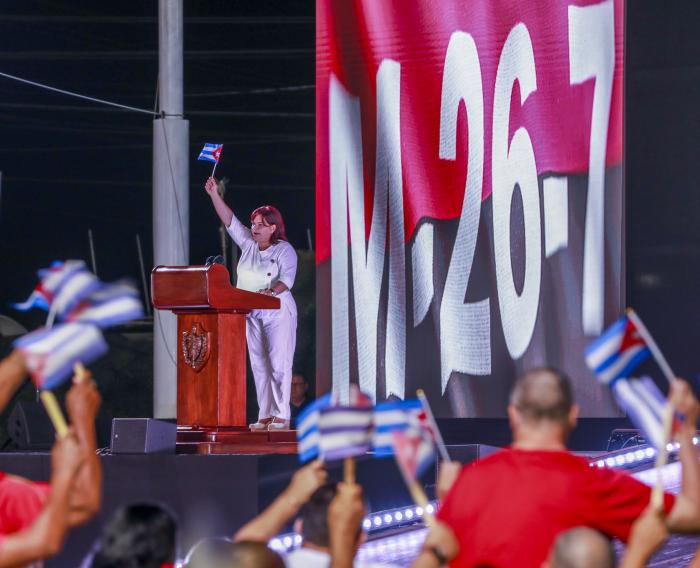
En su intervención, la Primera Secretaria del Partido en la provincia, Yamilé Ramos Cordero, reafirmó que la designación de Pinar del Río como sede nacional del Día de la Rebeldía Nacional, en especial durante el año del centenario del natalicio de Fidel Castro ratificó la respuesta del pueblo ante el recrudecimiento del bloqueo estadounidense. «Frente a las graves y desafiantes circunstancias —señaló— nuestra respuesta es y será siempre con mucha firmeza: defender la revolución y sus conquistas».
Ramos Cordero recordó que más de 40 pinareños participaron en la gesta del Moncada, de los cuales tres cayeron en combate y 13 fueron asesinados por la dictadura batistiana.
En cuanto al contexto actual, la Primera Secretaria del Partido en la provincia, reconoció que fueron muchos los retos, luego del paso del huracán Ian en 2022, la construcción de viviendas para damnificados, el montaje de nuevas casas de cultivo del tabaco y la edificación de 27 casitas infantiles en los más remotos espacios de la geografía pinareña, así como el mantenimiento constructivo de centros educativos y de la Salud.
La Primera Secretaria en Vueltabajo ratificó además que, estas dificultades forjaron un pueblo fiel y firme que ha sabido salir adelante siempre pensando como país y como Revolución.
Ramos Cordero destacó el avance de la provincia en la transición energética con el montaje de cuatro parques fotovoltaicos que suman 87 MW, además de la instalación de energías renovables en centros hospitalarios y de alta demanda social.
En Salud Pública la provincia mantiene una tasa de mortalidad infantil de 4,8 por cada mil nacidos vivos, con varios municipios en cero durante periodos prolongados. La esperanza de vida al nacer es de 78,1 años y más de 1 000 profesionales profesionales del sector prestan colaboración médica en 38 países.
Ante los desafíos actuales los pinareños siguen cultivando, manteniendo a la provincia como la mayor productora de arroz del país.
La funcionaria detalló que, «Pinar del Río produce el 70 % del tabaco nacional, con creciente incorporación de jóvenes y mujeres. Reconoció que aún no se cubre toda la demanda de alimentos, pero aseguró que «es el camino para lograrlo, produciendo más y aprovechando todas las potencialidades».
En el deporte, resaltó la medalla de oro de Leyanis Pérez en el Mundial de Atletismo y la quinta corona olímpica de Mijaín López, que mantienen el orgullo de «esta tierra de campeones»
Ramos Cordero llamó a no cruzarse de brazos, expresando su fidelidad y compromiso en el pueblo pinareño: «Frente a las amenazas imperiales, responderemos con más Revolución. Frente al bloqueo, responderemos con más trabajo, más unidad. Frente a la mentira, responderemos con la verdad de nuestra historia y la justeza de nuestra causa».
En su discurso evocó las palabras de Fidel en 1976: «Esta provincia dio uno de los mejores contingentes para el inicio de la lucha armada revolucionaria. Jóvenes de Artemisa, Guanajay y de la ciudad de Pinar del Río. Por eso, tenemos presente el aporte de esta región de Cuba a la lucha revolucionaria antes del 26 de julio, después del 26 de julio, antes del primero de enero, ayer, hoy y mañana».
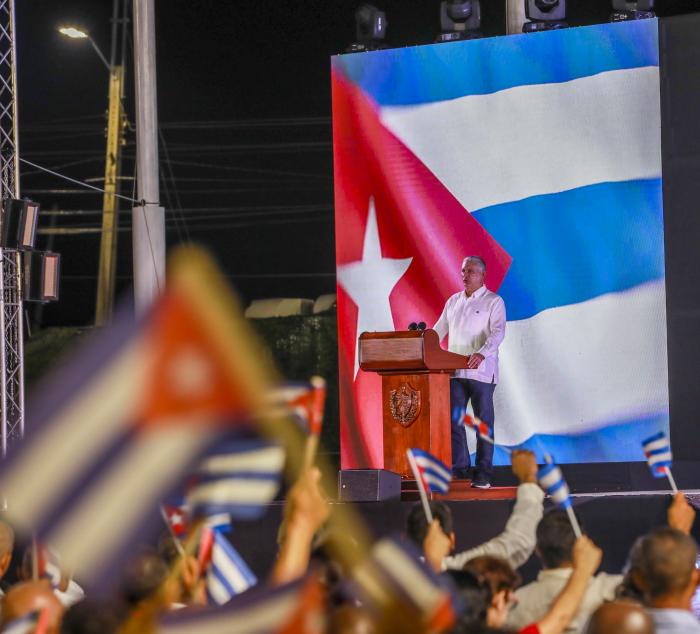
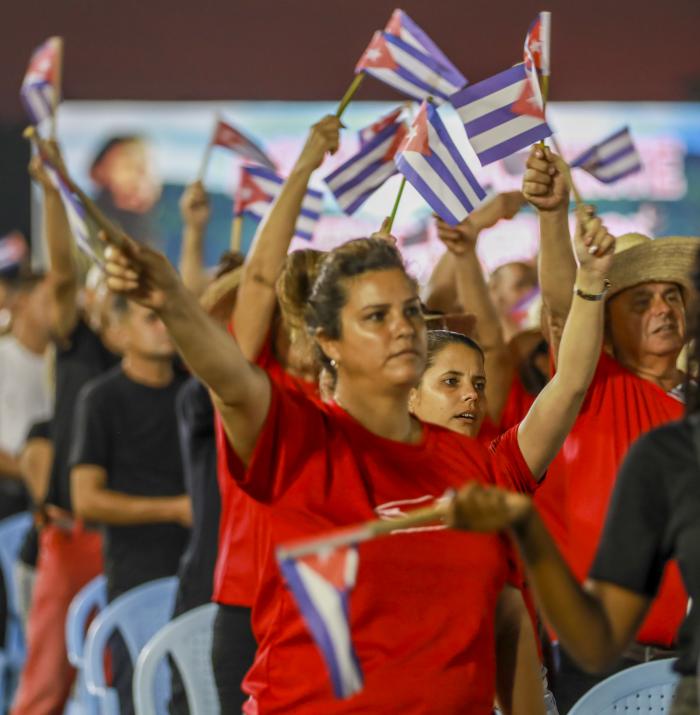
--------------------------------------------------------------------------------------------------------------------------------------El Primer Secretario del Comité Central del Partido y Presidente de la República, Miguel Díaz-Canel Bermúdez, preside el acto por el Aniversario 73 del Asalto de los Cuarteles Moncada y Carlos Manuel de Céspedes, al que asisten 5 000 pinareños en representación de toda Cuba.
Asisten, además, el Comandante del Ejército Rebelde José Ramón Machado Ventura, Miembros del Buró Político del Comité Central del Partido, hermanos de la solidaridad internacional y dirigentes de las provincias de Matanzas y Villa Clara que obtuvieron la condición de destacadas.
La celebración del Día de la Rebeldía nacional se dedica al centenario del Comandante en Jefe Fidel Castro Ruz, el cumpleaños 95 del General de Ejército, Líder al frente de la Revolución, Raúl Castro Ruz, y al aniversario 50 de la primera vez en que Pinar del Río recibió la sede de esta efeméride.
--------------------------------------------------------------------------------------------------------------------------------------

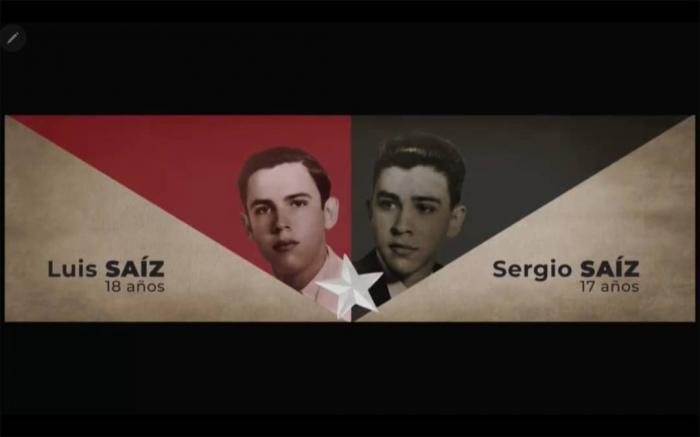
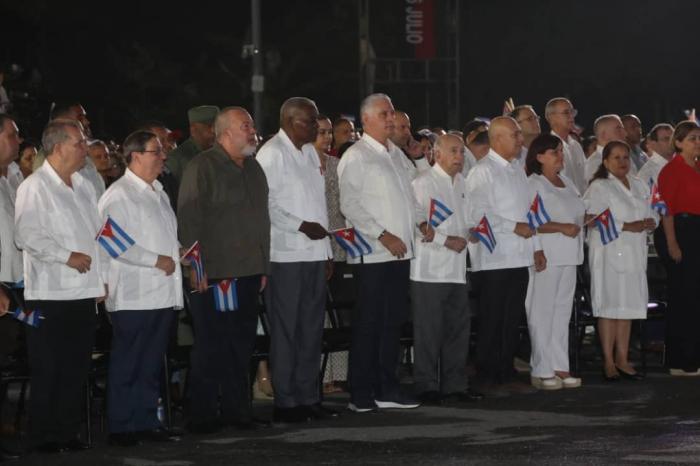
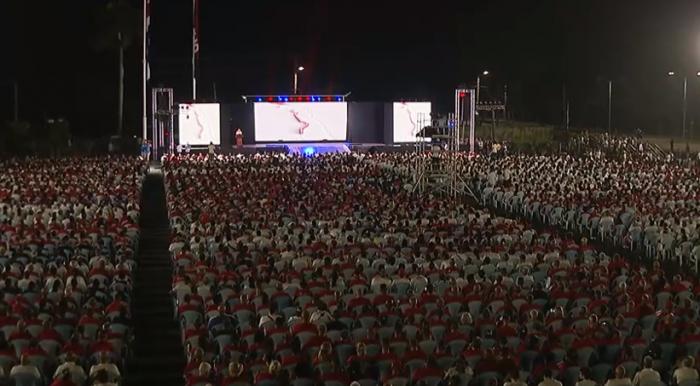
El pueblo de Pinar del Río, en representación de toda Cuba, celebrará hoy el Aniversario 73 del asalto a los cuarteles Moncada y Carlos Manuel de Céspedes, un hecho que marcó definitivamente el rumbo de la Revolución.
Es la cuarta ocasión en la que la provincia más occidental de Cuba acoge las celebraciones por el Día de la Rebeldía Nacional, y constituye, sin duda alguna, unos de los territorios, como cada palmo de esta Isla, en los que las transformaciones revolucionarias cambiaron para siempre la triste realidad del pueblo.
En medio de un bloqueo recrudecido en su máxima expresión por el imperio, el pueblo de Cuba demuestra que sigue fiel a su historia y que nuestros héroes no están ni olvidados ni muertos.
Aquel motor pequeño que movió después la inmensa obra social nacida el primero de enero de 1959, sigue siendo motivo de orgullo, lealtad a la Patria y compromiso incuestionable con nuestra independencia.
Here is the English translation of the article:
Díaz-Canel in Pinar del Río: “May every dawn find us ready to fight” (Special Coverage)
With a message sent by Army General Raúl Castro Ruz, Leader of the Cuban Revolution, the First Secretary of the Central Committee of the Party and President of the Republic, Miguel Díaz-Canel Bermúdez, began his speech at the National Central Act for July 26th.
By: Digital Editorial Team | internet@granma.cu
By: Amelia Quintero Becquer | internet@granma.cu
By: Leydis María Labrador | internet@granma.cu
By: Mailenys Oliva Ferrales | internet@granma.cu
July 26, 2026 – 05:07:05
Díaz-Canel: “May every dawn find us ready to fight”
(Photo: José M. Correa)
“Dear residents of Pinar del Río: on this July 26th, receive my affection and appreciation for having earned, through your effort, dedication to the revolutionary cause, and creative work, the great honor of hosting the central event for the 73rd anniversary of the assault on the Moncada and Carlos Manuel de Céspedes barracks, National Rebellion Day. A big hug to all, Raúl Castro Ruz.”
With that heartfelt message from the Leader at the head of the Revolution, Army General Raúl Castro Ruz, the First Secretary of the Central Committee of the Party and President of the Republic, Miguel Díaz-Canel Bermúdez, began his speech at the National Central Act for July 26th.
The Cuban president stressed that “Cuba is fighting a historic battle today, a new Moncada,” and recalled Fidel's words when he described the Moncada assault as the small engine that later set in motion the large engine that is the Revolution.
Díaz-Canel emphasized that today Cubans are fighting “ferociously and stubbornly for our sovereignty and our right to freely choose how we govern ourselves, with the same passion with which José Martí set out to conquer all justice.”
In his remarks, he remembered the example of Commander of the Revolution Ramiro Valdés Menéndez, who remained true to his ideals until the last moment of his life.
Once again, the President referred to demonstrations of daily heroism, highlighting the results of the Maternal and Child Health Program in Pinar del Río, with an infant mortality rate of 4.8 per thousand live births and zero maternal deaths, “amid blackouts and shortages of all kinds.” He also recognized other key factors behind the results the province shows today, such as food production, tobacco farming, and supply-chain integration in the food industry.
He highlighted the work in science and innovation, cultural development, and heritage protection. The province also has a working system that has fostered stronger ties with local communities. “Congratulations Pinar del Río, for your heroism and your results,” the President said. He also greeted Matanzas and Villa Clara—provinces recognized as outstanding—and acknowledged the achievements of Guantánamo and Sancti Spíritus.
Díaz-Canel reflected that the historical adversaries of the Cuban nation “issue threats against the Revolution every single day, and every week announce new punishments for Cuban companies and officials, including anyone—Cuban or foreign—who dares to send a oil tanker or invest in Cuba.” He specifically called the arguments behind sanctions targeting Cuban Public Health entities and officials infamous.
“They have declared a world war against the left, and against Cuba as the capital of 21st-century Communism,” said the President, noting that they are not only criminalizing protest, but opportunistically seeking new excuses to justify their genocidal policy against Cuba, which the world condemns. “Let Cuba live in peace,” he stated, adding that “Cuba is not a threat to the United States, nor to any other country on Earth.”
He also spoke of our island’s merits regarding international solidarity, highlighting that despite the difficulties, Cuban universities have graduated over 30,000 professionals, more than 300 of whom came from other countries. He emphasized that among them were 23 Palestinian doctors and five Americans. “Is this what they call terrorism? Is this what they call a threat?” he questioned.
“The only threat to security in the region, the true and real threat to world peace and human life, is the policy of aggression that causes famines, impoverishment, disorderly migration, chaos, instability, and tens of thousands of deaths worldwide,” he asserted.
Firmly, the President expressed: “From this platform, I denounce that Cuba is the victim of a coldly calculated genocide. The United States Government has consciously designed and implemented a policy of maximum economic strangulation against the Cuban people. It has intensified its six-decade blockade, imposing an energy and financial siege that has triggered a deep crisis in the electro-energy system, resulting in blackouts lasting more than a day, the shutdown of industries, and severe impacts on tens of thousands of workers.”
He also denounced statistics reflecting the pain of Cuban families, such as deaths due to shortages of medicines that were always free in the country; more than 100,000 surgeries that cannot be performed because hospitals cannot be protected from unexpected blackouts during the now-frequent failures of the National Electric System (SEN) and due to a lack of fuel for backup generators. More than 118,000 cancer patients, including 1,200 children, cannot receive first-line treatments and are forced onto second- and third-line alternative therapies. “And what is as painful or even more painful: the infant mortality rate rose to 9.3 per thousand live births, compared to 4.5 recorded in previous years. Behind those numbers are the faces of children who did not get to live as a consequence of the blockade,” he said, asserting that it is illegal and criminal to torment a people just to get them to revolt against their government.
“The blockade is a weapon of war and causes deaths,” he stated, adding later that the blockade only works due to the complicity of those who fear Washington’s power more than the judgment of history. “This is a new call to the world’s conscience: do not become accomplices to another genocide.”
“First it was Gaza, Lebanon, Iran; today it is Cuba. Tomorrow it could be any other nation,” he said, recalling that international solidarity arrived too late for thousands of Gazans, including more than 21,000 children. He emphasized that solidarity with Cuba cannot wait, expressing gratitude to those who risk everything to deliver solidarity to the island, as well as to governments that voted in the UN in favor of the Cuban resolution against the blockade despite external pressures.
Díaz-Canel noted that this year, 2026, holds special meaning not only for Cubans: “The centenary year of Commander-in-Chief Fidel Castro Ruz carries universal resonance,” he affirmed, reminding listeners that Cubans honor his memory with words, but also with deeds, hard work, unity, dignity, and “with enough clarity and determination to implement, as quickly as possible, the transformations that this moment and the nation demand of us.”
Addressing Cuban youth, he told them they are the present and future: “You are the youth of Fidel’s centenary; you are called to lead this moment from every neighborhood and every corner of this island.”
Concluding his speech, the President stated that “the call now is to action—not to wait, not to complain, not to settle, but to think as a country, to seek alternatives boldly and creatively, to safeguard every resource as if it were the last, to produce, to substitute imports, to develop our potential, and to rely on our own strength.” He urged every Cuban to play an active role in the present moment, declaring, “Today’s call is a call to hope.”
“May every dawn find us on a war footing,” he concluded.
“In the face of the blockade, we will respond with more work and more unity”
(Photo: José M. Correa)
On July 26, 1953, a group of young people mounted a synchronized assault on the Moncada and Carlos Manuel de Céspedes barracks in the eastern cities of Santiago de Cuba and Bayamo, aiming to launch the struggle to liberate Cuba from the Batista tyranny.
The morning of Saint Anne’s Day arrived alongside revolutionary fervor, accompanying hundreds of gunshots that heralded the dawn of the Revolution.
Today, the people of Cuba commemorate the 73rd anniversary of that event, with Pinar del Río province hosting the central event for National Rebellion Day.
Fifty years after first earning the honor of hosting this event in 1976, the Revolution Square in Pinar del Río brings together around 5,000 residents representing all Cubans.
In her address, Yamilé Ramos Cordero, First Secretary of the Party in the province, reaffirmed that designating Pinar del Río as the national host for National Rebellion Day—especially during the centenary year of Fidel Castro's birth—ratified the people’s response to the tightening U.S. blockade. “In the face of serious and challenging circumstances,” she noted, “our response is and always will be steadfast: to defend the revolution and its achievements.”
Ramos Cordero recalled that over 40 people from Pinar del Río participated in the Moncada assault, three of whom fell in combat and 13 of whom were murdered by the Batista dictatorship.
Regarding the current context, the First Secretary recognized that challenges have been numerous following Hurricane Ian in 2022, including housing construction for victims, erecting new tobacco curing barns, building 27 childcare centers in the most remote areas of the province, and undertaking structural maintenance of health and education facilities.
She further affirmed that these hardships forged a loyal, resolute population that has consistently managed to move forward by thinking as a country and as a Revolution.
Ramos Cordero highlighted the province’s progress in energy transition, including the installation of four photovoltaic parks totaling 87 MW, as well as the implementation of renewable energy systems in hospitals and high-demand social facilities.
In public health, the province maintains an infant mortality rate of 4.8 per thousand live births, with several municipalities reporting zero for extended periods. Life expectancy at birth stands at 78.1 years, and over 1,000 healthcare professionals from the area provide medical assistance across 38 countries.
Facing current challenges, the people of Pinar del Río continue farming, maintaining the province’s position as the country’s largest rice producer.
She detailed that “Pinar del Río produces 70% of the national tobacco crop, with increasing involvement from youth and women.” While acknowledging that local food demand is not yet fully met, she assured that “producing more and leveraging all potential is the path to achieving it.”
In sports, she highlighted Leyanis Pérez’s gold medal at the World Athletics Championships and Mijaín López’s fifth Olympic title, both continuing to bring pride to “this land of champions.”
Ramos Cordero called on citizens not to stand idly by, expressing the loyalty and commitment of the local populace: “In the face of imperial threats, we will respond with more Revolution. In the face of the blockade, we will respond with more work and more unity. In the face of lies, we will respond with the truth of our history and the justice of our cause.”
In her speech, she recalled Fidel’s words from 1976: “This province provided one of the finest contingents for the start of the armed revolutionary struggle—youth from Artemisa, Guanajay, and the city of Pinar del Río. That is why we remember the contribution of this region of Cuba to the revolutionary struggle before July 26th, after July 26th, before January 1st—yesterday, today, and tomorrow.”
The First Secretary of the Central Committee of the Party and President of the Republic, Miguel Díaz-Canel Bermúdez, presides over the ceremony marking the 73rd Anniversary of the Assault on the Moncada and Carlos Manuel de Céspedes Barracks, attended by 5,000 residents of Pinar del Río representing all of Cuba.
Also attending are Rebel Army Commander José Ramón Machado Ventura, members of the Political Bureau of the Central Committee of the Party, international solidarity comrades, and leaders from Matanzas and Villa Clara provinces, which earned outstanding recognition.
The celebration of National Rebellion Day is dedicated to the centenary of Commander-in-Chief Fidel Castro Ruz, the 95th birthday of Army General and Revolutionary Leader Raúl Castro Ruz, and the 50th anniversary of the first time Pinar del Río hosted this historic event.
The people of Pinar del Río, representing all of Cuba, will celebrate today the 73rd Anniversary of the assault on the Moncada and Carlos Manuel de Céspedes barracks—an event that decisively shaped the course of the Revolution.
This marks the fourth time Cuba's westernmost province hosts the National Rebellion Day celebrations. It stands, like every corner of this island, as a territory where revolutionary transformations permanently altered the harsh realities facing its people.
Amid an intensified blockade enforced to the extreme by the empire, the Cuban people demonstrate that they remain true to their history, and that our heroes are neither forgotten nor dead.
That small engine, which later powered the immense social undertaking born on January 1, 1959, remains a source of pride, loyalty to the Homeland, and an unquestionable commitment to our independence.


No comments:
Post a Comment