Orunmila!
Elérí Ípin, Ìbikeji Olódumarè, A-je-jù-Oògùn, Obìriti, A-p'ijó-ikú-da,
Olúwa mi, A-to-i-ba-j'ayé, Òrò à-bi-kú-j'igbo, Olúwa mi, Ajiki, Ógégé
a-gb'ayé-gún; Odúdú ti nídú orí emèrè; A-tún-orí-tí-kò sunwòn se,
A-mo-i-kú. Olówa Aiyere, Agiri Ilé-Ilógbón; Olúwa mi; amoimotán, A kò mo
O tàn kose, A ba mo tàn kose, A bà mo tán ìbà se ke. [Orunmila, the
witness of our fate, Second to Olodumaré, you are more effective than
medicine, You are the immense presence that avoids the day of death,
Lord
Almighty save us, mysterious spirit that battles death. Salutations
are due you first in the morning, for you are the force than produces
equilibrium among the forces on Earth, you are the one than can
reconstruct the creature whose lot in life is bad, you are the
repairer
of bad luck, those who come to you encounter immortality. Lord and
undeposable ruler, perfection in the house of wisdom, Lord infinite in
knowledge, we who fail to know you fully will fail, if we could but
know
you fully, all would be well with us.] (Afolabi A Epiga and John
Philip Niemark, The Sacred Ifa Oracle (Brooklyn, NY: Athelia Henrietta Press, 1995))
So begins the invocations of the Babalawós of IFA to Orunmila,
that divine manifestation of wisdom and the conduit through which such
wisdom is sometimes made available to humanity. Such wisdom is, as is
traditional in many places and among many cultures, oracular. It is
provided through manifested by other divine manifestations, in the case
of IFA, through Ellegua/Esu, the tricky and quite moody divine
manifestation of divine
spirit of connection, before the work of divination, of connection to
the divine, may be commenced.
For the last eleven years I
have written of the annual letter of the Cuban Council of the High
Priests of Ifá (Consejo Cubano De Sacerdotes Mayores De Ifá),
the practitioners of traditional religion brought over from West Africa
with the slave trade and now naturalized as a powerful indigenous
religion throughout the Caribbean and now growing in the United States. (e.g., 2022; 2021; 2020; 2019; 2018, 2017, 2016, 2015; 2014; 2013; 2012).
* * * * * *
Every religion connects the structures of divinity to the human
communities around which their worship is structured and social,
political, economic, and cultural communities are organized. To that
end, the priestly caste platys a very specific role as mediator,
interpreter, and as the incarnation of a social order grounded in divine
principles and rules.
In most states, the priestly role has been transformed. But it is
useful, as one examines the priestly role in modern western states, to
consider a more traditional relationship between the priest and the
state. One of the more interesting manifestations of the role of
religion within political life is that of the priests of the
practitioners of the old religions of Africa as re-established in the
Western Hemisphere, particularly in Marxist-Leninist Cuba. (here)
That priestly role is exercised in very specific ways among the great
traditions of Western Religions: Judaism, Christianity, and Islam. It
shows a more variegated vigor among Non-Western religious traditions.
These are well known. Yet most of these have sought to marginalize the
great traditions of African religions as a barbaric variant of primitive
idol worship that had been suppressed elsewhere. And yet those
religious traditions remain as vibrant, their theologies as complex, and
their practices as rich as those other religious traditions that have
sought over many centuries to supplant them. And so it was in the early
hours of the 1st of January that leaders of the various branches of the
Afro Cuban religious communities met.
To
that end, at the start of every year the leaders of the great
indigenous religion of Cuba conduct, through a series of ceremonies, a
general divination for the country. The results of that divination, and
its advice, is organized into a "Letter of the Year" (
Letra del Año) (on the history of the
Letras del año see HERE (
Historia de la Ceremonia de la Letra del Año )).
La letra indica que es lo que comunican los Orichas a las família de santo
y creyentes, como les irá en el transcurso del año en curso, y lo que
deberán hacer para que, las posibles tragedias venideras no los agarre
tan desprevenidos. Por esa letra, se regirán todos los familiares de ese
ilé (casa) sin excepción, durante todo ese año, y en ella quedan
determinados cuales limpiezas (Ebbós) deben hacerse todos los miembros. [
The
letter indicates what the Orishas communicate to the orisha communities
and uninitiated believers (the laity), how they will fare in the course
of the current year, and what they must do so that possible coming
tragedies do not catch them so unprepared. The
letter serves without exception as the rules and instructions that
serve as the basis for the governance (and guidance) of those religious
communities, each ilé (house), throughout that year, and in it are
determined which cleanings (Ebbós) all the members should undertake.] (
EcuRed, Letra del Año)).
The object of the annual letter is to provide guidance for the
nation and its people, as well as more technical advice for the orisha communities of initiates and believers. More specifically it is meant to provide
guidance for faith practitioners otherwise unable to receive more
specific guidance within their own branch.
Traditionally
each of the major houses provided their own annual divination. In Cuba
a process of consolidation resulted in agreement among the major houses
for a major joint divination and the production of a single national
augury. The year 2021 marked the 6th year of an important change, in
which many of the
most important branches of the faith came together to produce a unified
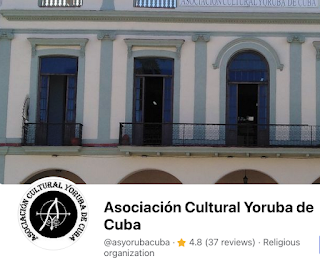
letter under the aegis of the Asociación Cultural Yoruba de Cuba (ACYC).
It also marked the last year of that union.
The
rupture was a long time coming. In 2019 there was some confusion over
the authenticity of the Letter of the Year with two appearing in the
early hours of the new year. That was cleared up but not to everyone's
satisfaction. 2020 proved to be a more difficult year. It caused the IFA
practitioners to change their divination ceremonies in light of the
realities of the pandemic.
La
Asociación informa además, que Las Ceremonias de La Letra del Año 2021,
se realizarán a «puertas cerradas», participando los Sacerdotes que
sean Convocados, siempre que no excedan el total de 100 personas como
medida sanitaria frente al Covid-19, enfatizan la necesidad de entender
que quienes no sean convocados no podrá acceder a las instalaciones.(Consejo Cubano De Sacerdotes Mayores De Ifá , Letra del Año 2021).
But
2021 saw major fracture. First ACYC responded harshly to efforts by
women practitioners in Holguin to divine their own letter of the year
for Cuba. That was condemned in the harshest terms ("Asociación
Yoruba de Cuba acusa de profanación a mujeres que emitieron Letra del
Año: Hasta el momento el grupo de mujeres que dictó la Letra del Año no
se ha pronunciado al respecto," CiberCuba (11 January 2021) which
includes the original denunciation posted to the ACYC Facebook page).
The letter from the women of Holguin was never widely circulated. Fatal
to the union of the various branches of Afro-Cuban religion in
producing the Letter of the year was the decision, bitterly denounced,
to severely limit those who participated in the divination that produced
the 2021 Letter.
La
tradicional "Letra del Año para Cuba", que cada primero de enero se da a
conocer en la isla con los vaticinios de lo que sucederá de acuerdo a
la divinidad regente, este año no contó con la participación de los
babalawos independientes integrantes de la Comisión de la Letra del Año
Miguel Febles Padrón. Desde La Habana, el sacerdote de Ifá, Víctor
Betancourt, dijo que la oficialista Asociación Cultural Yoruba rompió
con los acuerdos establecidos desde 2016 y este año hicieron la
ceremonia "a puerta cerrada, sin convocar a nadie de la comisión". En
2016 ambos grupos de babalawos cubanos decidieron por el bien de la
religión establecer una sola letra del año, pero acordaron ciertas
reglas para el día de la ceremonia. Pero este año, la Asociación
Cultural Yoruba incumplió con lo acordado aduciendo medidas por la
pandemia, ("Asociación Yoruba dejó fuera a babalawos independientes en ceremonia de Letra del Año para Cuba," (4 January 2021))
The
official explanation was pandemic related, but for an important segment
of the community it appeared political. Those excluded tended to be
members of the so-called independent babalwo community. Accusations were
then traded and rupture became inevitable between the "oficialistas"
and the "independientes" (for reporting see, e.g., Conflicto por Letra del Año: ¿yorubas oficialistas dejaron fuera a babalawos independientes?,"
ADV Cuba 2021). This is a rupture that is likely to have staying
power. And it is unclear where women practitioners in the community may
also influence events or begin to serve as an independent source of
divination, something traditionalists will likely to continue to
oppose. This fracture has carried over to the diaspora community,
especially in Miami and speaks to a wider dialogue (see, e.g., here; for my discussion of the difficulties in the last years of the union, see 2021; 2020; 2019; 2018).

The
result changed the complexion of the Letter of the Year, and perhaps ts
stature. And yet in the broader history of communal oracular practices over the last century substantial changes do not appear to produce a weakening of the oracle; but then again for believers this is not human driven (except in the asking and the usual transactions between a divine and human force). 2022, on the other hand, appeared to bring a more transparent approach, focusing on preparations that though centered on the leadership in Havana, suggested something of a more inclusive approach ("
La consulta inicial fue anunciada, porque hoy contamos con una página oficial de la Institución Religiosa Asociación Cultural Yoruba de Cuba, para que los religiosos en general realicen sus obras y ebbo de cierre del año y prepararse para el inicio del próximo año 2023 con las Profecías obtenidas el 31 de Diciembre." ACYC
Facebook Announcement Post 1 December 2022), though the independence of houses is preserved.
* * * * * *
 |
Pix Credit here (Preparatory event 1 December 2022)
|
The
2023 Letter of the Year is interesting after several years
of oracular suggestions (2019-2022) of turmoil and explosion--ones
which culminated, in a perhaps unexpected way in the pandemic and its
production not merely of death and suffering, but in the rage that it
set free, a rage beyond reason but triggered by reasoned reaction. It ended with the excesses of great derelictions of those charged with authority. N one in autority appeared coming to right willingness, and some ran as far as possible from it. Indeed, 2022 saw much of that failure to attend to responsibilities, even as the apparatus of state appeared more decisively secure in the hands of its leaders. The guiding
aspect of the Divine spirit for the year was
Obatala; representing rule by the divine aspects of reason and of reason that is also disordered. In 2022 Obtala showed all aspects of its character--reason, and the irrationality of bad judgment, or judgment made in the absence of reason. And it was the time tat those who knew better appeared, like Oshaná to sit back and watch the destruction that appeared inevitable. "This is Oba Moro, the old man who requires
quiet and does not like being disturbed, or Oshanlá, the old woman who
prefers to sit all day on her porch knitting in the way of the Norse
Norns the fates of everyone. But this is also Ayaguna, and Obanlá, fiery
tempered warriors. This is the Obatala who created the Earth for
Olodumaré, but also the drunken Obatala who in his inebriation created a
malformed humanity which he was thereafter obligated to protect." (Larry
Catá Backer
Analysis Letter of the Year 2020). The second was Oshun, one of the most popular of the Orisha, and the embodiment of fertility, of wealth, and of the sweet waters of the Earth. She is the embodiment of the Tarot "Lovers"--but with a temper. She does not like to be crossed, and she can be fickle. She is warmth and passion and ferylity and wealth, but also the forces that take all of this away.
For
2023, there is something new and something old. Working through the semiotic signification embodied in Ifa and the ruling spirits one can translate the fundamentals of the 2023 oracle this way: Obtalá returns as the ruling sign--but with a vengeance. We expect the oracles to be read in the context of reason, of reason gone to (absurd) extremes, and of the rise of the irrational. The irrational, like reason itself, will reflect the will and character of the reasonable (or rational) individual, community, collective, institution, etc. Obatalá is the responsible one--who can thoughtlessly become the paradigm of irresponsibility, with disastrous consequences. Even reason without limit suggests an alignment with the irrational. Obataá, though, is tempered this year by Oshun. To Obatalá's mind, Oshun brings the heart. Together they can produce the reasonable completeness and resolution of matters--the equilibrium point. But Oshun, like Obatalá has another side. The heart can produce passion, and an intense irrational passion can burn one in the fires of the heart. Where both the mind (Obataá) and the heart (Oshun) are inflamed they can either produce a movement towards disastrous synergy, or perhaps worse, disastrous opposition. Irrational wars brought to a head by inflamed passion as as likely as the advance of a rational but emotive trend toward solidarity. Expect a little of all of this in 2023, interpreted through the ordering gateways of the ruling signs (oddus) of the year. 2022and its ferocities, its exposures, revelations, and excesses, is gone, but it leaves in its wake an aftermath in which the tragedies produced in 2022 will be dealt with--and that cam also produce both healing and explosively tragic moments. The energy is better--the heart mind binary can be positive; but there will be explosions as well as each clusters of significs--faith and reason, mind and heart, strategy and passion, irresponsibility and ferocity--manifest in the actions of individuals, institutions, collectives and the human realm. Finding the center in all of this is the best counsel that emerges from the oddu and the reigning spirits. And that will not be easy this year.
The
Letra del Año 2023
follows (in Spanish and with English translation in parts) along with
my analysis and discussion (in English). The letter may be accessed in
full on the ACYC Facebook Page (
here) or from CiberCuba (
here). The Letra del Año of the independistas (Fraternidad Miguel Febres Padron) may be accessed
HERE.